
The End of the Growth Fairy Tale: What FY26’s Tracker Really Tells Us About Building Companies
For most of the last decade, the Indian startup playbook was seductively simple: raise capital, subsidise growth, and defer the awkward conversation about profitability to a future quarter that never quite arrived. I have often argued in STPI meetings and board rooms that this model was always a borrowed luxury – and FY26’s financial data has arrived to prove it.
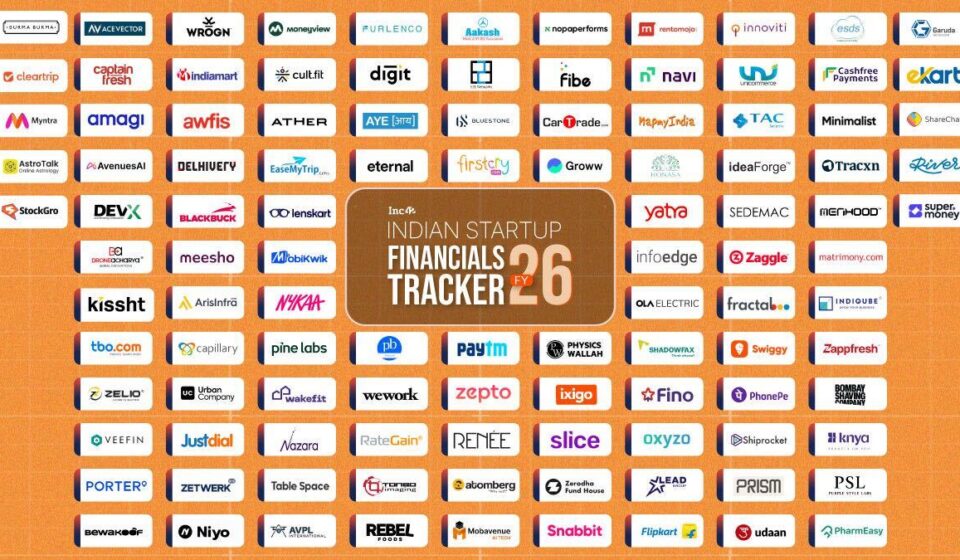
If you read Inc42’s FY26 Financial Tracker, the signal is unmistakable. Of 112 tracked startups, 68 turned profitable, generating ₹14,822 Cr in net profit. But the remaining 44 posted a cumulative loss of ₹34,904 Cr. Meanwhile, total operating revenue crossed ₹4.98 Lakh Cr, up 32.5% YoY – and 22 startups went public versus 13 last year. So the ecosystem is growing. But it’s also being sorted.
Profitability Is an Architectural Output, Not a Financial Trick
The companies that turned profitable this year did so through operating leverage – through disciplined cost structures and compounding unit economics. Look at Lenskart’s 69% profit jump, Paytm’s first full profitable year, Amagi swinging to profit, BlackBuck’s turnaround. These aren’t accounting miracles. They’re the result of re-architecting the underlying business model.
I see this through the same lens I use for legacy modernization. Growth-at-all-costs companies are like monoliths built for rapid feature deployment – they scale fast but accumulate technical debt, and eventually the maintenance cost of that debt exceeds the revenue you can generate. The FY26 winners are the ones who paid down their operational debt early. The companies in quick commerce and food delivery still carry the weight of subsidies whose interest compounds by the quarter.
The Portfolio Pattern
Notice where the money is. The structurally profitable businesses cluster around SaaS, matured fintech, logistics, and B2B platforms – capital-efficient models where every rupee of revenue can compound. The mega-losses concentrate in need-scale businesses where the only path to sustainability is more scale. Both are legitimate. But they require radically different architectures of patience, capital, and governance.
And beware the “exceptional items.” Moneyview’s ₹206 Cr one-time incentive, Zetwerk’s impairment charges – these are exactly where architecture and accounting diverge. A CTO’s lesson: distinguish structural profitability from one-off events, because only the former compounds.
The Northeast Truth: Scarcity as a Discipline
For founders in Northeast India, this data isn’t a pivot strategy – it’s the operating model they were forced into from day one. Capital has never been abundant here. We cannot subsidise growth for a decade. Which means the FY26 discipline that established ecosystems are only now learning is, for us, the default. Frugal architecture, profitability-first design, and lean operations are not catch-up measures – they are our structural advantage. When the era of easy money ends nationally, the ecosystem that never had it is suddenly the best-trained.
What CTOs and Founders Should Take Away
- Profitability is an output of system design, not a financial lever. If your cost base grows faster than your revenue, you are renting growth from investors – and the lease always expires.
- The market is now triaging business models. 22 IPOs means founders answer to public shareholders, who value durability over narrative.
- Cost rationalisation is re-architecture. Trimming headcount is cosmetic. Rewiring your operating engine is transformative.
- Build for compounding, not for headlines. The founders who will win the next decade are the ones designing for unit economics before they design for scale.
Closing Thought
The Indian startup ecosystem has finally stopped asking “how big can we get?” and started asking “how well are we built?” That is the most important maturity signal in years – because a company, like a system, is only as resilient as the architecture beneath its story.