Beyond Warehousing: Architecting India’s AI-Led Fulfilment Stack

The Warehouse Is Becoming Software
Everyone loves to talk about the app on the phone. Almost nobody talks about the shelf, the pallet, and the dock door behind it. Yet that is where the promise of quick commerce is kept or broken.
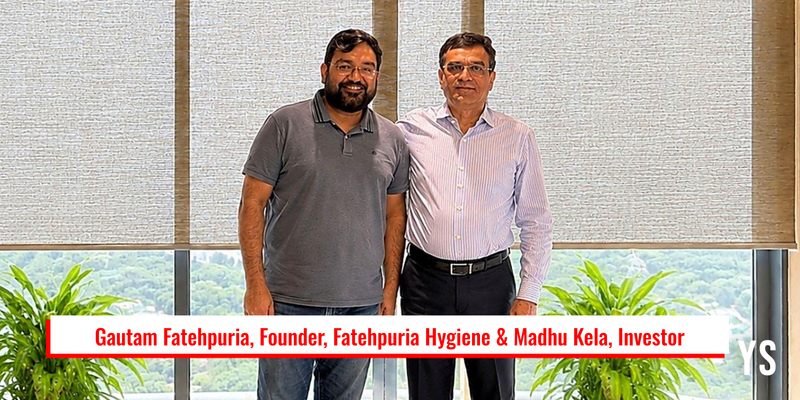
Fatehpuria Hygiene, a trading, supply chain and fulfilment company, has raised Rs 100 crore in its first equity round, led by investor Madhu Kela. It plans to expand into more than 50 cities in 24 months and build an “AI-enabled, integrated supply chain network.” Its network already spans 16 states and serves brands and platforms from Unilever to Blinkit.
I am less interested in the funding than in the phrase technology-driven supply chain ecosystem. It deserves a closer look.
Physical Scale Is Not the Moat Anymore
Warehouses can be leased and trucks can be hired. Any well-funded competitor can copy square footage within a year. What cannot be copied quickly is the orchestration layer: the software that decides where inventory sits, how orders are routed, and how a stockout in one city is absorbed by another.
When a company serves both Unilever and Zepto, it handles two very different operating rhythms. One is a planned replenishment cycle. The other is a ten-minute delivery promise. Running both on one network is not a logistics problem. It is a systems design problem.
What “AI-Enabled” Should Actually Mean
“AI-enabled” is one of the most overused labels in enterprise pitches, so I would ask the founders a few architectural questions:
- Is the data foundation unified? Fifty cities with fifty slightly different WMS configurations produce noise, not intelligence. Forecasting models are only as good as the consistency of the SKU, location and event data feeding them.
- Is the integration layer API-first? Clients like Amazon, Flipkart and Myntra each have their own seller and vendor interfaces. Without a clean abstraction layer, every new client becomes a custom project, and every custom project becomes technical debt.
- Where does AI sit in the decision loop? Demand forecasting, slotting optimisation and route planning are mature, high-value uses. Autonomous decisions without human override in a physical network are a different risk class.
- What happens when the system fails? Resilience matters more in logistics than in most software. A dashboard glitch is an inconvenience. A routing failure on a festival weekend is a lost customer.
The central trade-off is speed of expansion versus coherence of architecture. Growing to 50 cities in 24 months pushes you to stand up nodes quickly. The discipline lies in standardising the digital blueprint, covering data schema, event model and exception handling, before replicating the physical one. Companies that skip this step discover the cost during their second scale-up, when it is far more expensive to fix.
The Bharat Connection
India’s logistics story is increasingly shaped by Digital Public Infrastructure thinking. Open networks, interoperable protocols and shared standards are lowering the cost of coordination across fragmented players. A private fulfilment network that plugs into these rails, rather than building closed silos, will have a structural advantage.
The Northeast shows what is at stake. Long transit times, difficult terrain and thin infrastructure mean that fulfilment promises made in metros often do not hold here. If 50-city expansion plans stop at the usual tier-one list, the region stays at the margins. A well-designed, data-driven network can make the economics of serving smaller markets viable through better demand pooling and route optimisation. That would help local retailers and MSMEs as much as consumers.
Takeaways
- Treat logistics as a software business with physical endpoints. The competitive edge lives in the orchestration layer.
- Standardise before you scale. Data models and APIs should precede new warehouses.
- Define “AI” by decisions improved, not by buzzwords. Measure forecast accuracy, fill rates and cost per order.
- Design for exceptions. Resilience is the real test of a supply chain platform.
- For young entrepreneurs: the unglamorous, infrastructure-heavy layers of the economy often hold the most durable value.
Closing Thought
Great consumer brands are built on what customers see. Great businesses are built on what they never have to think about, and the invisible supply chain is where that trust is earned.
About the Author: Sanjeev Sarma is the Founder Director and Chief Software Architect at Webx Technologies. With a core focus on Generative AI integration, Cloud-Native Scalability, and Enterprise Software Architecture, he has spent over two decades driving digital transformation across Northeast India and beyond. Beyond his corporate leadership, Sanjeev is deeply invested in shaping the future of the IT industry. He serves as an Industry Expert on the Board of Studies for Assam Don Bosco University’s School of Technology, advises state technology committees, and actively mentors emerging tech startups at STPI. He brings a unique, dual perspective of high-level enterprise execution and future-ready academic curriculum development.