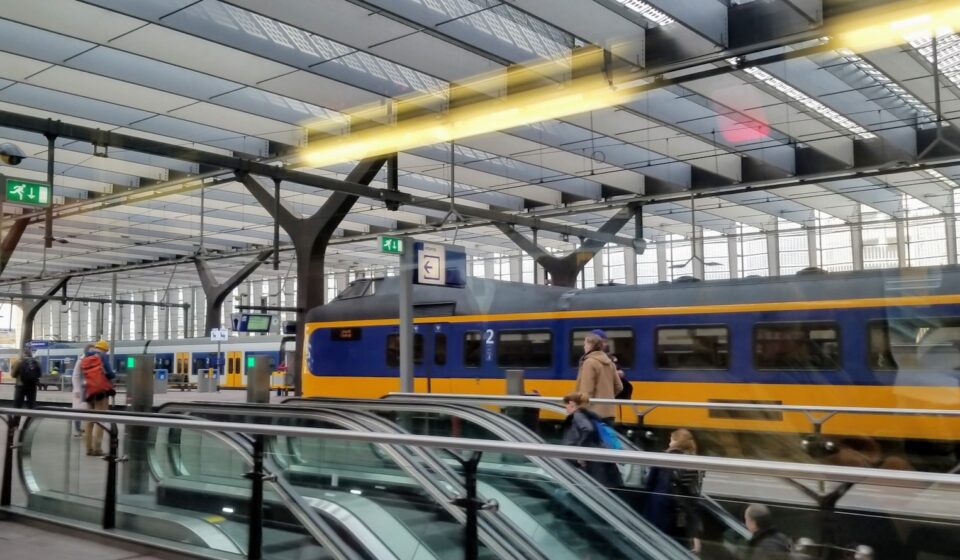
The UK-EU Summit: Architecting a Strategic Reset for International Rail

When policymakers debate the future of cross-border transit, the public imagination immediately jumps to steel tracks, high-speed locomotives, and physical tunnels. Yet, as a software architect, whenever I hear calls for international transit integration, I don’t think about civil engineering-I think about fragmented API gateways, incompatible legacy mainframes, and the friction of sovereign data handshakes.
I was reminded of this recently while reading a policy brief ahead of the upcoming UK-EU summit. A broad coalition of transport operators, environmental groups, and youth organizations has issued a joint call urging the UK to establish a comprehensive international rail strategy with its European partners. Their objective is to engineer a decisive modal shift-moving both passengers and freight out of the skies and onto cross-border rail networks.
On paper, this looks like a diplomatic and environmental initiative. Underneath the hood, however, executing a modal shift from air to rail is one of the ultimate enterprise architecture challenges of our time.
Why Aviation Won the Interoperability War
To understand why travellers and logistics managers still default to short-haul flights over cross-border trains, we have to look at the underlying digital ecosystems. Decades ago, commercial aviation solved global interoperability. Despite fierce competition and strict national airspace sovereignties, airlines built unified Global Distribution Systems (GDS) and standardized data-exchange protocols. You can book a multi-leg international flight across three carriers in seconds because the APIs speak a single language.
International rail, conversely, remains trapped in regional silos. Across Europe and the UK, rail operators often rely on decades-old, country-specific legacy systems for ticketing, dynamic pricing, track-slot allocation, and signaling telemetry. Political decoupling-such as Brexit-didn’t just add border checks; it introduced regulatory and digital divergence, compounding existing architectural debt.
You cannot convince consumers or supply-chain directors to abandon aviation if booking a cross-border train or tracking a freight container requires navigating four disconnected digital ecosystems. Friction at the data layer inevitably creates bottlenecks at the physical layer.
Architecting for Sovereignty without Silos
Moving freight from air and road to international rail requires even deeper systems integration. In an era of strict data localization and diverging regulatory frameworks, how do independent jurisdictions share real-time IoT cargo telemetry, automated customs manifests, and predictive scheduling without surrendering data sovereignty?
Centralized databases fail in cross-border geopolitics because no nation wants another controlling the master ledger. The solution lies in Federated Enterprise Architecture-leveraging open protocols, zero-trust API meshes, and event-driven data exchanges where sovereign nodes verify and pass state seamlessly without hoarding data.
Lessons from Digital Public Infrastructure
This challenge resonates strongly with what we are witnessing here in India. Our push to reduce logistics costs hasn’t relied solely on building highways and dedicated freight corridors; it required building ULIP (Unified Logistics Interface Platform) and ONDC. By treating interoperability as Digital Public Infrastructure (DPI), India created a consent-based API layer that connects disparate ministries, customs databases, and private fleet operators without forcing everyone onto a single proprietary software stack.
Sitting here in Northeast India-a region rapidly transforming into a physical gateway to Bangladesh, Bhutan, and ASEAN nations through ambitious cross-border rail and road projects-this lesson is vital. Laying physical tracks across borders is only half the equation. Without harmonized digital protocols for customs clearance, identity verification, and freight tracking, billion-dollar physical corridors quickly succumb to bureaucratic latency.
Strategic Takeaways for Enterprise Leaders
Whether you are advising on public transit policy or integrating multi-enterprise supply chains, the UK-EU rail debate highlights three universal architectural truths:
- User Experience is Dictated by Backend Interoperability: Behavioural shifts (like choosing green transit) rarely happen through moral persuasion; they happen when open APIs eliminate user friction.
- Design for Regulatory Divergence: Never assume compliance rules between partners will remain static. Decouple your compliance and identity layers from core operational logic so systems can adapt when policies shift.
- Federation Beats Centralization: In multi-stakeholder ecosystems where trust is guarded, open standards and federated data exchanges always outscale monolithic platforms.
Steel rails may connect geographies, but in the twenty-first century, it is clean, interoperable software architecture that actually erases borders.
About the Author: Sanjeev Sarma is the Founder Director and Chief Software Architect at Webx Technologies. With a core focus on Generative AI integration, Cloud-Native Scalability, and Enterprise Software Architecture, he has spent over two decades driving digital transformation across Northeast India and beyond. Beyond his corporate leadership, Sanjeev is deeply invested in shaping the future of the IT industry. He serves as an Industry Expert on the Board of Studies for Assam Don Bosco University’s School of Technology, advises state technology committees, and actively mentors emerging tech startups at STPI. He brings a unique, dual perspective of high-level enterprise execution and future-ready academic curriculum development.