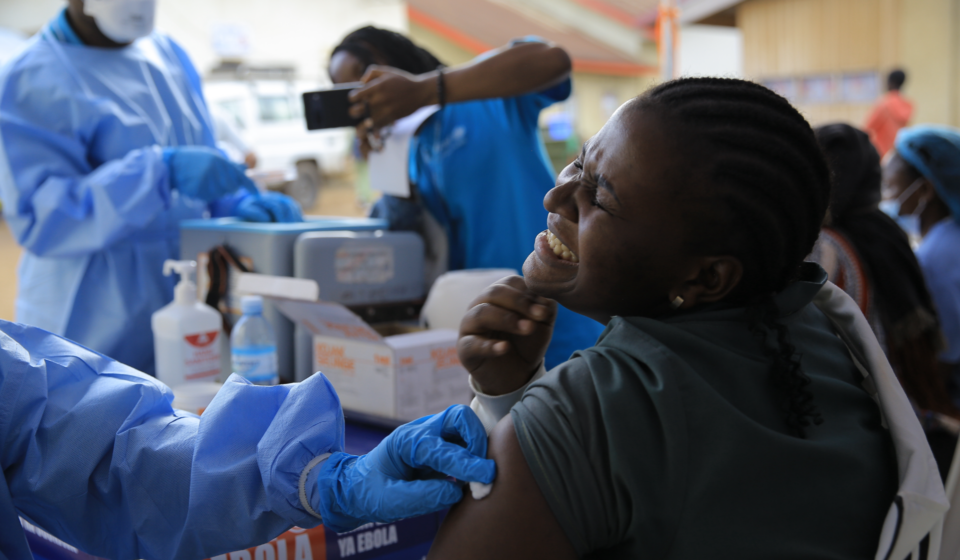

Six months into the Ebola outbreak in the Democratic Republic of the Congo, the death toll has surpassed 5,500, with 400 to 500 new infections still reported each week as the virus reaches remote rural communities and escalating violence hampers containment efforts.
The country had recorded 11,254 confirmed cases, including 5,505 deaths, as of Nov. 12, a case fatality rate of 48.9 percent, according to the latest situation report from national health authorities. The World Health Organization (WHO) and humanitarian partners warned in a joint statement that the weekly case count remains high even after significant progress in several early epicenters.
Children are especially vulnerable. They account for more than a quarter of confirmed cases and one-third of deaths, and seven in 10 infected children under five have died, the agencies said.
Transmission has been brought under control in some former hotspots, including Butembo and Mongbwalu. In Bunia, an early epicenter, new infections have halved, though transmission continues. Testing capacity has expanded from two laboratories to more than two dozen, and nearly 2,000 treatment beds are available across 104 treatment and transit centers. About 3,000 patients have recovered. Still, contact tracing remains below target, and imported cases in Kenya and Nigeria underscore the risk of cross-border spread.
Insecurity is one of the biggest threats to the response, especially in the conflict-torn eastern provinces of Ituri and North Kivu. A recent armed attack in Cantine-Aloya, North Kivu, killed 66 civilians, including three health workers, and left three health facilities looted, according to the joint statement. The attack disrupted Ebola surveillance, leaving more than 1,000 contacts lost to follow-up and three confirmed patients unaccounted for. Another attack was reported in the area on Nov. 11. More than 80 attacks on healthcare have been recorded since the outbreak began.
At a UN briefing in Geneva, Senior Ebola Coordinator Julien Harneis warned that violence by the Allied Democratic Forces was now killing more people in parts of Ituri and the Kivu provinces than Ebola itself. He called for safe contact tracing in conflict zones, closer cooperation with private healthcare providers and stronger preparedness in areas at risk.
The outbreak is unfolding amid a deepening humanitarian crisis. The World Food Program warned that nearly 29 million people in the DRC face acute food insecurity, a figure projected to reach 30.3 million in early 2027. Harneis said the government has unveiled a new $1.3 billion Ebola response plan, while a separate $2.2 billion appeal launched in June was 54 percent funded, with resources unevenly distributed among response agencies.
WHO and its partners called for sustained funding through 2027, secure humanitarian access and greater protection for frontline workers. With candidate vaccines and treatments still under evaluation, they warned that ending the outbreak will depend on reaching communities beyond the effective reach of the response, particularly in conflict-affected areas. The outbreak is now the world’s second-largest recorded Ebola epidemic, surpassed only by the 2014-2016 West Africa outbreak.
Original Source: https://www.chinadailyasia.com/article/642748
Category:
Tags:
Publish Date: 2026-11-16 09:48:00