The Architecture of Autonomy: Why Robotaxi Scale Demands Deliberate Deployment

The Robotaxi Race Isn’t About Driving. It’s About Deployment Discipline.
The autonomous vehicle conversation is usually framed as an AI problem: better perception models, more training miles, smarter planning algorithms. Watch how these systems actually reach the street, though, and a different picture appears. The hardest engineering problem is not making a car drive itself. It is rolling out a safety-critical distributed system into an unpredictable physical environment without breaking public trust.
The Signal
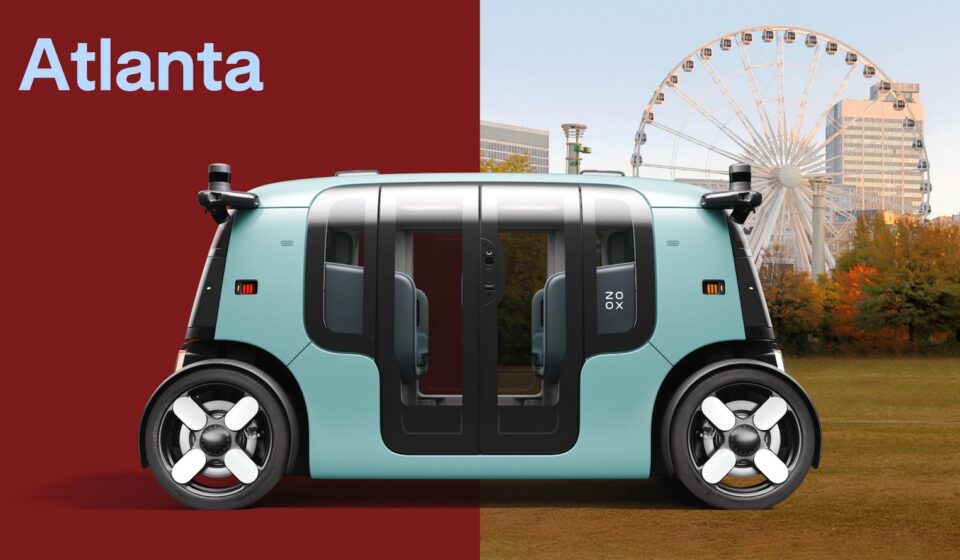
Zoox has opened a new robotaxi testing market in Atlanta. Service is initially restricted to employees, family, and friends inside a limited geofence, after roughly eighteen months of mapping, local behaviour learning, and regulator engagement. As CleanTechnica observes, Zoox, Waymo, and Tesla are all expanding city by city with small fleets and tight boundaries, which leaves open whether this is the early bloom of giant networks or a race to prove viability before the economics catch up.
Canary Releases on Asphalt
To a software architect, this playbook looks familiar. It is a canary deployment applied to the physical world.
- Dogfooding first: Internal users absorb the early failure modes before the public does.
- Geofencing as a bounded context: The system is constrained to a domain small enough to model, observe, and debug.
- Progressive expansion: The service area grows only as telemetry earns the right to grow.
The “no surprises” philosophy towards regulators deserves particular attention. Most enterprises treat compliance as a gate at the end of the pipeline. Here it sits at the beginning, as a design input. I have often told founders that regulators are stakeholders in your architecture whether you invite them or not. Inviting them early is simply cheaper.
Greenfield vs. Brownfield: The Eternal Trade-off
The more interesting architectural question is the split between purpose-built platforms and retrofitted ones. A vehicle designed from scratch for autonomy, with no steering wheel and full vertical integration of hardware, software, and operations, is the physical equivalent of a cloud-native rewrite. A retrofitted vehicle is the equivalent of modernising a legacy monolith.
Neither approach wins by default:
- Purpose-built systems remove legacy constraints and optimise the whole stack for one job. The cost is heavy capital, slower iteration on hardware, and concentrated risk.
- Retrofitted systems use existing supply chains and scale faster. The cost is carrying architectural debt from a design made for a human driver.
Every CTO faces this choice when deciding whether to rebuild a core platform or wrap it with modern layers. The honest answer is that vertical integration buys control and coherence but sacrifices optionality. If unit economics don’t close, that sacrifice becomes very expensive. The article’s scepticism about long-term profitability is the right question. Technical elegance does not pay for depreciating fleets.
The Lesson Closer to Home
Indian roads are not ready for driverless pods, and pretending otherwise would be fanciful. The deployment discipline, however, transfers directly. Too many e-governance and citizen-service platforms, including some I have seen in the Northeast, launch “big bang” across a whole state on day one. The result is predictable: overwhelmed systems, frustrated citizens, and lost trust that takes years to rebuild.
Contrast that with how India’s best Digital Public Infrastructure matured. It used sandboxes, staged onboarding, and close coordination with regulators. A district-level pilot is a geofence. A departmental soft launch is dogfooding. These are not delays. They are how resilient systems are built.
Strategic Takeaways
- Treat rollout as architecture. Staged exposure, observability, and rollback paths are first-class design concerns, not operational afterthoughts.
- Engage regulators upstream. Compliance shaped early is far cheaper than compliance retrofitted.
- Choose greenfield deliberately. Rebuild from scratch only when legacy constraints fundamentally block your core value, and when your balance sheet can survive the bet.
- Validate economics alongside technology. A system that works but cannot sustain itself is still a failed architecture.
Closing Thought
The future rarely arrives as a single launch event. It arrives one carefully bounded neighbourhood at a time, and the organisations that master that patience will own the map.
About the Author: Sanjeev Sarma is the Founder Director and Chief Software Architect at Webx Technologies. With a core focus on Generative AI integration, Cloud-Native Scalability, and Enterprise Software Architecture, he has spent over two decades driving digital transformation across Northeast India and beyond. Beyond his corporate leadership, Sanjeev is deeply invested in shaping the future of the IT industry. He serves as an Industry Expert on the Board of Studies for Assam Don Bosco University’s School of Technology, advises state technology committees, and actively mentors emerging tech startups at STPI. He brings a unique, dual perspective of high-level enterprise execution and future-ready academic curriculum development.