After the Exit: Rebuilding Founder Identity for the AI Era

The Hardest Legacy System to Modernise May Be the Founder’s Mindset
We celebrate exits as finish lines. But for a founder, selling a company can expose a dependency no balance sheet captures: the business has become the operating system of their identity.
That is not just a personal challenge. It has consequences for how the next company gets built.
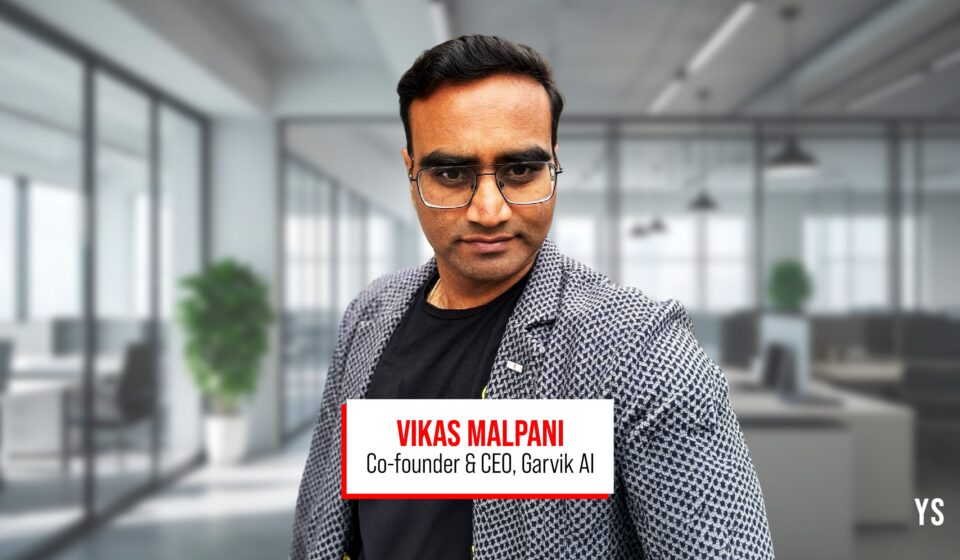
Vikas Malpani’s reflections on life after CommonFloor’s acquisition by Quikr in 2016 bring this tension into focus. He describes the difficulty of letting go of his founder identity, followed by a return to entrepreneurship through social technology and, now, enterprise AI.
What interests me is not the acquisition value. It is the question underneath: when the environment changes, which parts of our experience remain assets-and which become architectural debt?
Experience Is Valuable. Its Assumptions Have Expiry Dates.
I believe founders and architects face a similar trap: a successful model becomes an unquestioned model.
A consumer property portal and an enterprise AI system may both involve search, data and user interfaces. But their trust contracts are fundamentally different.
A portal helps someone discover options. An enterprise assistant may influence a financial decision, interpret an internal policy or retrieve confidential information. Relevance still matters, but so do authorisation, provenance and the ability to say, “There is insufficient evidence to answer.”
The danger is not carrying experience forward. It is carrying forward assumptions without revalidating them.
For a CTO, this means asking a difficult question before approving a new platform: are we solving today’s problem, or recreating the conditions under which our previous solution succeeded?
Enterprise AI Is an Organisational Memory Problem
The broader shift towards AI-assisted access to company information deserves attention beyond any individual product.
Most enterprises do not lack documents. They lack dependable connections between information, permissions, ownership and context.
Adding a language model does not resolve those gaps. It can make them harder to notice because fluent answers create an impression of coherence.
From an enterprise architecture perspective, the priorities are therefore less glamorous than the demonstration:
- Preserve access boundaries. Retrieval must respect the user’s permissions, not merely the application’s access.
- Make evidence inspectable. Answers need traceable sources, with freshness and ownership visible where relevant.
- Design for uncertainty. Abstention and human escalation are capabilities, not failures.
- Evaluate real work. Test accuracy, information leakage and task completion-not just whether an answer sounds convincing.
Retrieval-augmented generation can improve grounding. It cannot guarantee correctness or substitute for information governance.
That distinction separates an impressive prototype from a system an organisation can responsibly depend on.
Unlearning Needs an Operating Model
There is also a leadership lesson here.
Founders are encouraged to be persistent. Architects are encouraged to establish standards. Both instincts are useful-until persistence becomes attachment and standards become inherited constraints.
The answer is not perpetual reinvention. Constantly replacing platforms creates its own costs: migration risk, fragmented expertise and operational instability.
Instead, I favour deliberate checkpoints:
For founders: distinguish attachment to the problem from attachment to the original solution.
For CTOs: record the assumptions behind major architectural decisions, including the conditions that would justify revisiting them.
For young engineers: learn to explain trade-offs before becoming loyal to a framework, cloud provider or model family.
This makes unlearning disciplined rather than fashionable.
Build Beyond Your Own Certainty
A successful company should not depend indefinitely on its founder’s memory. A trustworthy AI system should not depend on users accepting its confidence.
Both require knowledge to become inspectable, transferable and open to correction.
Perhaps the deepest form of entrepreneurial maturity is not knowing how to build again.
It is knowing which parts of yourself should not become requirements for the next system.
About the Author: Sanjeev Sarma is the Founder Director and Chief Software Architect at Webx Technologies. With a core focus on Generative AI integration, Cloud-Native Scalability, and Enterprise Software Architecture, he has spent over two decades driving digital transformation across Northeast India and beyond. Beyond his corporate leadership, Sanjeev is deeply invested in shaping the future of the IT industry. He serves as an Industry Expert on the Board of Studies for Assam Don Bosco University’s School of Technology, advises state technology committees, and actively mentors emerging tech startups at STPI. He brings a unique, dual perspective of high-level enterprise execution and future-ready academic curriculum development.