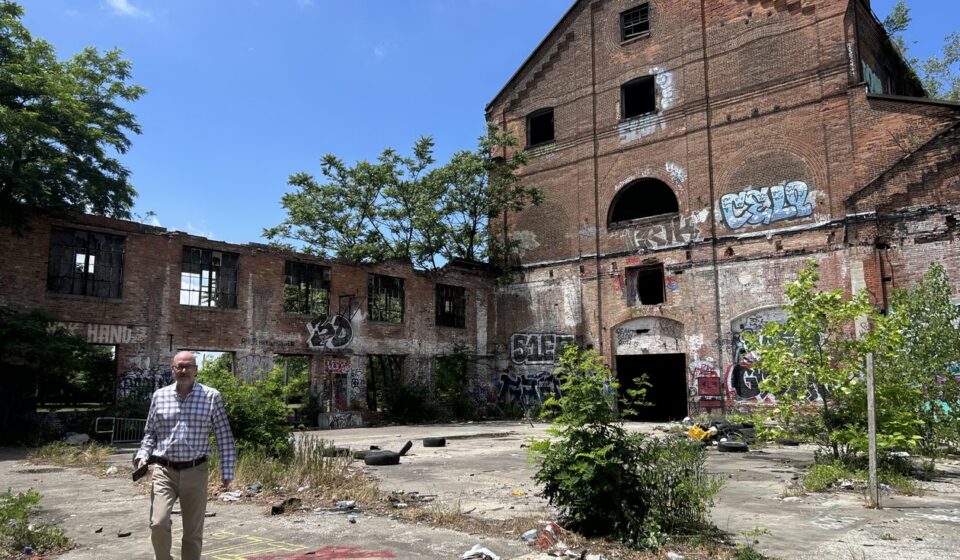
Prosperity Isn’t Permanent: What Cleveland Teaches Seattle About Its Next Act

Don’t Be the Cleveland of Your Industry: Lessons from Seattle’s Economic Anxiety
Every successful enterprise architecture contains the seeds of its own obsolescence. The very stack that powers today’s growth often becomes the legacy system that anchors tomorrow’s decline. That’s the thought that kept nagging me as I read a recent GeekWire analysis of Seattle’s economic future-a piece that uses Cleveland’s industrial collapse as a cautionary tale for a city that rode the software boom to unprecedented prosperity.
The core warning is simple: “The version of the tech sector that drove the last wave of economic growth will not drive the next one.” Seattle’s population is still growing, but slowing. Amazon and Microsoft have cut thousands of jobs. Downtown office vacancy is among the highest in the country. And the center of gravity for AI is shifting to the Bay Area. The report even concedes that Seattle could become the “next Cleveland”-hyperbolic, perhaps, but not absurd.
For an enterprise architect, this is a familiar story. Replace “Seattle” with “a Fortune 500 company,” and “Cleveland” with “a once-dominant industry player,” and you have the classic narrative of platform disruption. The company that owned the mainframe era missed client-server. The one that won client-server struggled with cloud. The one that leads in cloud today may not lead in AI tomorrow-unless it actively re-architects itself.
The Architecture of a City Is a Platform
What struck me most is how the article frames a city’s job: attract people, give them reasons to stay. That’s exactly how I think about a developer platform. People come for opportunity-the APIs, the ecosystem, the potential to build something new. They stay when the experience is worth it: low friction, good infrastructure, a community that welcomes builders.
Seattle’s success was never just about Boeing, Microsoft, or Amazon. It was about the conditions that allowed each generation of builders to emerge. The article asks a piercing question: Would Seattle’s last century have looked the same without Bill Boeing, Bill Gates, and Jeff Bezos? But the deeper question is: What made Seattle the place where such people chose to build? And does it still have that pull today?
For enterprises, the equivalent is: What makes your org the place where top engineers want to work? Is it the brand, the equity, the mission? Or are your best builders leaving to found startups in more fertile environments? The city’s own report says it bluntly: “Headquarters and top-tier tech jobs are very hard to replace.” In my world, I say: your senior architects and principal engineers are very hard to replace. If they leave, you don’t become more equal or more efficient-you just become poorer in capability.
Growth Problems Are the Good Kind
The article’s most counterintuitive insight is that Seattle should envy Cleveland’s mayor, who said, “I envy problems around growth.” We so often romanticize stability. But a fixed system, whether a city or a legacy enterprise, has to fight harder for every resource. As the Seawall report puts it, “it is easier to distribute the benefits of a growing pie than a fixed one.”
This resonates with how I view technical debt. A stagnant platform-one that avoids breaking changes, resists modernization, and prioritizes short-term stability over long-term adaptability-accumulates hidden debt. Growth, messy as it is, forces you to re-architect, to scale, to confront the cracks. Decline, on the other hand, just forces you to ration the pain.
What Northeast India Can Learn
I see a direct parallel to our own region. Northeast India has long been a talent exporter, watching its brightest engineers and entrepreneurs migrate to Bengaluru, Pune, or abroad. The Seattle story reminds us that prosperity is fragile and that regions can lose their builders if they fail to create the right conditions.
But there’s also hope. Seattle’s next act won’t be a replay of its last one. Neither will ours. We don’t need to clone Silicon Valley or Bangalore; we need to build an ecosystem that is native to the AI era, leveraging our unique constraints-frugal innovation, multilingual talent, and strong institutions. The goal isn’t to attract a Jeff Bezos. It’s to create the conditions where the next Bezos from Guwahati or Aizawl stays home to build.
The Takeaway for CTOs, Founders, and Policymakers
- Diversify your economic stack. Don’t let one sector-or one vendor-own your future.
- Attract and retain builders. Talent is the ultimate API. If your ecosystem repels developers, nothing else matters.
- Embrace growth problems. A stagnant system isn’t safe; it’s just slowly failing.
- Watch leading indicators. Population, startup formation, and engineering retention are the metrics that predict the future, not lagging revenue reports.
- Re-architect continuously. Prosperity, like software, is never “done.” It requires constant refactoring.
Closing Thought
Seattle’s lesson is not about a city-it’s about every system we build. The moment we treat our current success as a permanent state is the moment we start becoming the next Cleveland. The only sustainable strategy is to keep building, keep adapting, and keep making the place where the next generation wants to live, work, and create.
About the Author: Sanjeev Sarma is the Founder Director and Chief Software Architect at Webx Technologies. With a core focus on Generative AI integration, Cloud-Native Scalability, and Enterprise Software Architecture, he has spent over two decades driving digital transformation across Northeast India and beyond. Beyond his corporate leadership, Sanjeev is deeply invested in shaping the future of the IT industry. He serves as an Industry Expert on the Board of Studies for Assam Don Bosco University’s School of Technology, advises state technology committees, and actively mentors emerging tech startups at STPI. He brings a unique, dual perspective of high-level enterprise execution and future-ready academic curriculum development.