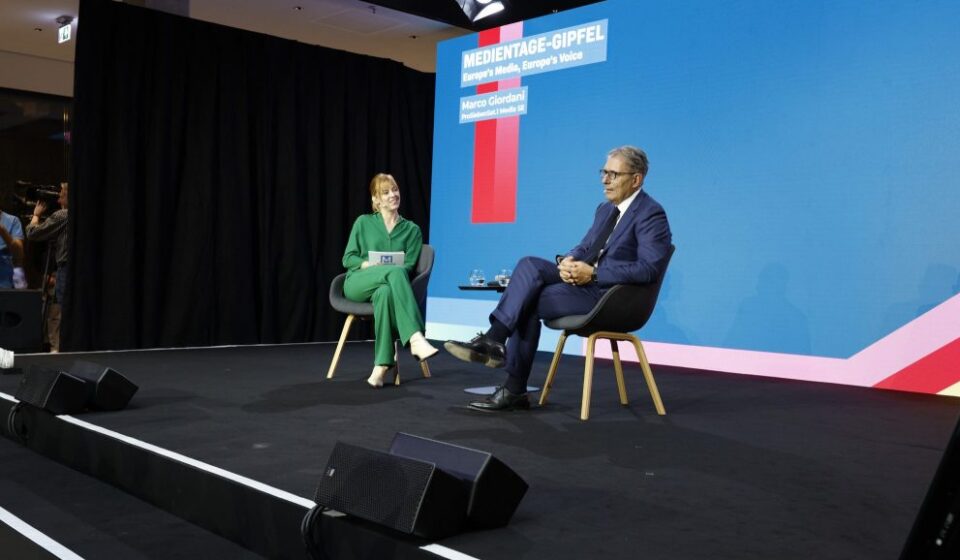
Big Streaming Buzz! ProSiebenSat.1 Boss Marco Giordani Unveils Blockbuster Pan-European Streamer Plan That Could Change European Entertainment Forever

One Stream to Unite Them All: Marco Giordani’s Grand European Gamble
From the desk of Rupaliparda
Munich, darling — a city of lederhosen and lager, and this week, of broadcasting bombshells. At Munich Media Days, ProSiebenSat.1 chief Marco Giordani made no mere announcement; he staged a declaration of ambition: one streaming service, five countries, one banner under which Europe’s scattered television kingdoms intend to take on the streaming superpowers.
The platform, he confirmed, will be identical across all five territories where ProSieben’s parent, the Berlusconi family-owned MediaForEurope (MFE), operates — launching together in the first quarter of next year. His pitch was disarmingly practical: lower costs, stronger technology underpinning the unified platform, and MFE’s sales house finally knocking on the doors of European-headquartered advertisers. “We are spending less, and we are getting better technology,” he said. “Sharing costs is the easiest part, but we are also getting revenue benefits.” Cost-sharing, in short, is the overture; revenue, the symphony.
This is the Berlusconi playbook, restaged for the streaming age. MFE — once Mediaset, still a family production — has run channels in Italy and Spain for decades, acquired a stake in Portugal’s Impresa, and last year seized control of German giant ProSiebenSat.1, unlocking the Swiss and Austrian markets. In July, the group unveiled its masterstroke: fuse the strongest elements of its streamers in Italy, Germany, Spain and Portugal into one pan-European service. The argument, long rehearsed, is simple — Europe’s media houses are understrength against the global streamers. Scale, or surrender.
Giordani himself — a long-serving MFE hand who replaced Bert Habets as CEO a year ago — has been directing his own housecleaning. “In reality, if you want to change, you need to change, and that’s the reason behind what happened last year,” he reflected. “Now we have a clear, long-term media company as main shareholder, and that means we have to focus on media. The rest of the company is less important, and we will try to take the maximum out of it to invest back in media.” Between those lines lies MFE’s long-running complaint: ProSiebenSat.1 was hamstrung by side ventures in dating and e-commerce, now being sold off to fund the main stage.
Then came the moment this columnist savoured — Unterföhring, the unassuming suburb where ProSiebenSat.1 and arch-rival RTL literally share a street. RTL’s takeover of Sky Deutschland earlier this year had whisperers predicting advertising armageddon. Giordani, ever the diplomat with a glint, shrugged it off. RTL, he noted, has “decided to go towards an SVOD future, while we are still on AVOD” — ProSieben’s Joyn being free and advertiser-funded. “In specific terms, that is not really impacting us a lot.”
And then, the line that made the room — and this desk — purr: “It’s pretty hard work to integrate the two companies. We know a little bit about that, but I can imagine that for them it could be even worse.” Oh, Marco. Somebody fetch the champagne.
Still, he insists a “rational RTL” would benefit everyone — content, advertising, an industry that cannot afford infighting while bigger predators circle outside. “It’s hard to think about traditional media fighting one against the other, while outside our world there is much more competition,” he reasoned. A reasonable neighbour across the street, apparently, is all he asks.
The curtain lifts next quarter. Audiences will deliver the verdict.