Warmth as a Moat: Why Emotional Design Decides Which AI Products Endure

Trust Is the New API Key: What the AI Companion Shakeout Really Signals
We have spent three years arguing about how intelligent AI can become. The market, far more quietly, has been deciding something else: how trustworthy it should be allowed to feel.
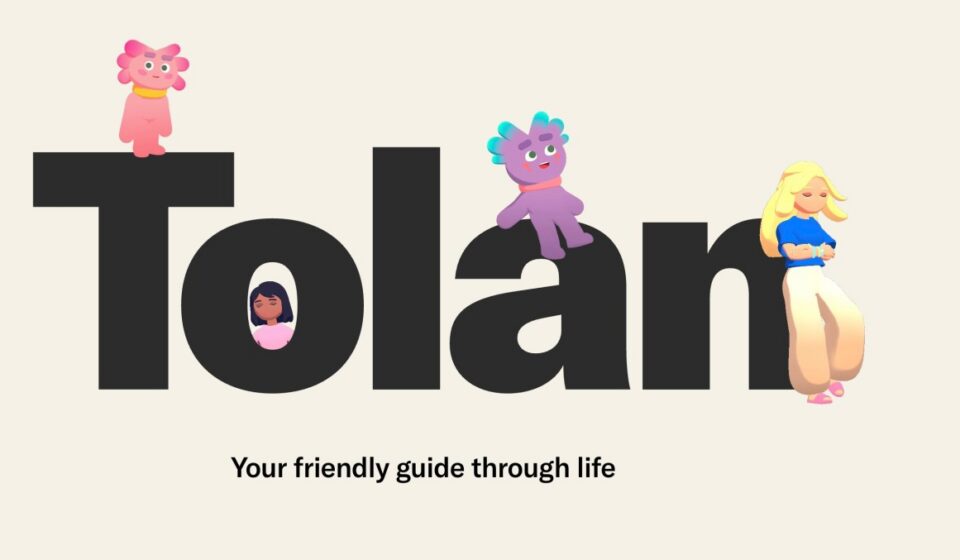
Consider this week’s evidence. Tolan, an AI companion app, raised $30 million – reportedly valuing it well past its previous $120 million – with 250,000 active users, 70 million conversations, and recurring revenue in the double-digit millions, skewed heavily toward women, parents, and neurodivergent users whom mainstream tools often fail. Meanwhile, the Friend pendant was ridiculed into a cautionary tale, and Character.ai, once the category’s poster child, filed for bankruptcy. Same technology wave. Radically different fates. That asymmetry is the real signal.
Anthropomorphism Is a Dial, Not a Feature
The instinct in this space has been to maximize human-likeness – better voices, deeper memory, more “soul.” The shakeout suggests this is exactly backwards. Tolan’s deliberately cartoonish, unmistakably non-human character isn’t a design quirk; it is a trust boundary. The interface declares what it is, so leaning on it doesn’t feel like deception. Friend over-indexed on simulated intimacy and was rejected for it; Character.ai over-indexed on open-ended persona and accumulated liability it couldn’t survive.
In my own architecture reviews, I see the same mistake in enterprise copilots and HR bots: persona debt. The more human a system sounds, the more empathy, memory, and accountability users assume it has – expectations the system cannot honor. Persona design is risk management. Tune the dial deliberately.
Emotional AI Needs a Safety Architecture, Not a Disclaimer
With lawsuits now alleging that chatbot interactions contributed to users’ suicides, any system touching human emotional states operates in a high-stakes domain – whether or not regulators have caught up. That changes the pipeline fundamentally. It can no longer be prompt → response. It must be prompt → risk classification → constrained generation → human escalation → audit trail. Think of the circuit breakers and real-time scoring we engineered for financial fraud; emotional AI deserves the same seriousness.
There is also an uncomfortable metric problem: engagement. Time-spent is a vanity metric in most software; in emotional products, it can be a warning light. I would argue the industry needs an outcomes standard – did the user leave the conversation better off? – much as we never celebrate how long a user spends fighting fraud.
Trust Becomes the Permission Layer
The next wave is agentic: Meta’s Muse, avatar included, that plans and acts rather than merely talks. When conversation collapses into execution – calendars, messages, payments – emotional trust becomes the consent screen of the agentic decade. Whoever earns the right to be leaned on first will be delegated to first. That, I suspect, is what is truly being priced into that valuation: not conversations, but future permission.
A Note for the Founders I Mentor
There is a genuine parallel back home. India’s mental health treatment gap – a fraction of the clinicians recommended per capita – makes vernacular, culturally-attuned, AI-assisted support a legitimate last-mile opportunity. But the stakes invert: in low-resource settings with fewer fallback services, a badly guardrailed emotional AI is more dangerous, not less. Here, the guardrail is not compliance overhead. The guardrail is the product.
Takeaways
- Treat persona design as a risk parameter, tuned deliberately – not personality maximized by default.
- Build the safety pipeline – detection, constraint, human escalation, auditability – before scale, not after the first incident.
- Refuse engagement-optimization on emotional products; price and monetize trust instead.
- Assume regulation will arrive; design for auditability now, and it becomes a moat.
The most valuable interface of this decade will not be the AI that sounds most human. It will be the one honest enough about what it is that a human can safely lean on it. Trust, like architecture, holds only when you know exactly where the load-bearing walls are.
About the Author: Sanjeev Sarma is the Founder Director and Chief Software Architect at Webx Technologies. With a core focus on Generative AI integration, Cloud-Native Scalability, and Enterprise Software Architecture, he has spent over two decades driving digital transformation across Northeast India and beyond. Beyond his corporate leadership, Sanjeev is deeply invested in shaping the future of the IT industry. He serves as an Industry Expert on the Board of Studies for Assam Don Bosco University’s School of Technology, advises state technology committees, and actively mentors emerging tech startups at STPI. He brings a unique, dual perspective of high-level enterprise execution and future-ready academic curriculum development.