From Access to Advantage: Engineering India’s AI-Driven Tech Decade

We Solved Access. Now Comes the Hard Part.
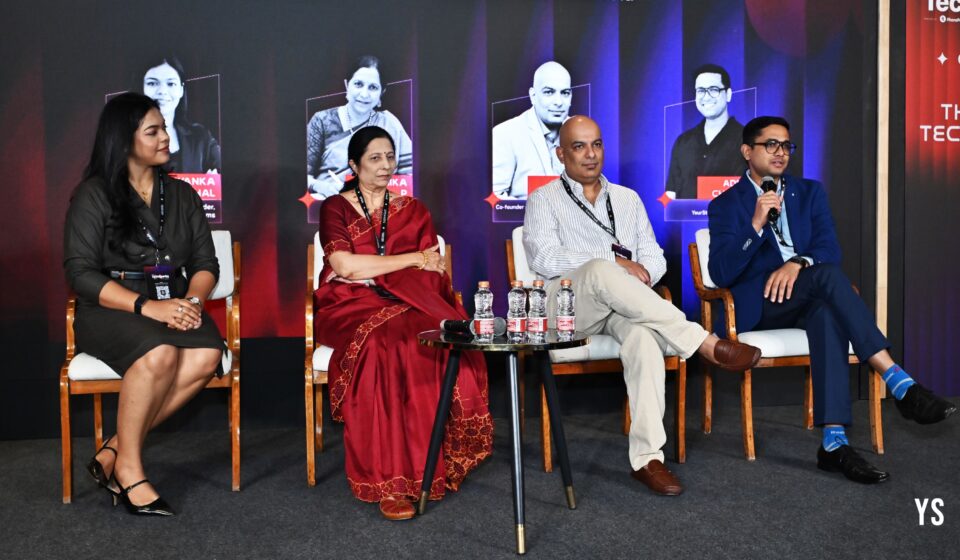
Ten years ago, getting an Indian retail investor into the markets was an infrastructural saga – paper forms, wet signatures, weeks of waiting. Today, Angel One and Zerodha can place a Wall Street ETF beside a Nifty holding in the same app, onboarding in minutes. And yet, as Dale Vaz of Sahi argued at TechSparks 2026, most of those investors still aren’t confident about what they’re doing.
That gap – between access and outcomes – is, in my view, the defining architectural problem of the next decade.
Access Is a Distribution Problem. Outcomes Are a Cognition Problem.
The last decade of Indian fintech – and honestly, of India’s entire digital public infrastructure – industrialized distribution. KYC APIs, payment rails, onboarding funnels: we made opening doors nearly free. But confidence in a financial decision isn’t a distribution problem; it’s a cognition problem. It requires context, judgement, and trust.
This is precisely where AI must earn its place – not as a shiny feature bolted onto an app, but as a decision-support layer with explainability and guardrails. In regulated domains like wealth, credit, and health, a wrong outcome isn’t a UX bug; it’s systemic risk. I’ve long believed that the hardest engineering of the coming years won’t be generating answers, but designing systems that know when not to answer – when to surface uncertainty, when to defer to the human. Vaz’s thesis validates something I tell every founder I mentor at STPI: if your AI merely accelerates access, you’ve built a feature. If it improves the quality of the decision, you’ve built a moat. That’s exactly the “products difficult to replicate” edge the TechSparks AI panel was pointing toward.
The War for the Abstraction Layer
Strip the marketing from Amazon’s new chip announcement and the real story emerges: the battle for AI compute was never about silicon alone. Nvidia’s moat is the software stack above it. Tooling that lets the world’s dominant AI code run unmodified on custom hardware pushes the entire industry toward hardware-agnostic inference.
For enterprise architects, the lesson is blunt: assume the hardware layer will be commoditized and swappable. Treat any deep model-to-hardware coupling as technical debt, and abstract your inference layer now. The organizations that design for portability will ride the coming cost-collapse in AI compute; the ones that don’t will be renegotiating vendor terms from a position of weakness.
Outcomes Are an Infrastructure Problem Everywhere
What strikes me is that this principle shows up in places far from fintech. The NCW’s report recommending an overhaul of India’s childcare framework makes the same argument in a different domain: 26 weeks of maternity leave gave women access to careers – but childcare infrastructure determines the outcome of those careers. Shifting childcare from a solo maternal burden to shared societal responsibility is, structurally, an infrastructure play. Even Operation Sindoor’s private defence moment tells the same story – indigenisation moved India from having access to technology toward owning outcome capability.
And this is where India’s DPI story gets interesting. UPI and ONDC made us the world’s most successful access machine. But in the Northeast, I’ve watched connectivity arrive far faster than the capability to use it well. The rails exist; the judgement layer doesn’t yet.
The Architect’s Playbook
- Build the judgement layer. Invest in decision-support with guardrails before building your fifth onboarding funnel.
- Architect for portability. Abstract your inference stack; today’s convenient coupling is tomorrow’s migration crisis.
- Measure outcomes, not logins. Whether in governance or fintech, KPIs should track quality of result, not volume of access.
- Infrastructure beats intention. From crèches to compute, shared infrastructure determines who actually benefits.
Access was the easy revolution – a race to remove friction. The next decade will belong to those who build for what happens after the door opens.
About the Author: Sanjeev Sarma is the Founder Director and Chief Software Architect at Webx Technologies. With a core focus on Generative AI integration, Cloud-Native Scalability, and Enterprise Software Architecture, he has spent over two decades driving digital transformation across Northeast India and beyond. Beyond his corporate leadership, Sanjeev is deeply invested in shaping the future of the IT industry. He serves as an Industry Expert on the Board of Studies for Assam Don Bosco University’s School of Technology, advises state technology committees, and actively mentors emerging tech startups at STPI. He brings a unique, dual perspective of high-level enterprise execution and future-ready academic curriculum development.