Repricing Nature: Insurance as a Lever for Climate Resilience

Insurance’s Next Architecture: Funding Prevention Before Disaster
Insurance has traditionally been designed to transfer risk after it appears. But in an era of accelerating climate losses, that model is increasingly insufficient. The more consequential question is: can insurance finance the reduction of risk before damage occurs?
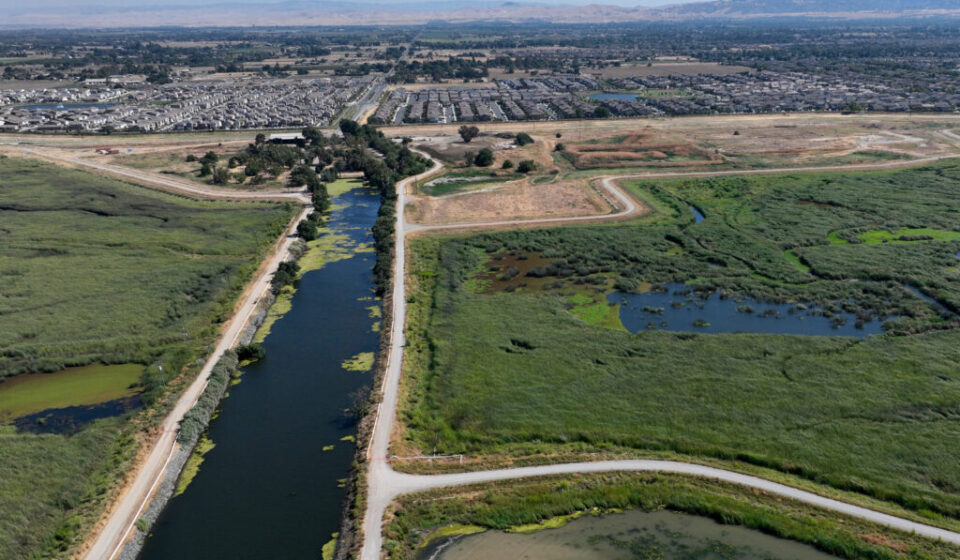
Recent research is challenging the industry’s conventional wisdom. Nature-based insurance is taking two forms: policies that protect ecosystems and the communities dependent on them, and resilience policies that reduce premiums when policyholders restore wetlands, manage forests or strengthen buildings against natural hazards.
The more important development is not a particular policy. It is the alignment of ecological science, actuarial models and financial incentives. When a verified intervention lowers expected losses, part of the savings can reward the policyholder and be reinvested in further risk reduction. Conservation, in effect, becomes risk-adjusted capital allocation.
From Risk Transfer to a Closed Feedback Loop
From an enterprise-architecture perspective, this is a closed-loop system:
Ecological condition → mitigation action → risk model → financial benefit → reinvestment
Without the final reinvestment stage, the model is incomplete. Conservation remains an external cost. With it, nature restoration can become a self-reinforcing investment.
This also exposes a familiar technology problem: visibility without consequence is merely reporting. Many enterprises maintain sophisticated risk dashboards, yet those dashboards do not influence budgets, operational decisions or capital allocation. Likewise, nature has been monitored extensively, but its contribution to financial resilience has often remained outside core decision systems.
The next phase therefore requires more than better environmental data. It requires an architecture capable of connecting:
- Geospatial and ecological conditions
- Climate-hazard models
- Intervention and maintenance records
- Financial-loss estimates
- Insurance terms and premium calculations
- Reinvestment into the next mitigation cycle
Each connection must be verifiable. If a policy offers a discount, the insurer must be able to explain what changed, by how much, over what period and with what confidence.
Transparency Is the Real Unlock
Catastrophe models are often proprietary black boxes. Even when regulators require insurers to publish property-level risk scores, a score alone does not reveal the assumptions, causal relationships or uncertainty behind the result.
A mature model must expose its model lineage, baseline, assumptions, confidence intervals and validation methodology. This is not simply an actuarial issue; it is a data-governance issue.
It also raises equity concerns. Better risk pricing may produce technically accurate results while disproportionately increasing premiums for vulnerable communities. Accurate risk measurement must therefore be paired with subsidies, public risk pooling and transition support. Otherwise, a more precise system may simply make exclusion more efficient.
There is also a limit to what insurance can solve. A policy may pay after a storm damages a coral reef, but insurance cannot compensate for chronic ocean acidification. Some ecological threats require grants, restoration finance and public policy-not merely risk transfer.
A Relevant Lesson for India
For Northeast India and other flood-exposed regions, this model deserves serious study, but not a literal transplant of US insurance frameworks.
Municipal drainage, wetlands, river basins, farms and transportation infrastructure often share risk. Technologies, land records and claim-handling capacity also vary considerably at the local level. An effective model would need to aggregate benefits across a watershed or community, use trusted public climate data and ensure that incentives reach vulnerable households-not only property owners able to finance upgrades.
What Decision-Makers Should Take Away
For insurers and policymakers, the priority is a common measurement framework: standardized data, independent validation and transparent model governance. The real bottleneck is less a lack of awareness and more a lack of standardized, auditable evidence. The real risk involves the absence of a credible financial feedback loop that converts better ecological conditions into lower losses and renewed investment. Finally, the central challenge is alignment, which requires ensuring that risk reduction benefits communities as well as insurers.
The next major innovation in climate resilience may be better insurance products. It may be a trustworthy, transparent system that begins funding nature before nature becomes a loss.
About the Author: Sanjeev Sarma is the Founder Director and Chief Software Architect at Webx Technologies. With a core focus on Generative AI integration, Cloud-Native Scalability, and Enterprise Software Architecture, he has spent over two decades driving digital transformation across Northeast India and beyond. Beyond his corporate leadership, Sanjeev is deeply invested in shaping the future of the IT industry. He serves as an Industry Expert on the Board of Studies for Assam Don Bosco University’s School of Technology, advises state technology committees, and actively mentors emerging tech startups at STPI. He brings a unique, dual perspective of high-level enterprise execution and future-ready academic curriculum development.