Beyond Disaster Response: Nepal’s Fight for Climate Justice and Loss and Damage

When the Water Recedes, the System Is Still Failing
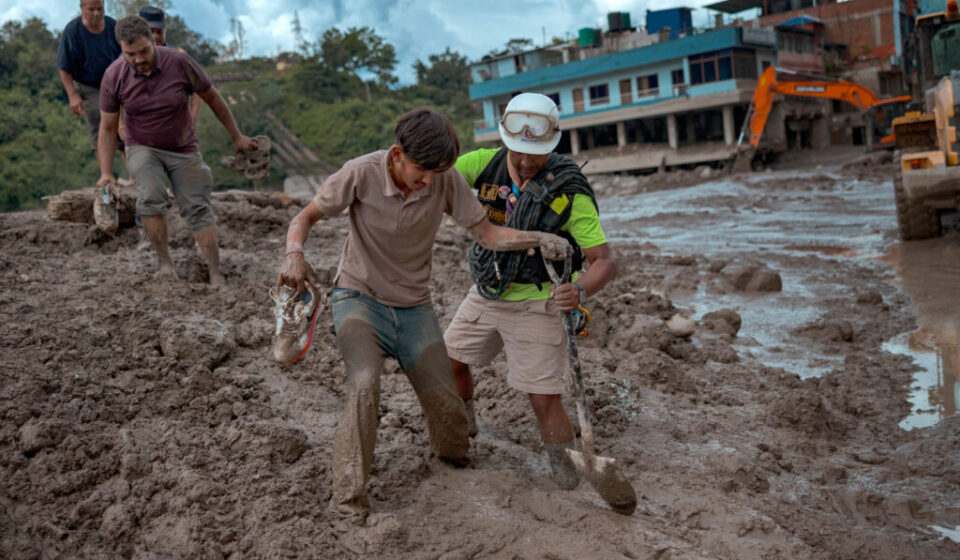
Floods are usually reported through the language of emergency: rising water, death tolls, missing persons and damaged bridges. That language matters, but it is incomplete. In the Nepal disaster described in an interview with climate justice activist Tanuja Pandey, recovery begins long after the water recedes. Families rebuild homes, livelihoods, trust and a sense of safety. When a community loses the routines and places that define its identity, the event has not ended; it has entered a slower, more destructive phase.
Researchers from World Weather Attribution concluded that climate change played a “very strong” role: warming melted ice, thawed permafrost and increased rainfall, destabilizing the glacier. Nepal estimates that damages could exceed $4 billion-over a tenth of GDP. With Nepal responsible for less than 0.02% of global greenhouse-gas emissions, the deeper signal is that preparedness and international loss-and-damage finance remain inadequate.
Resilience is an architecture, not a response plan
Climate risks are compound failures. A changing atmosphere can alter snow, ice, rainfall and soil stability; a resulting flood can damage homes, roads, power, telecommunications, health services and livelihoods simultaneously. Yet institutions often manage these risks in silos-meteorological data in one department, water and disaster information in another, and local knowledge outside the formal architecture.
My architectural conclusion is straightforward: resilience must be treated as a core organizational, technology and governance capability, not a cost center that becomes visible only after failure. We need a federated risk architecture combining interoperable sensors, satellite and ground observations, hydrological and slope-stability models, and clear escalation paths. At the data layer, that means interoperable standards, provenance, privacy, consent and data sovereignty-not indiscriminate centralization.
The objective is not certainty; it is better decisions under uncertainty, with confidence levels visible to the people who must act. The tradeoff is not speed versus safety; it is short-term efficiency versus long-term optionality. Unmaintained sensors, disconnected datasets and single points of failure are resilience debt. No central dashboard can substitute for local reporting, coordination and community ownership.
The last mile is the system
An early-warning system matters only when a resident can receive it, understand it, trust it and act before danger arrives. It is an end-to-end service, not merely a forecasting application. It needs accessible language, redundant communication, backup power, offline capability, trusted intermediaries and a response plan that reaches households as well as administrators.
The interview’s emphasis on early warning is a reminder that the last mile is a life-safety boundary, not a technology footnote. For India, the lesson is directly relevant to flood- and landslide-prone regions, including parts of Northeast India, where connectivity can be intermittent, terrain can be difficult, and linguistic diversity is significant. A public-warning or digital-service architecture must work under those conditions.
Solar-powered edge nodes, community radio, mobile alerts and locally maintained data can complement scientific systems. Digital public infrastructure should be judged by whether it remains usable when power or connectivity fails. Frugal engineering, properly designed, is not compromise; it is resilience.
Development must not recreate vulnerability
The reported destruction of hydropower capacity is a warning against equating development with capacity added. Energy planning must account for watershed risk, ecological impact, local livelihoods and the resilience of the wider system. Distributed resources, storage and stronger local infrastructure can reduce dependence on a single vulnerable asset.
Recovery funding should not simply restore the pre-disaster baseline; it should enable communities to adapt and choose viable futures. This is also a question of justice and e-governance. Technical architecture is shaped by public investment priorities, data ownership and who gets protected first. Communities with the least historical responsibility must have a meaningful voice in adaptation decisions, and their Indigenous and local knowledge should be protected, compensated and integrated-not treated as an afterthought.
Hope, as Pandey observes, is political. It depends on institutions funding preparedness before loss occurs, rather than offering sympathy afterward.
A mandate for leaders
Leaders must treat climate risk as an enterprise-wide dependency and avoid treating it as a peripheral sustainability project. They must design for graceful degradation by identifying single points of failure and preserving essential communication, warning and recovery services. Resilience should be measured in lives protected, recovery time and community continuity-not only uptime or output. Furthermore, leaders must fund local capability, responsible data stewardship and long-term adaptation before the next emergency.
The real test of resilience is not whether a system prevents every disaster. No system can do that. It is whether our institutions and technologies preserve dignity, mobility and choice when disruption becomes inevitable. Climate adaptation is not a distant environmental goal; it is foundational infrastructure for human continuity.
About the Author: Sanjeev Sarma is the Founder Director and Chief Software Architect at Webx Technologies. With a core focus on Generative AI integration, Cloud-Native Scalability, and Enterprise Software Architecture, he has spent over two decades driving digital transformation across Northeast India and beyond. Beyond his corporate leadership, Sanjeev is deeply invested in shaping the future of the IT industry. He serves as an Industry Expert on the Board of Studies for Assam Don Bosco University’s School of Technology, advises state technology committees, and actively mentors emerging tech startups at STPI. He brings a unique, dual perspective of high-level enterprise execution and future-ready academic curriculum development.