Beyond Assumptions: The Evidence-Based Imperative for Battery Classification

The Voltage Curve Isn’t the Truth – It’s a Hypothesis
We have a chronic habit in technology adoption circles: we see a pattern that resembles something we know, and we call it proof. In enterprise architecture, we’ve watched this play out across decades – legacy systems rebranded as microservices, proprietary protocols marketed as open standards, and lithium-ion chemistries classified by voltage signatures alone. A recent deep-dive into battery technology validation offers a striking cautionary tale, and the lessons extend far beyond the laboratory.
The Signal
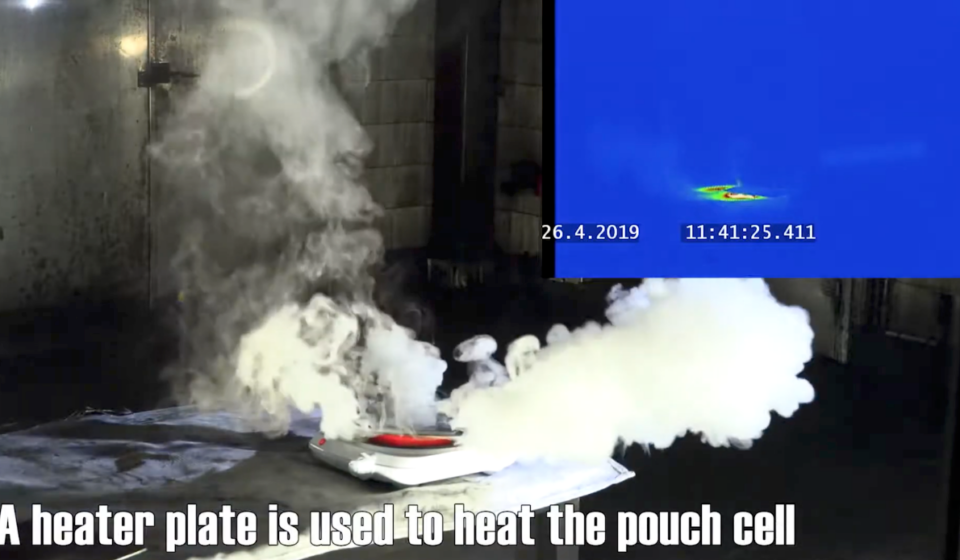
A well-known clean technology publication recently dissected how multiple claims about a novel battery’s chemistry were debunked through rigorous empirical testing. Critics had classified the battery as Nickel Manganese Cobalt (NMC) based on voltage curve analysis – a surface-level signature that, on the surface, appeared compelling. However, when the same battery was subjected to high-temperature stress testing at 100°C for four hours in a professional laboratory, it exhibited none of the hallmark behaviors of NMC chemistry: no gas evolution, no pouch expansion, no exothermic decomposition. An amateur backyard experiment, ironically, provided more decisive evidence than months of theoretical curve-matching.
What This Means for Enterprise Architecture
This case strikes at something I’ve long argued in technology governance circles: classification is not validation. In system architecture, we routinely make foundational decisions – choosing between relational and NoSQL databases, committing to specific API paradigms, or adopting cloud-native stacks – based on behavioral signatures that look like the patterns we recognize. But resemblance is not equivalence.
The voltage curve controversy is a perfect analog for how enterprises often assess emerging technologies. A startup’s architecture might mimic microservice patterns superficially, yet lack the resilience, observability, and independent deployability that define true microservice design. An AI platform might produce outputs that resemble expert analysis, yet its underlying training data may carry biases that surface only under stress conditions – much like the battery that held up under professional thermal testing but would have failed catastrophically had its chemistry been NMC.
The deeper issue is what I’d call the cost of premature classification. When Ziroth’s claims were amplified as “scientists say,” the discourse shifted from empirical investigation to narrative consensus. This mirrors a pattern I’ve observed in enterprise technology reviews where a single vendor’s whitepaper becomes the foundational reference for multi-million-dollar infrastructure decisions. The voltage curve provided a convenient shorthand; the thermal test provided the truth.
There is a critical trade-off here between speed of assessment and depth of validation. Organizations that optimize for speed – riding the hype curve, making quick technology commitments – often accumulate enormous architectural debt when their foundational assumptions prove wrong. Those that invest in rigorous, sometimes slower validation protocols build systems that withstand stress. The backyard experimenters and professional laboratory testers in this battery saga understood something fundamental: test the thing under conditions that would break it, not just conditions where it looks impressive.
The Strategic Takeaway
- Signature matching is a starting point, not a conclusion. Whether evaluating battery chemistry, database behavior, or AI model outputs, behavioral signatures must be corroborated by empirical stress testing before architectural commitments are made.
- Amateur insights can outpace professional narratives when professionals rely on shortcuts. The battery’s true chemistry was revealed by a critic asking a simple, dangerous question that professionals hadn’t tested. In enterprise architecture, the most valuable stress tests are often the ones that challenge assumptions everyone else has accepted.
- Amplification without vetting is an architectural risk. When unvetted claims become consensus, entire technology roadmaps are built on sand. Every CTO should institutionalize mechanisms for independent validation before strategic bets are placed.
- The cost of misclassification compounds. A misidentified battery chemistry is a failed experiment. A misidentified technology stack is years of refactoring, migration, and lost opportunity cost.
Closing Thought
The most dangerous assumption in technology strategy isn’t choosing the wrong tool – it’s being confidently wrong about what tool you’re choosing. The next time a voltage curve looks familiar, ask whether you’ve stress-tested the truth, or just the appearance of it.
About the Author: Sanjeev Sarma is the Founder Director and Chief Software Architect at Webx Technologies. With a core focus on Generative AI integration, Cloud-Native Scalability, and Enterprise Software Architecture, he has spent over two decades driving digital transformation across Northeast India and beyond. Beyond his corporate leadership, Sanjeev is deeply invested in shaping the future of the IT industry. He serves as an Industry Expert on the Board of Studies for Assam Don Bosco University’s School of Technology, advises state technology committees, and actively mentors emerging tech startups at STPI. He brings a unique, dual perspective of high-level enterprise execution and future-ready academic curriculum development.