Architecting Grid Resilience for the 750 GW Energy Storage Pipeline

Title: 750 GW in the Queue – A Boom Misread as Capacity, Not a Symptom of Systemic Friction
The Contrarian Hook
We love big numbers. A headline saying “750 gigawatts of energy storage waiting for grid connection” reads like a market opportunity – but numbers without context are dangerous. A long queue is not the same as operational capacity; it’s a signal that infrastructure, process and governance are not keeping pace with deployment.
Context (the signal)
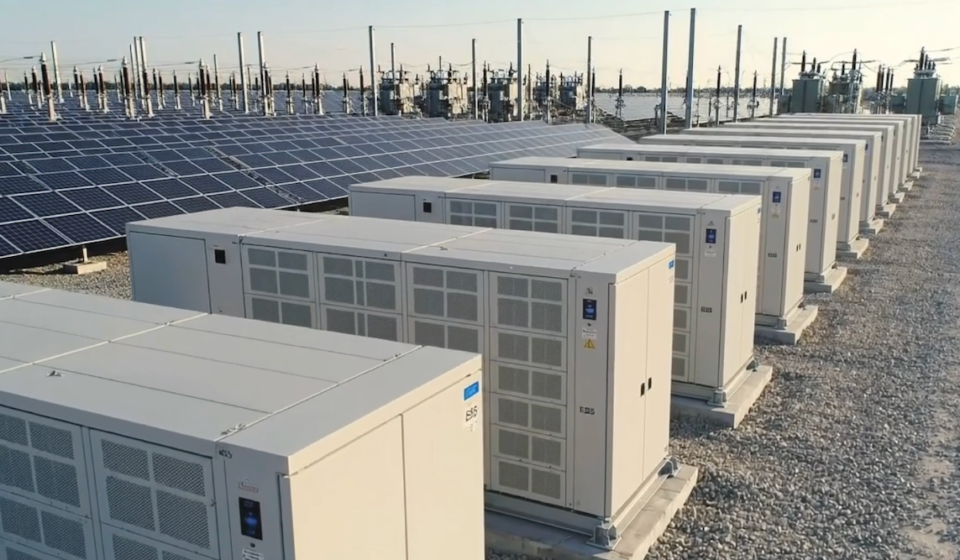
A recent industry write-up highlighted that roughly 750 GW of battery storage projects in the US are queued for grid interconnection, and that only a small fraction of requested capacity historically reaches commercial operation. The story also noted manufacturing shifts and a growing emphasis on domestic supply chains following regulatory changes.
Analysis – what this means for systems, architects and decision makers
The technical lesson here is straightforward: deployment is a system-level problem, not just an equipment problem. Large numbers of battery projects are useful only when they can be integrated reliably and quickly into the grid. The choke points are operational and institutional – interconnection queues, transmission constraints, inconsistent standards, and opaque approval processes – rather than purely technological.
As an enterprise architect, I see the same pattern repeat across domains: when you scale an ecosystem, interfaces fail before components. For grid planners and energy project developers this translates into three critical design imperatives:
-
Reduce friction at the interfaces. Interconnection is an orchestration problem. Standardized data formats, API-driven queue management, and clear, time-bound milestones for study and approval convert a backlogged spreadsheet into a managed workflow. Think of this as moving from ad-hoc RFCs to RESTful contracts – predictable, machine-readable, auditable.
-
Treat storage as a flexible system service, not a siloed asset. Batteries can provide frequency regulation, peak shaving, blackstart support, and capacity firming – but only if market signals and grid control systems can command and remunerate those services. Architecture must enable two-way control and real-time telemetry with robust cyber-resilience and role-based access.
-
Invest upstream in modelling and digital twinning. Many interconnection delays result from uncertainties in power-flow studies and impact analyses. Digital twins, probabilistic grid models, and better scenario orchestration reduce conservative overbuild and slow manual studies.
Supply-chain and regulatory trade-offs cannot be ignored. Moves toward domestic manufacturing – accelerated by rules discouraging certain foreign suppliers – improve sovereignty and reduce geopolitical exposure. They also shift lead-time and cost dynamics, requiring parallel investment in workforce development and factory-scale logistics. For CTOs and planners, that means aligning procurement strategy with long-term operational models rather than short-term asset delivery.
Reliability is a social-technical problem. Events where large loads (e.g., clusters of data centers) disconnect rapidly expose the interdependence of load, generation, and protection settings. Designing for resilience requires coordination between large consumers, grid operators and storage providers: ride-through requirements, fast-acting distributed controls, and shared situational awareness.
Localization – a practical bridge to India and the Northeast
These are not US-only lessons. India’s renewable growth trajectory makes similar bottlenecks likely: grid upgrades, interconnection transparency and local supply chains will matter. For states and regions – including those in Northeast India – the priority should be creating a single source of truth for interconnection status (a sort of Digital Public Infrastructure for grid planning), combined with modular, factory-built BESS units that reduce field commissioning time.
Actionable takeaways
- See queues as symptoms: diagnose process, not just capacity shortages.
- Standardize machine-readable interconnection interfaces and SLAs.
- Design storage into markets and grid-control layers from day one.
- Align procurement with operations: localize manufacturing and skills development where strategic.
- Build shared situational awareness across operators, large consumers and storage providers.
Closing thought
Big numbers excite investors, but building a resilient, decarbonized power system is an exercise in systems engineering, institutional design and patient implementation. The next decade will reward those who master interfaces as much as those who manufacture cells.
About the Author: Sanjeev Sarma is the Founder Director and Chief Software Architect at Webx Technologies. With a core focus on Generative AI integration, Cloud-Native Scalability, and Enterprise Software Architecture, he has spent over two decades driving digital transformation across Northeast India and beyond. Beyond his corporate leadership, Sanjeev is deeply invested in shaping the future of the IT industry. He serves as an Industry Expert on the Board of Studies for Assam Don Bosco University’s School of Technology, advises state technology committees, and actively mentors emerging tech startups at STPI. He brings a unique, dual perspective of high-level enterprise execution and future-ready academic curriculum development.