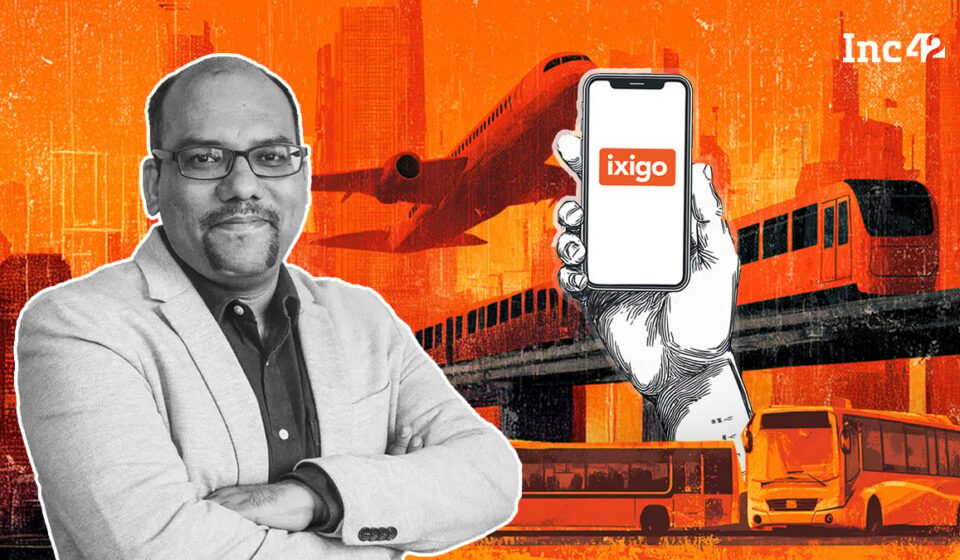
Capital Moves: Refocusing from EV Buses to Scalable Traveltech & AI

Owning the fleet isn’t the same as owning the advantage
We often conflate control of physical assets with sustainable strategic advantage. In mobility and travel tech, the true leverage increasingly sits at the intersection of data, orchestration, and resilient software – not merely on the balance sheet line that reads “fleet.”
Context
ixigo’s parent, Le Travenues, has agreed to sell a material portion of its stake in electric intercity bus operator Fresh Bus, reducing its holding and removing the startup from associate-company status. The move happens alongside ixigo’s broader acquisition push into European OTAs and AI companies, and comes after a period of investment in Fresh Bus and reported operating losses at the startup level.
Analysis – what this tells enterprise architects and founders
-
Asset-light orchestration vs. asset ownership
Digital travel platforms face a recurring strategic choice: own the vehicle (or the supply) or orchestrate many suppliers through software. Owning assets gives control over customer experience end-to-end, but it also imports capital intensity, operational complexity, and heavy regulatory/maintenance responsibilities. For companies like ixigo – whose core competency is demand aggregation, pricing, and distribution – divesting part of an asset-heavy bet can be a rational reallocation of capital toward scaling software, international expansion, and AI capabilities that have higher incremental returns. -
Data is the strategic asset – negotiate it
Selling equity does not need to mean surrendering operational intelligence. Telemetry from EVs (battery health, route performance, passenger patterns), CCTV metadata, and environmental sensors are the inputs for predictive maintenance, dynamic routing, and safety ML models. If you transition away from ownership, protect long-term value via contractual data rights: API access, anonymized telemetry feeds, regular data exports, or even federated learning arrangements where models train on operator infrastructure without raw-data transfer. Architects should bake these requirements into any M&A or divestment playbook. -
Integration and the cost of “buying” capabilities
ixigo’s parallel acquisitions in Europe and AI firms highlight a different risk: rapid capability-accumulation increases integration debt. Expect a heterogenous landscape – different teams, divergent data models, distinct infra stacks. The antidote is discipline: define canonical data models, adopt event-driven contracts, versioned APIs, and a centralized identity and access approach. Prioritize observability and SRE across newly acquired domains to avoid fragile point-to-point integrations. -
IoT, edge, and operational resilience
Running an EV bus platform is a classic cyber-physical system challenge. Reliable OTA updates, secure telemetry, edge inference for CCTV/driver safety, and offline-first behaviors are not optional. For architects, this means an approach that balances cloud-native centralization with selective edge compute and hardened field devices. Security must be treated as a system property – firmware signing, device identity, zero-trust on telemetry channels, and incident playbooks. -
Speed vs. stability: the portfolio trade-off
Financially, stepping back from asset-heavy bets can improve reported margins and free cash for strategic M&A. Technically, it lets the platform focus on its differentiators (UX, marketplace liquidity, ML-driven personalization). But there’s a counterfactual: if owning assets were the only way to secure high-quality data or a unique experience, divestment can cost product differentiation. The right answer depends on whether your strategic moat is orchestration and software, or exclusive physical control.
Regional note – why this matters for India (and Northeast India)
EV intercity services are promising in India’s connectivity gaps, but success depends on grid reliability, charging networks, and localized maintenance – challenges acute in the Northeast’s terrain. Here, partnerships between platform companies and local operators (with clear data contracts and jointly managed ops centers) can unlock scale without untenable capex. Public programs and STPI-led incubators can help cultivate the stack of edge software, local telematics, and service networks necessary for sustainable deployment.
Practical takeaways
- Treat data rights as primary in any buy/sell: define APIs, SLAs, and model-sharing terms.
- Favor modular, event-driven architecture when integrating acquisitions.
- Invest in edge compute, device identity, and firmware security for fleet IoT.
- Quantify the total cost of ownership (tech + ops + regulatory) before owning assets.
- For regional rollouts, pair platform orchestration with local ops partners and infrastructure planning.
Closing thought
Strategic advantage in mobility will belong less to the company that owns the most vehicles, and more to the company that orchestrates the most reliable data-driven experiences.
About the Author: Sanjeev Sarma is the Founder Director and Chief Software Architect at Webx Technologies. With a core focus on Generative AI integration, Cloud-Native Scalability, and Enterprise Software Architecture, he has spent over two decades driving digital transformation across Northeast India and beyond. Beyond his corporate leadership, Sanjeev is deeply invested in shaping the future of the IT industry. He serves as an Industry Expert on the Board of Studies for Assam Don Bosco University’s School of Technology, advises state technology committees, and actively mentors emerging tech startups at STPI. He brings a unique, dual perspective of high-level enterprise execution and future-ready academic curriculum development.