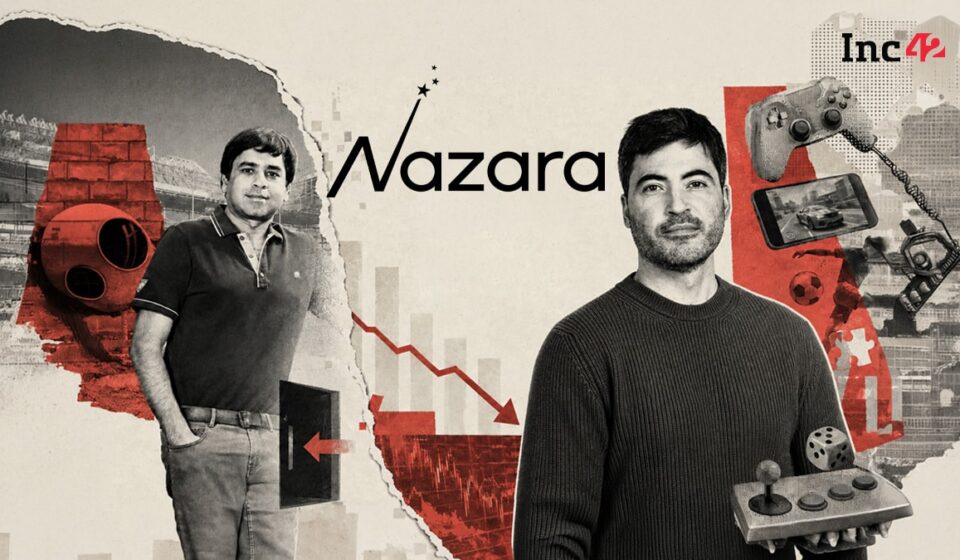
Capital Allocation and CEO Alignment in High-Growth Gaming M&A

We applaud bold strategic moves, but the real test of a deal is not the headline price – it’s the capital architecture that keeps the company running while it builds value.
Why this matters now
Nazara’s decision to buy Bluetile and BestPlay for $303 million, appoint Bluetile’s founder as CEO and absorb a large tranche of payments due over the next 12 months creates a familiar tension: accelerated growth ambitions colliding with constrained liquidity and rising unit economics pressure. Add an unusual personal capital infusion from the incoming CEO and you have a classic corporate-architecture problem dressed up as M&A theatre.
From software architecture to corporate architecture: three parallels
-
Coupling vs. Modularity – When you acquire a business, you’re deciding how tightly to couple its cash flows, product roadmap and costs to the parent. A tightly coupled model (full ownership of cash, centralized funding) gives you control but raises single-point-of-failure risk: if the acquired studio needs extra UA (user acquisition) spend, the parent bears the strain. A more modular approach – ring-fenced P&Ls, independent cash runways, and staged integrations – preserves optionality and reduces systemic risk.
-
Short-term throughput vs. long-term maintainability – Rapid user-growth pushes companies to increase UA and dev spend. This is equivalent to favouring feature velocity over refactoring in software: you might ship impressive growth metrics today, but you accumulate margin erosion and “technical debt” in the form of stalled monetization and declining unit economics. A disciplined capital allocation framework forces choices between immediate scale and sustainable margin expansion.
-
Alignment and governance as APIs – Structural alignment (how earn-outs, buyouts, and executive investments are designed) is an API between founders, management and shareholders. Performance-linked payouts and milestone tranches are contract-level guarantees that map incentives to outcomes; fixed, upfront payments are blunt instruments that transfer risk to the buyer. Similarly, a CEO’s personal investment can be a powerful alignment signal – but without transparent governance (valuation mechanics, vesting, conflict rules), it complicates board independence and minority shareholder protections.
Practical, architectural actions for CTOs, CFOs and founders
- Design a funding mix explicitly as risk layers: what portion is cash on hand, what can be deferred via earn-outs, what can be debt, and what requires equity? Model each path under adverse scenarios (30–50% lower EBITDA) and identify breach points for covenants and runway.
- Insist on a separate, operationally autonomous P&L for the acquired studio for at least 12 months. Require weekly operating metrics (CAC, LTV, payback period, active users, ARPDAU) that feed consolidated stress tests.
- Prefer milestone-linked tranches where possible. They reduce downside and preserve seller incentives to hit product milestones – akin to progressive feature releases tied to QA gates.
- Build an explicit capital allocation committee with product, finance and M&A representation. Treat large investments as architecture decisions with a lifecycle: acquisition → integration → scale → harvest/exit.
- Embed governance when leaders invest personally: disclose valuation, lock-up, vesting, and recusal clauses for related-party decisions.
A note for Indian founders and boards
In markets where capital access oscillates and multiples compress quickly, acquiring a business larger than your quarterly revenue compounds risk. Be surgical: if the target needs burn to get to profitable scale, the buyer must either have surplus dry powder or the discipline to de-risk the deal via contingent payouts.
Takeaways
- View M&A as a systems design problem, not just a financial transaction.
- Protect optionality with modular integrations and milestone tranches.
- Make alignment explicit through clear KPIs and governance guardrails.
- Stress-test every plausible downside and preserve at least 12–18 months of runway under an adverse case.
Closing thought
Ambition is necessary; architecture makes ambition durable.
About the Author: Sanjeev Sarma is the Founder Director and Chief Software Architect at Webx Technologies. With a core focus on Generative AI integration, Cloud-Native Scalability, and Enterprise Software Architecture, he has spent over two decades driving digital transformation across Northeast India and beyond. Beyond his corporate leadership, Sanjeev is deeply invested in shaping the future of the IT industry. He serves as an Industry Expert on the Board of Studies for Assam Don Bosco University’s School of Technology, advises state technology committees, and actively mentors emerging tech startups at STPI. He brings a unique, dual perspective of high-level enterprise execution and future-ready academic curriculum development.