Architecting AI Agents: Prioritizing Outcomes Over Personality

Title: When Personality Meets Purpose: Why AI Companions Must Earn Their Place in Enterprise Workflows
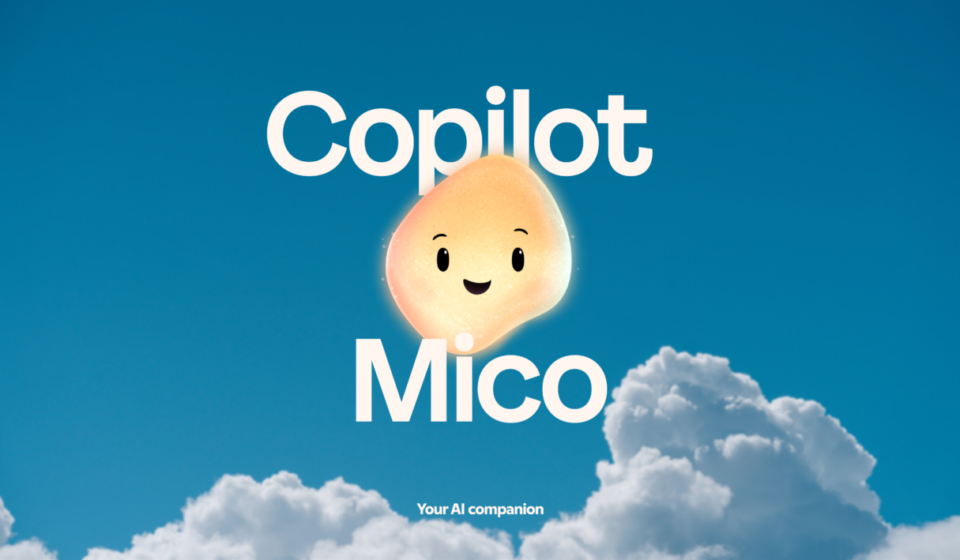
The human impulse to anthropomorphize technology is nothing new. From early desktop assistants to modern “AI companions,” designers have long believed that warmth and personality deepen engagement. A recent product shift – where a prominent AI companion was removed from a core voice experience and reserved for narrower educational features – is a useful reminder that anthropomorphic design is a feature, not a substitute for measurable value.
The core signal
A visible AI persona was pulled back from a mass-facing voice experience and repositioned toward educational scenarios. That decision reflects a broader industry pivot: teams are prioritizing outcome-oriented utility over expressive ornamentation when AI must scale across diverse, high-stakes users.
What this means for enterprise architecture
-
Personality is an interface layer, not the platform. Treat anthropomorphic agents as a detachable UX module. Architect systems so that the persona – animation, voice, emotional state – is configured at the presentation layer and can be removed or substituted without changing core model capabilities, data flows, or governance. Modular design reduces both runtime risk and long-term technical debt.
-
Measure the right KPIs. Engagement is seductive; task completion is not. For enterprises, success metrics must be task-focused (time-to-resolution, accuracy of outputs, completion rates, error recovery) and safety-focused (hallucination rate, policy violations, complaint counts). Warmth should only be shipped when it demonstrably increases those outcome metrics, not merely session length or smile-factors.
-
Build a permissioned persona pipeline. Anthropomorphic agents can increase user trust – or erode it quickly if they overpromise. Separate the persona’s dialogue framing from model responses with a policy-adapter that enforces guardrails (safety filters, provenance statements, opt-in for suggestions). This adapter should add explainability tokens and source attributions before content reaches the user.
-
Operationalize fast A/B experimentation. Personas are product features. Use continuous experiments to validate variants (tone, animation, persistence) across cohorts and tasks. Production-grade telemetry, causality analysis, and rollback mechanisms are mandatory; what delights in lab settings often distracts in 10,000-user deployments.
-
Mind the cost of expressiveness. Animations, synchronized voice, and customized persona states add significant engineering and maintenance cost – often with high compute and storage footprints. For cloud economics and latency-sensitive apps, consider progressive enhancement: basic textual persona by default, richer multimodal presentation on capable devices or paid tiers.
-
Governance and model stewardship scale differently. When a persona makes a claim in a conversational UI, the legal and compliance implications change. Log persona-user interactions in immutable, queryable formats for audits; capture model versioning, prompt templates, and the persona policy that shaped the reply.
The Indian and education angle (why this matters here)
Anthropomorphic agents have clear utility in education and regional language support – areas where India has pressing needs. But in contexts like rural classrooms or multilingual digital public services, the technical approach must be frugal: lightweight persona layers, local-language models or constrained on-device inference, and strict adherence to data-locality policies. If education is the natural home for expressive agents, Indian deployments should prioritize measurable learning outcomes, offline-first designs, and defensible privacy practices.
Actionable takeaways for CTOs and founders
- Decouple persona from core AI: make it a flag-enabled frontend module.
- Define business-level outcome metrics before adding expressiveness.
- Implement a policy-adapter that enforces safety, attribution, and localization.
- Run continuous A/B tests and include rollback paths for UX regressions.
- Optimize for frugal modes (offline/lightweight) where connectivity is limited.
- Maintain detailed logging for governance, auditability, and model lineage.
Closing thought
Personality can enhance AI, but only when it amplifies real human outcomes rather than hiding fragile capabilities – the future of trustworthy AI is earned through results, not charm.
About the Author: Sanjeev Sarma is the Founder Director and Chief Software Architect at Webx Technologies. With a core focus on Generative AI integration, Cloud-Native Scalability, and Enterprise Software Architecture, he has spent over two decades driving digital transformation across Northeast India and beyond. Beyond his corporate leadership, Sanjeev is deeply invested in shaping the future of the IT industry. He serves as an Industry Expert on the Board of Studies for Assam Don Bosco University’s School of Technology, advises state technology committees, and actively mentors emerging tech startups at STPI. He brings a unique, dual perspective of high-level enterprise execution and future-ready academic curriculum development.