Designing Civic Data Infrastructure for Apportionment, Equity, and Privacy

At the end of every data field in a census form sits a human being whose access to healthcare, education, and political representation depends on whether they are counted. When the mechanics of counting change, the architecture of public services changes with them – often in ways that disproportionately harm the most vulnerable.
What happened
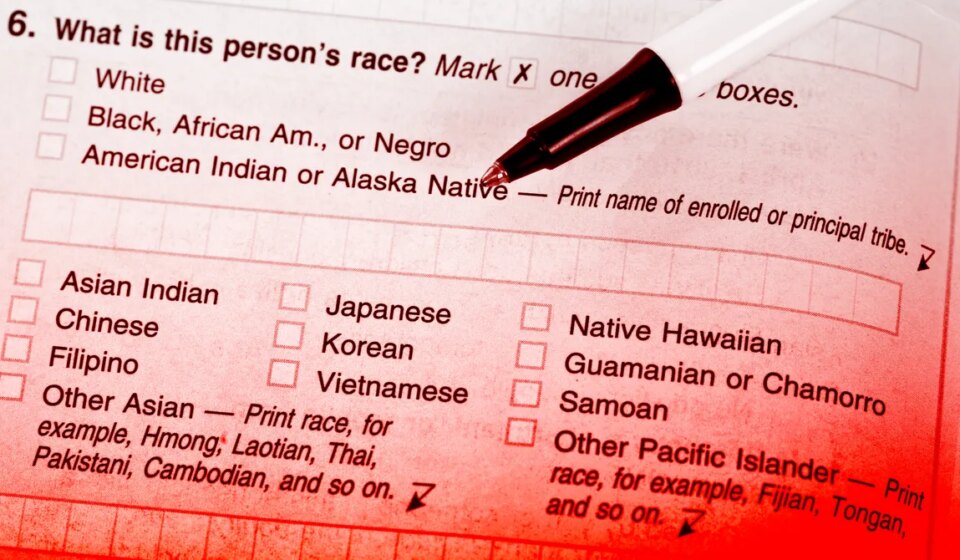
Documents reported by WIRED indicate the Department of Commerce is circulating a proposed rule that would stop collecting certain demographic questions (race, sexual orientation) and would seek to exclude undocumented immigrants from apportionment counts for the 2030 census. The proposal is part of a broader push – including legislative efforts like the COUNT Act and renewed testing of a citizenship question – to redefine who is “counted” and how census data are protected or altered. (wired.com)
Why this matters to architects of public systems
Census data are not neutral raw inputs; they are foundational system requirements. They determine apportionment, formula-based federal funding, and the statistical baselines used to enforce civil-rights protections. Changing what is collected (or whom we include) is equivalent to changing the schema of a national information system – with cascading downstream effects on data pipelines, funding algorithms, and legal claims. The immediate trade-off being argued – privacy/provenance versus completeness and legal inclusivity – is a classic architecture decision that must be made consciously, with explicit acceptance of the downstream costs. (apnews.com)
Technical and governance implications
- Data integrity vs. privacy: Differential privacy was introduced to protect respondents from reidentification, but it also injects statistical noise that changes small-area population figures. Removing privacy protections without a viable alternative risks deanonymization; removing categories or entire populations risks breaking the integrity of policy modeled on that data. Both are architectural failures if not planned with compensating controls. (arstechnica.com)
- Upstream schema changes break downstream contracts: Program allocations, grant eligibility checks, and civil-rights enforcement logic all assume specific demographic fields and a universal headcount. If you change the schema midstream, every consumer of that data needs rework – an expensive, error-prone modernization program for which few budgets are planned. (regulations.justia.com)
- Legal and operational fragility: Attempts to exclude noncitizens from apportionment have already triggered litigation and political conflict; technical teams must therefore design for contested data provenance and chain-of-custody documentation – not just compute efficiency. (apnews.com)
What I would advise CTOs and public-sector architects now
- Treat census outputs as a contractual API: version the schema, document provenance, and publish transformation rules so downstream systems can adapt predictably.
- Invest in privacy-by-design that retains analytical utility: explore hybrid approaches (synthetic data, stratified release schedules, verifiable aggregates) rather than binary choices between noise and exposure.
- Build resilience through data diversification: map and operationalize alternate, independent indicators (administrative records, surveys, satellite/remote sensing where appropriate) to cross-validate allocations and detect anomalous shifts quickly.
- Prepare legal–tech playbooks: coordinate with counsel to ensure that technical choices support defensible audits, litigation responses, and compliance reporting.
A short note for Indian technologists and DPI thinkers
The underlying principle is global: data inclusion determines who receives services. India’s Digital Public Infrastructure and its census exercises show how exclusion or misclassification can distort resource flows at scale. Indian DPI practitioners should watch these debates closely – inclusion, transparent provenance, and robust versioning are essential ingredients whether you’re designing welfare delivery or electoral rolls.
Takeaways
- Counting is a systems design decision with social consequences.
- Privacy and accuracy are not binary; both require engineering trade-offs and transparent governance.
- Any change to census schema requires coordinated modernization of downstream consumers, budgets for migration, and legal defensibility.
- Build alternative data channels and provenance-first pipelines now – litigation and policy shifts are inevitable.
Closing thought
Data architecture is civic architecture: when we decide how to count people, we are deciding what kind of polity we will be.
About the Author: Sanjeev Sarma is the Founder Director and Chief Software Architect at Webx Technologies. With a core focus on Generative AI integration, Cloud-Native Scalability, and Enterprise Software Architecture, he has spent over two decades driving digital transformation across Northeast India and beyond. Beyond his corporate leadership, Sanjeev is deeply invested in shaping the future of the IT industry. He serves as an Industry Expert on the Board of Studies for Assam Don Bosco University’s School of Technology, advises state technology committees, and actively mentors emerging tech startups at STPI. He brings a unique, dual perspective of high-level enterprise execution and future-ready academic curriculum development.