Architecting AI-Native Systems: From Reasoning to Action with Trust

We obsess over speed. We under-invest in trust.
Many conversations about AI-native startups fixate on velocity-how quickly a model can be trained, how fast an engineer can ship with an LLM at their side. That’s necessary, but insufficient. The more important question for founders and architects is: can your system understand, reason, and act in ways that are auditable, affordable, and trustworthy?
Context in brief
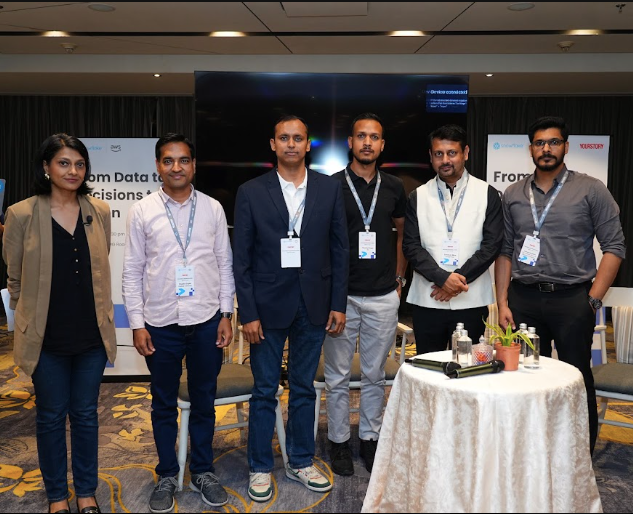
I recently reviewed a panel discussion and demo that crystallised this shift: startups moving from generative experiments to systems that combine reasoning, unified data layers, and workflow orchestration so AI doesn’t just answer questions, it triggers business actions. The takeaways were familiar-productivity gains, tighter customer trust with AI, and a renewed emphasis on outcomes rather than features-but the architectural implications are where the real work begins.
What “AI-native” should mean for architecture
If “AI-native” is more than a label, it should redefine three platform capabilities.
-
Data as the control plane, not just fuel.
AI-native systems need a single, queryable, auditable data fabric where structured and unstructured sources are first-class citizens. This isn’t about stitching tools together; it’s about owning lineage, metadata, and access policies so reasoning agents can justify decisions. For enterprises, that means investing in strong data contracts, feature stores, and tamper-evident lineage so every recommendation can be traced back to sources and transformations. -
Orchestration + Explainability = Operational Trust.
When agents move from “insight” to “action,” orchestration becomes your control plane. Workflows must include explicit human-in-the-loop touchpoints, deterministic decision logs, and explainability layers that translate probabilistic model outputs into business-level rationales. Expect trade-offs: aggressive automation speeds outcomes but increases audit burden. Design for reversible actions, policy gates, and role-specific explanations rather than opaque “confidence scores.” -
ModelOps, but elevated to BusinessOps.
Model lifecycle management cannot live in isolation. Continuous validation, drift detection, and synthetic test harnesses must be embedded in CI/CD pipelines and tied to SLA metrics that matter to the business-fraud false positives, wastage reduction, customer NPS impact. Outcome-based pricing models cited by investors become realistic only when these measurable SLAs are instrumented end-to-end.
People, hiring and the new seniority curve
AI lowers the cost of execution, which slows hiring demand-but raises the bar for senior talent. Junior engineers can ship faster with copilots; senior leaders must define guardrails, interpret edge cases, and design systems that fail safely. I’ve seen this pattern in ecosystem engagements: add AI and the org needs fewer hands for repetitive tasks but more senior people to encode policy, ethics and resilience into the platform.
A practical note for India and smaller cities
The example of voice AI increasing customer confidence in Tier II/III markets is instructive. Local-language understanding, latency tolerances on low-bandwidth networks, and culturally sensitive conversational UX are not nice-to-haves-they are product differentiators in India. For startups serving diverse geographies, prioritise lightweight edge/near-edge inference, robust fallback flows, and human escalation paths that build trust where literacy and connectivity vary.
Concrete takeaways for CTOs and founders
- Start with outcomes, not models: define the business metric you will measure (reduction in waste, transaction confidence, support resolution time) before choosing architectures.
- Build your data fabric with lineage and access controls as first-class features.
- Treat orchestration as the control plane: workflows, gates, reversibility, and audit trails must be designed alongside models.
- Invest in ModelOps that link validation to business SLAs, not just loss curves.
- Reframe hiring: hire fewer generalists and more senior architects who can design guardrails and failure-mode behaviour.
- Localise intelligently: for India, invest in regional language stacks, low-bandwidth UX, and human escalation for trust-critical flows.
- Prepare for outcome-based commercial models by instrumenting for measurement and explainability.
Closing thought
Becoming AI-native is less about the model you adopt and more about the systems you build to make that model a predictable partner in business decision-making-one that can be interrogated, corrected, and relied on.
About the Author: Sanjeev Sarma is the Founder Director and Chief Software Architect at Webx Technologies. With a core focus on Generative AI integration, Cloud-Native Scalability, and Enterprise Software Architecture, he has spent over two decades driving digital transformation across Northeast India and beyond. Beyond his corporate leadership, Sanjeev is deeply invested in shaping the future of the IT industry. He serves as an Industry Expert on the Board of Studies for Assam Don Bosco University’s School of Technology, advises state technology committees, and actively mentors emerging tech startups at STPI. He brings a unique, dual perspective of high-level enterprise execution and future-ready academic curriculum development.