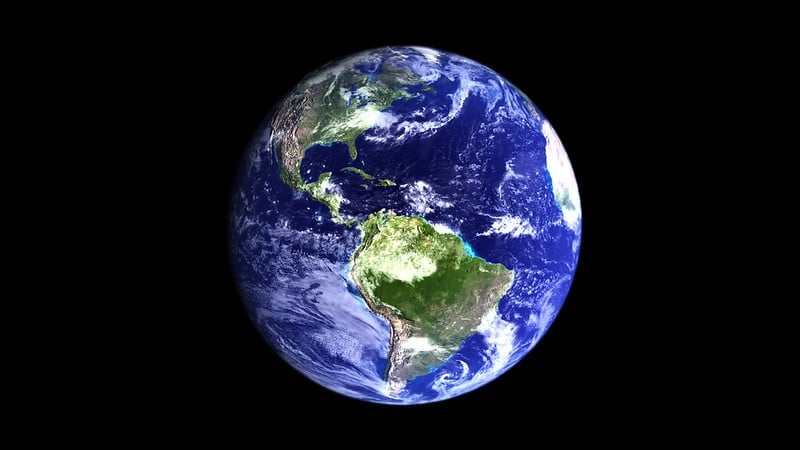

Scientists who monitor Earth’s rotation say a recent run of unusually short days may be easing: the International Earth Rotation and Reference Systems Service (IERS) projects that the shortest day of 2026 will fall on July 26, 2026 and will be about 0.65 milliseconds shorter than the standard 24‑hour day. While Earth is still rotating slightly faster than its long‑term average, the projected difference is much smaller than recent extremes and further observations are needed to confirm a lasting slowdown.
A standard day is exactly 86,400 seconds, but actual day length fluctuates by tiny fractions of a second because of movements inside Earth, changing winds and oceans, and the moon’s gravitational pull. Scientists first noticed a clear shift in 2020, when 28 of the shortest days on record were measured since atomic clocks began tracking time precisely. The trend peaked on July 10, 2025, when Earth completed a rotation 1.37 milliseconds faster than 24 hours — the shortest day recorded.
The IERS, the agency that keeps coordinated universal time aligned with Earth’s rotation, produces these projections so engineers and timekeepers can prepare systems that require extreme timing accuracy. Even millisecond‑level shifts matter for satellite navigation, telecommunications, high‑frequency financial trading and atomic‑clock networks, all of which depend on tightly synchronized timestamps.
Leonid Zotov, a geodesy specialist at Moscow State University, said the latest measurements indicate that “the deepest minimum over the past decade has been passed: Earth has passed its highest velocity,” suggesting the period of record‑breaking speed may already be behind us. Scientists caution, however, that short‑term fluctuations are common and more data are needed to establish a definitive trend.
Multiple natural processes drive these changes. Over geological time the moon’s tidal friction gradually slows Earth’s spin, while short‑term variations arise as mass is redistributed in the planet’s liquid outer core, oceans and atmosphere and as the moon moves in its orbit. Climate change adds a growing influence: melting glaciers and polar ice sheets move water toward the equator, altering Earth’s moment of inertia — a bit like a figure skater extending their arms to slow a spin — and tending to slow rotation.
Because of these changing forces, timekeepers briefly considered an unprecedented “negative leap second” — removing a second from Coordinated Universal Time — when Earth sped up. The projected slowdown for July 2026 reduces the immediate likelihood of that change, providing temporary relief to engineers who must keep global digital infrastructure synchronized with the planet’s subtle but consequential shifts in rotation.
Original Source: https://greekreporter.com/2026/07/25/earth-fast-rotation-shortest-day/
Category:
Tags:
Publish Date: 2026-07-25 02:31:00