
The central government has appointed T. K. Anil Kumar as the new School Education Secretary as India moves into a critical phase of education reform. A 1995 Karnataka‑cadre IAS officer, Kumar was previously Additional Secretary in the Ministry of Rural Development. His appointment comes just after the five‑year mark of the National Education Policy (NEP) 2020, ushering in what officials describe as the most difficult stage of its implementation.
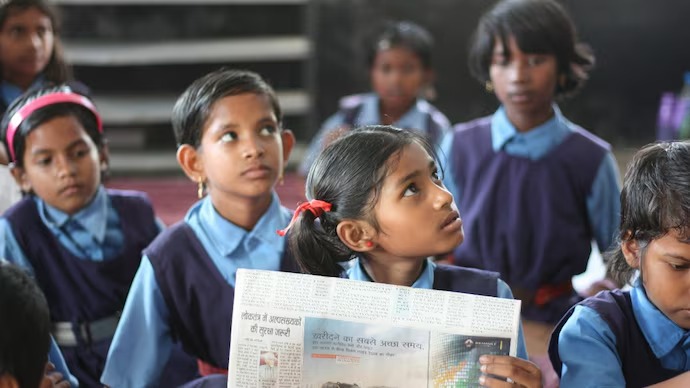
Kumar inherits responsibility for the world’s largest school system: roughly 24.7 crore students and about 14.7 lakh schools, according to the source. The immediate priority is not policy announcement but translating reforms into classroom practice across India’s diverse states and contexts.
Key tasks awaiting the new secretary include finalizing rollout of NEP‑driven changes such as a restructured curriculum that emphasizes skill development and experiential learning over rote memorization. Textbooks based on the new syllabus have been printed, yet inter‑state curriculum differences and a significant shortage of trained teachers make uniform nationwide implementation a major challenge.
The Central Board of Secondary Education’s (CBSE) three‑language policy and board exam reforms are also high on the agenda. The CBSE now requires students from classes VI to IX to learn three languages, including two Indian languages, a rule that has faced opposition from states such as Tamil Nadu and exposed a lack of trained language teachers in many schools.
Digital assessment systems for board examinations must be stabilised as well. Recent digital evaluation drives suffered technical problems — unclear scans of answer sheets and instances of missing pages — underscoring the need for more reliable, transparent and accurate digital marking processes going forward.
Enrollment figures have risen, but learning outcomes remain a concern. Policy reports cited in the source show higher dropout rates at the secondary level compared with primary grades. Addressing these gaps will need not only more teacher appointments and stronger teacher training but also expanded digital and AI‑enabled learning tools. Crucially, many rural schools still lack dependable electricity, internet access and computers, limiting the reach of digital initiatives.
The mandate for the new School Education Secretary is clear in the source: ensure that government schemes, policies and regulations do not remain confined to paper but are implemented effectively on the ground. Converting announced reforms into measurable classroom improvements will be the defining challenge of T. K. Anil Kumar’s tenure.
Original Source: https://assam.nenow.in/new-education-secretary-takes-charge-will-real-change-come-to-the-education-system/
Category: Popular Stories,দেশ,শিক্ষা,শীর্ষ সংবাদ
Tags:
Publish Date: 2026-07-24 11:16:00