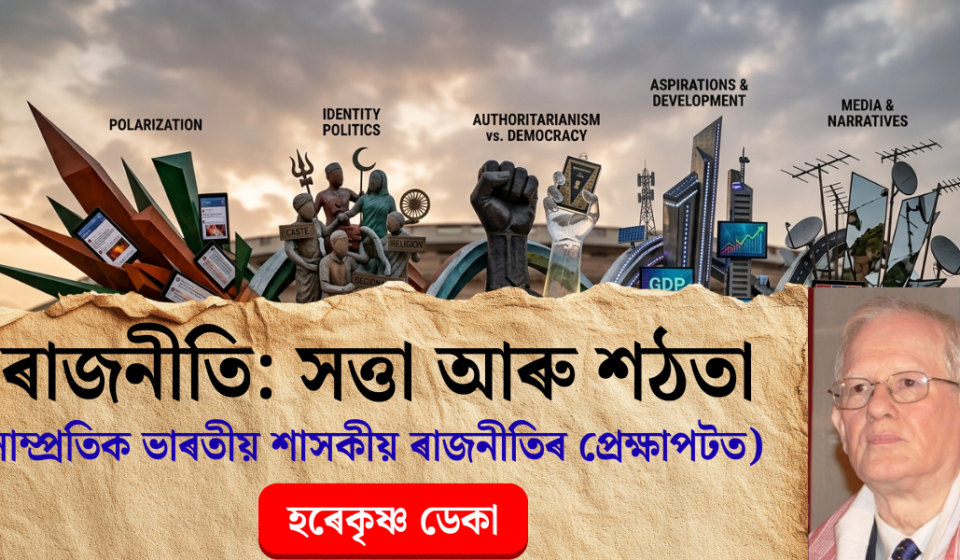

Politics is meant to be the art of managing public life — not merely the exercise of power, but the pursuit of justice and equality. Yet when politics devolves into a numbers game for power, its essence is often smothered by cunning. The piece warns that contemporary Indian politics increasingly sacrifices moral purpose to tactical calculation, turning strategy into doctrine and hollowing out the public good.
The article contrasts two long-standing strands in Indian political thought: the pragmatic, strategy-driven lessons of Kautilya’s Arthashastra, which stress tactics such as alliance, reward, punishment and subterfuge, and the moral, means-focused politics associated with Gandhi, which emphasizes purity of means and ends. It argues that today’s politics risks prioritizing pragmatic wins over ethical governance, with tactics replacing principles.
A defining feature of modern politics, the piece says, is the rise of a post-truth environment where emotion often outweighs evidence. Policy debates increasingly give ground to emotional messaging rather than data-driven reasoning. Social media algorithms, through personalized information feeds, fragment public opinion and create echo chambers that amplify like-minded views while excluding dissenting voices.
Institutions that sustain democracy are also under strain, the article contends. Controversies surrounding the impartiality of election bodies, investigative agencies (ED, CBI, IT) and even the highest courts have raised questions about democratic balance. When investigative agencies appear selective in their targets or legislatures favor simple majority rule over deliberative debate, public trust in the rule of law and parliamentary tradition weakens.
On the economy, the commentary sketches a dual picture. There are clear achievements — expanded digital infrastructure such as UPI, highway construction and large welfare schemes. Yet these coexist with persistent, everyday hardships, particularly among youth, and what is described as a K-shaped recovery: gains concentrated among the wealthy while middle- and lower-income groups stagnate. A lack of transparency in official statistics and promotional rhetoric that masks harsh realities amount, the piece says, to another form of political deception.
The article also warns about the politicization of religion and nationalism. While patriotism can be unifying, when it is turned into a tool to suppress opponents it becomes intolerance. Treating religious identity as electoral capital weakens social trust and frays communal bonds.
As a corrective, the piece calls for vigilant citizenship. Democracy is not only a five-year voting cycle but a continual practice requiring courage to question blind loyalty, a media freed from the role of government mouthpiece to act as watchdog, and a living commitment to constitutional values. Only a politics of being — where power is subordinate to the dignity and rights of each citizen — can defeat the cunning that now threatens democratic life.
Finally, the article notes that a movement named the Kakoroch Janata Party has moved from strong digital support to street mobilization, drawing young people protesting widespread, allegedly conspiratorial corruption in examination systems. The government’s attempts to suppress it may temporarily push the movement underground, but the piece warns that heavy-handed repression and the sheltering of such conflicts under religious fervor could make containment increasingly difficult and potentially escalate into a broader movement.
Original Source: https://assam.nenow.in/harekrishna-deka-writes-on-the-new-political-trend/
Category: অভিমত,অসম,উত্তৰ-পূব,দেশ,শীর্ষ সংবাদ
Tags:
Publish Date: 2026-07-14 11:42:00