Architecting Hybrid Aerial-Aquatic Systems for Scalable Ocean Sensing

A decade-long lens: why a robot that can both dive and fly matters more than the gadget itself
We tend to celebrate devices for what they do; the smarter question is what new system they make possible. A robot that can move seamlessly between air and water isn’t just a cool engineering demo – it’s a signal that the boundary between sensing domains is dissolving. That shift has deep implications for how organisations design observability, data pipelines, and resilient field operations.
What sparked this note
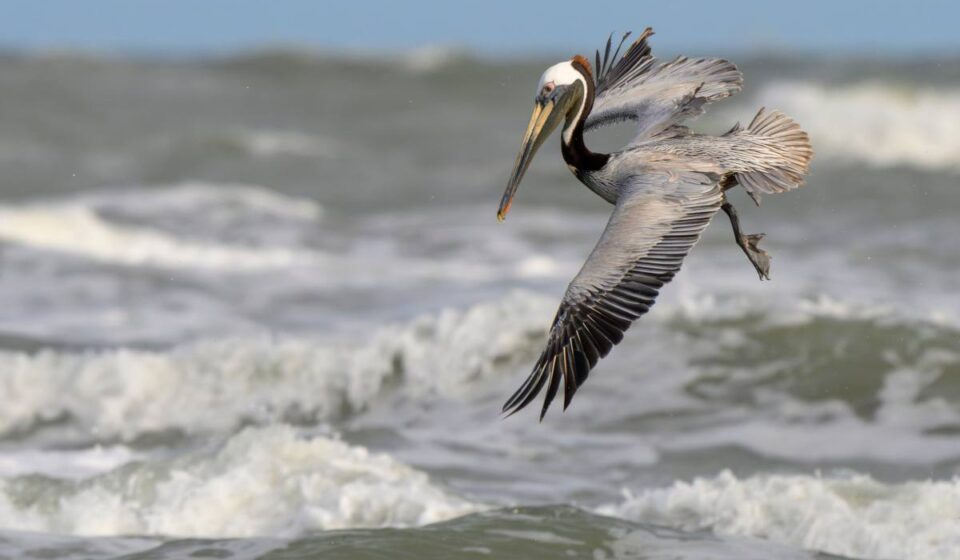
I recently read about a collaborative research project from MIT and EPFL that produced a lightweight flapping-wing vehicle capable of plunging underwater, collecting measurements, and then breaking the surface to continue flying. The team focused on mechanical adaptation (replaceable wings/tails), hydrophobic surface treatments, and the control trade-offs required to transition between two very different fluids: air and water.
Why this matters to architects and CTOs
-
Multi-domain sensing changes system assumptions. Traditional sensor fleets are single-domain: buoys sample the sea, drones sample the air, satellites sample from orbit. Aerial‑aquatic platforms collapse those domains into a single agent. Architecturally, that means data arrives with new temporal and contextual density – you may get frequent, localized vertical profiles (air→surface→subsurface) from a single platform. Back-end systems must therefore support richer metadata, new validation rules, and fusion across modalities (pressure, salinity, acoustic, optical) without manual reconciliation.
-
Edge-first compute becomes essential. Payload, weight and energy constraints on such vehicles make heavy uplink impractical. Expect more pre-processing, anomaly detection, and summarisation at the edge. For enterprises, that translates to designing canonical edge models, secure OTA updates, and runtime contracts that define what “processed” means before data leaves the vehicle.
-
Materials and mechanical design drive data quality. Progress in hydrophobic coatings, flexible actuators and modular control surfaces isn’t just hardware progress – it’s an investment in repeatability. If sensors remain fouled by water or mechanical failure rates are high, the downstream analytics pipeline becomes brittle. Investing in diagnostics, remote health telemetry, and digital twins of vehicle dynamics will reduce operational debt.
-
Communications and resilience are non-trivial. These platforms will operate in noisy RF, contested weather, and over wide areas. Architectures must incorporate intermittent connectivity patterns, opportunistic data drops (store-and-forward), and secure handshakes to shore gateways. Design for graceful degradation: partial metrics are better than none, but they must be annotated.
-
Ethics, regulation and wildlife impact are first‑class constraints. Deploying machines that mimic birds raises both regulatory and conservation questions. Enterprise programs must budget for permitting, environmental impact assessments, and community engagement – especially where those systems will operate near protected habitats or in small-scale fisheries.
Practical bridges to deployment
For CTOs and research leads thinking about pilots:
- Build modular data contracts now: define payload, metadata, health telemetry, and provenance. Make them immutable across firmware versions.
- Prioritise sim-to-field validation: use digital twins to stress-test control policies before exposing platforms to wildlife or human activity.
- Design the ingestion layer for partial, asynchronous data; avoid brittle schemas that assume continuous telemetry.
- Partner with domain agencies (oceanography, fisheries, coast guards) early to align on use cases, KPIs and regulatory needs.
A note for India (where it genuinely applies)
This class of platform is relevant beyond open oceans. India’s estuaries, mangrove fronts (e.g., Sundarbans), large river systems (Brahmaputra basin) and coastal fisheries present hard-to-reach environments where frequent, low-cost sampling would be valuable for water quality, pollution tracking, and disaster response. A pragmatic pathway is localised pilots tied to state research labs and community co-ops: start small, measure impact, iterate on cost engineering and maintainability.
Key takeaways
- The core principle: collapsing sensing domains changes how data must be modelled, validated and acted upon.
- Design for edge-first processing, intermittent connectivity, and modular hardware to reduce operational debt.
- Make environmental/regulatory strategy part of your technical roadmap.
- Pilot in partnered, well-scoped locations before scaling; use digital twins to reduce risk.
Closing thought
The elegant engineering of a bird-like vehicle is interesting; the more important conversation is how that engineering forces us to rethink resilient, modular observability systems that operate where humans can’t – and what new decisions those systems will enable.
About the Author: Sanjeev Sarma is the Founder Director and Chief Software Architect at Webx Technologies. With a core focus on Generative AI integration, Cloud-Native Scalability, and Enterprise Software Architecture, he has spent over two decades driving digital transformation across Northeast India and beyond. Beyond his corporate leadership, Sanjeev is deeply invested in shaping the future of the IT industry. He serves as an Industry Expert on the Board of Studies for Assam Don Bosco University’s School of Technology, advises state technology committees, and actively mentors emerging tech startups at STPI. He brings a unique, dual perspective of high-level enterprise execution and future-ready academic curriculum development.