Architecting Connected Luxury Appliances: Balancing UX, Scale, and Trust

When a countertop appliance becomes a networked, voice‑controlled, AI‑assisted device, it stops being a gadget and starts behaving like an endpoint in a distributed system. That shift is what matters far more than whether it makes the perfect chewable ice.
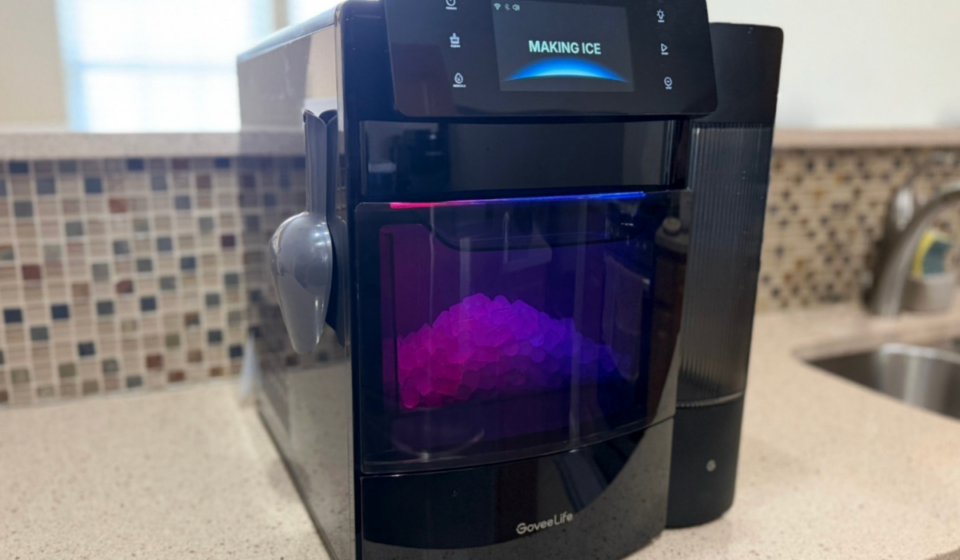
A recent review of a premium smart nugget-ice maker highlighted features now common across consumer IoT: mobile app control and scheduling, voice-assistant integration, embedded edge‑AI for noise and process management, real‑time telemetry, and ambient lighting as a UX layer. Those elements read like a compact case study in modern embedded systems design – and they carry lessons every CTO, enterprise architect, and product leader should internalize.
Why a connected appliance is an architecture problem
We tend to treat household devices as isolated products, but the minute they expose control surfaces (apps, voice, APIs) they participate in a larger socio‑technical system. That raises questions of identity, trust, lifecycle and service model:
- Identity & provisioning: Each device is a networked identity. Secure onboarding, unique device certificates, and least‑privilege credentials are as necessary for a kitchen appliance as for an industrial sensor. Weak provisioning is an attack surface that scales with device counts.
- Local vs cloud: App control and scheduling often rely on cloud services; yet features like scheduling or safety interlocks should survive cloud outages. Designing a local‑first control plane with optional cloud augmentation reduces operational fragility.
- Edge AI tradeoffs: On‑device models (e.g., to detect vibration/noise and trigger defrost cycles) lower latency and improve privacy, but they introduce constraints: model size, inference budgets, thermal impact and the need for robust model‑update pipelines.
- Telemetry and privacy: Real‑time bin-level info or usage patterns are useful for UX and predictive maintenance – and tempting to monetize. Architects must balance product analytics against minimising personally identifiable telemetry and keeping transparent consent flows.
- Continuous service mindset: Appliances are no longer one‑time purchases; they require OTA updates, long tail security support, supply chains for consumables, and clear end‑of‑life plans. This is a platform problem, not merely a manufacturing one.
Design principles I recommend for product and enterprise teams
These principles apply whether you’re shipping consumer appliances or deploying sensors across an enterprise campus:
- Design for graceful degradation. Define a minimal offline feature set and ensure safety and critical operations don’t depend on external services.
- Build a secure device identity lifecycle. Automate secure provisioning, certificate rotation, signed firmware, and rollback mechanisms into CI/CD for devices.
- Treat edge models as first‑class artifacts. Optimize for tiny, auditable models; maintain model registries; and include metrics for drift and performance in the telemetry stream.
- Minimise and monetize responsibly. If you collect operational telemetry, keep it aggregated and anonymized by default; make opt‑ins explicit and valuable to users (e.g., predictive maintenance that saves cost).
- Plan for long life and circularity. Provide spare parts, clear descaling/maintenance workflows, and documented upgrade/retirement paths to reduce e‑waste and reputational risk.
- Favor interoperability and standards. Where feasible, adopt or support common protocols to avoid vendor lock‑in and improve composability across ecosystems.
What this means for enterprise architecture
Consumer trends presage enterprise patterns. The same expectations for instant orchestration, voice or mobile control, and opaque AI behaviors will appear in smart offices, healthcare devices, and industrial edge deployments. Enterprises must therefore mature practices around device governance, telemetry governance, and cross‑domain incident response – otherwise small appliances will become the weak link in much larger architectures.
Takeaways
- A connected appliance is a distributed system: design for identity, resilience, and maintenance.
- Edge AI improves UX but increases lifecycle complexity; treat models as code.
- Privacy-by-default and minimal telemetry are both ethical and pragmatic.
- Long-term support and circularity should be part of the product’s SLA.
- Interoperability and local‑first capabilities reduce dependency risk.
We should stop thinking of smart home gadgets as isolated luxuries and start treating them as early examples of persistent, distributed services. The lessons are directly transferrable to enterprise and public‑sector deployments – if we pay attention now, we can avoid repeating the same mistakes at much larger scale.
About the Author: Sanjeev Sarma is the Founder Director and Chief Software Architect at Webx Technologies. With a core focus on Generative AI integration, Cloud-Native Scalability, and Enterprise Software Architecture, he has spent over two decades driving digital transformation across Northeast India and beyond. Beyond his corporate leadership, Sanjeev is deeply invested in shaping the future of the IT industry. He serves as an Industry Expert on the Board of Studies for Assam Don Bosco University’s School of Technology, advises state technology committees, and actively mentors emerging tech startups at STPI. He brings a unique, dual perspective of high-level enterprise execution and future-ready academic curriculum development.