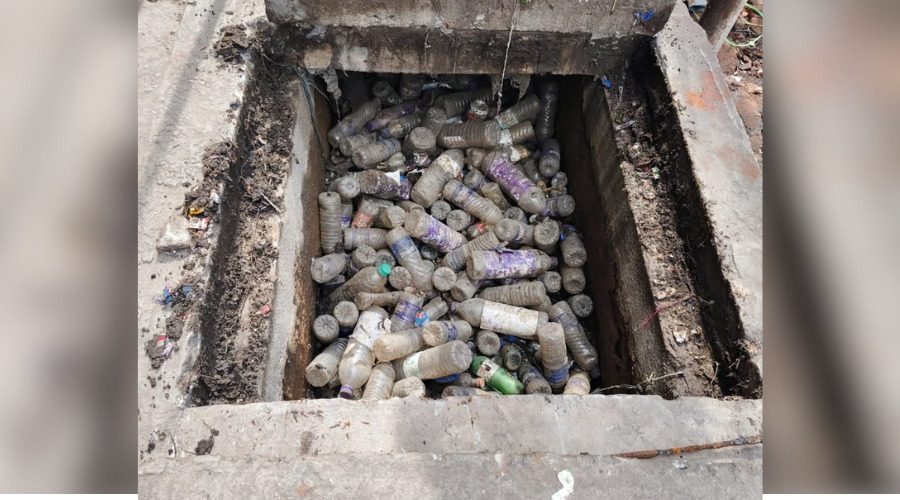

Every monsoon, streets across Guwahati turn into waterlogged channels, traffic grinds to a crawl and residents face hours of disruption — problems civic authorities increasingly say are as much self-inflicted as weather-driven. Plastic bottles, food wrappers, polythene bags and household waste routinely dumped into roadside drains are choking the city’s drainage network, turning ordinary rain into localized flooding in areas such as Hatigaon, Chandmari, Anil Nagar, Rukminigaon and parts of Zoo Road.
“Every day, people can be seen throwing plastic waste into drains without considering the consequences. When drains are clogged with plastic, rainwater has nowhere to flow and the water then spills onto roads and residential areas, creating the very flooding that people later complain about,” said Six Mile resident Meghna Medhi.
Residents and civic workers say the problem is behavioural as much as technical. “We often blame the government when roads are flooded, but many of us are equally responsible. People throw garbage from vehicles, dump waste near drains and expect the city to remain clean. Unless citizens change their habits, the problem will continue,” said Pranjal Deka of Hatigaon. In Chandmari, Rumi Das added that public indifference persists even where infrastructure exists: “Dustbins are available in many places, yet people still choose to throw plastic cups, bottles and packets into drains. We cannot expect a drainage system to function properly if we keep treating it like a garbage bin.”
Blocked channels become acute during prolonged rain, creating bottlenecks across multiple neighbourhoods at once. Civic teams report that even freshly cleaned drains can clog again within days, leaving municipal workers and residents frustrated.
Guwahati Municipal Corporation Mayor Mrigen Sarania acknowledged the scale of the challenge, calling it an “uphill battle.” Despite regular cleaning drives and penalties ranging from Rs 500 to Rs 5,000 for dumping waste into drains, he said, “We clean one area, and waste begins accumulating in another. Ultimately, awareness and public cooperation are critical if we want to keep the drainage system functional,” noting the difficulty of managing behaviour across nearly 20 lakh residents.
GMC’s Swachh Abhiyan 2.0 aims to shift ownership to communities by involving resident welfare associations, development committees and self-help groups, and by offering incentives to localities that keep drains and surroundings waste-free. “Cleanliness cannot be achieved by the municipal corporation alone. Through Swachh Abhiyan 2.0, we want every locality to take ownership of its environment and take pride in keeping it clean,” Sarania said.
As Guwahati braces for another monsoon, authorities can expand cleaning operations and enforce fines, but residents and neighbourhood groups will ultimately determine whether the city’s drainage system copes or collapses under avoidable waste. The drains can only do so much; the rest depends on people’s behaviour.
Original Source: https://assamtribune.com/guwahati/guwahatis-real-flood-problem-isnt-monsoon-or-drainage-its-littering-1612192
Category: Guwahati,Featured,More
Tags:
Publish Date: 2026-05-30 16:01:00