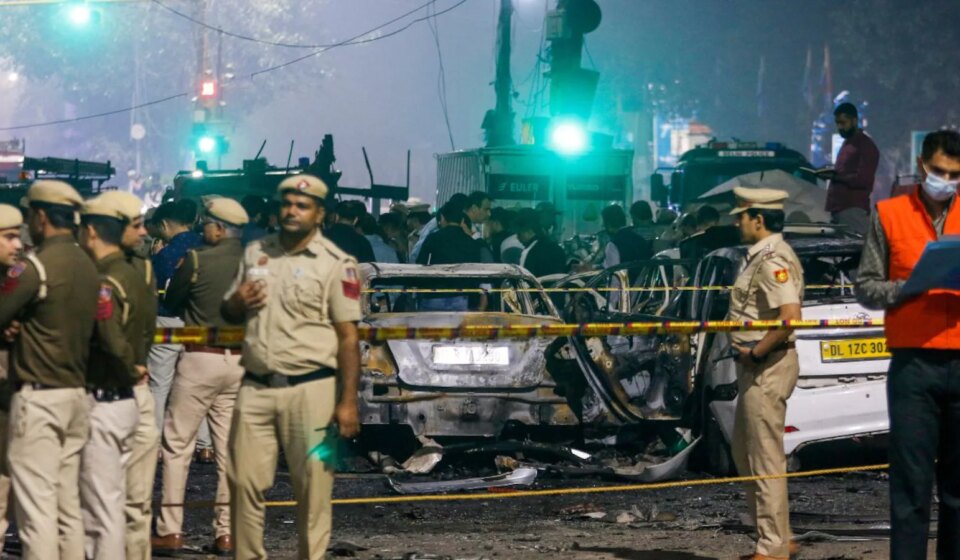

The National Investigation Agency (NIA) says its probe into the Red Fort car blast has revealed that the main suspect, Dr Umar Un Nabi, used a false identity to buy specialised chemicals and equipment and set up a makeshift explosives laboratory in his flat near Al Falah University in Faridabad. Dr Umar, who was driving the explosives-laden vehicle that detonated on November 10, 2025, and died in the blast, is accused of sourcing materials and experimenting at home before the high‑intensity IED attack that killed at least 11 people and injured several others.
Key evidence includes a delivery challan dated September 25, 2024, from a Mumbai trader recording the sale of a mixed metal oxide (MMO)‑coated titanium anode, a specialised electrode used in electrolysis. Interrogation and forensic work indicate Umar carried out electrolysis on a salt solution in his flat to produce chlorates and perchlorates — chemicals commonly used in fireworks and improvised explosives. Investigators recovered documentation showing he researched bomb‑making from both online and offline sources and performed experiments to create a prototype explosive material.
The NIA says Umar hid his purchases behind a fake identity — an account under the name Rahul Bhat (also reported as Rahul Bhatt) on the IndiaMART platform — and enquired about items such as fertiliser bags, acetone, anodes and other chemicals. In August 2024, Umar reportedly transferred about Rs 25,000 via PhonePe to a Mumbai shopkeeper, who couriered the goods to an address just outside Al Falah University where Umar collected them in person. He later negotiated for ten more anodes, a purchase that was not completed after security agencies disrupted the alleged module.
The agency has linked the group to Ansar Ghazwat‑ul‑Hind (AGuH), an organisation said to be affiliated with Al‑Qaeda in the Indian Subcontinent (AQIS). The investigation also found that Umar and co‑accused Dr Muzammil Shakeel travelled to Ahmedabad on April 12, 2025, to obtain precursor chemicals; they returned the next day after offering prayers locally. Radical jihadist literature and documents on explosives manufacture were recovered from the accused’s mobile phones.
The NIA filed a chargesheet of roughly 7,500 pages on May 14, 2026, naming ten accused. Investigators say the case underscores how online marketplaces, digital payments and readily available chemical knowledge can be exploited to assemble lethal devices from small, clandestine home laboratories.
Original Source: https://www.ndtv.com/india-news/how-red-fort-blast-suspect-turned-faridabad-flat-into-mini-bomb-factory-11551798#publisher=newsstand
Category:
Tags:
Publish Date: 2026-05-27 00:32:00