Architecting Physical AI for Medically Tailored Meal Programs

We obsess about whether AI will take our jobs. The more interesting-and immediately actionable-question is where automation can be used not to replace people, but to solve chronic capacity gaps that undermine service quality.
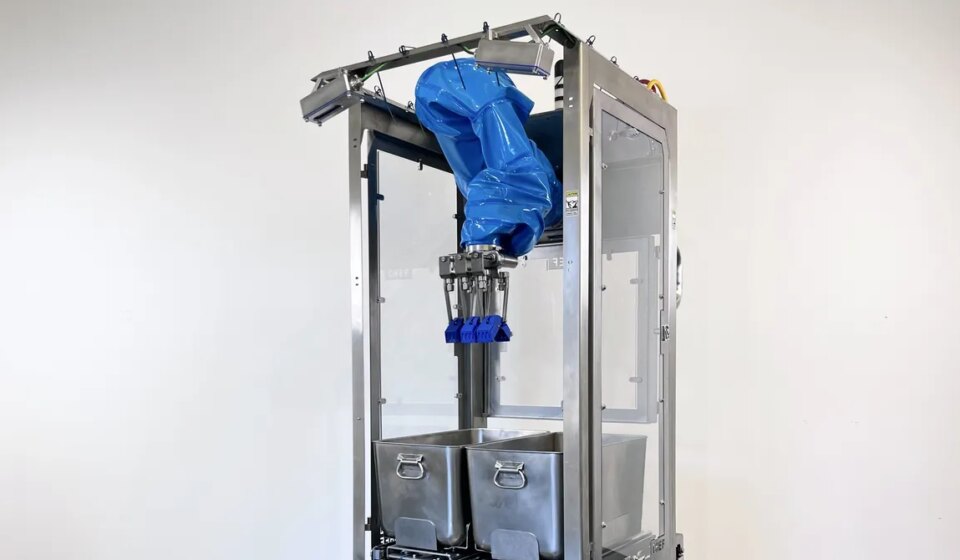
A recent case where automated plating robots were deployed to help a nonprofit assemble medically tailored meal boxes highlights that pivot. Volunteers were scarce, the meals required per-recipient customization, and the organization chose a subscription model to bring physical AI into a tightly constrained social service workflow. That simple decision surfaces a set of architectural, operational, and ethical issues every CTO, founder or public-facing technologist should be thinking about.
Why this matters for enterprise and civic architectures
Physical AI (robotics + on-device intelligence) is now a systems problem, not a gadget problem. Integrating robots into an operational workflow-especially one that handles sensitive dietary and medical constraints-creates a new stack:
- Sensors and edge compute for reliable perception and safety.
- An orchestration layer that translates care plans (dietary rules, allergies, nutrient targets) into deterministic assembly tasks.
- Inventory and logistics integration so what the robot needs is actually available, and substitutions are transparent and auditable.
- Data governance and privacy controls when patient or beneficiary profiles drive meal composition.
- Maintenance, spare parts and OPEX planning for long-term uptime.
Each layer introduces trade-offs: edge vs cloud for latency and privacy, closed vendor stacks vs modular open interfaces for avoidable lock-in, and high-capital robotics vs robotics-as-a-service models that convert CAPEX to OPEX.
Architectural implications and trade-offs
-
Safety and human-in-the-loop: In care scenarios, treat robots as specialized tools inside a human-supervision envelope. Define explicit escalation paths when the robot encounters anomalies-ingredient mismatch, missing package, or ambiguous dietary instruction. Instrument every action with auditable logs tied to beneficiary IDs.
-
Model lifecycle and sim-to-real: Perception models that work in labs often fail in cluttered, variable kitchens. Budget for continual model retraining, domain-specific data collection, and robust sim-to-real validation. That implies storage, compute and MLOps processes that many nonprofits don’t currently have.
-
Data sovereignty and compliance: Dietary and medical needs can be Protected Health Information depending on jurisdiction. Design for minimal data transfer, anonymization, and clear consent flows. Prefer edge-first processing where possible to reduce regulatory surface area.
-
Total cost of ownership and procurement: Subscription robotics can lower upfront barriers-but introduces dependency and long-term recurring costs. Negotiate SLAs for uptime, parts replacement, and local maintenance. Factor local technical capacity into procurement choices.
Localization: what this means beyond Silicon Valley
The underlying lesson is universal. In India’s civic ecosystems-hospitals, midday-meal programs, elder-care kitchens-the same constraint appears: high variability in demand, tight budgets, and the need for customization. The appropriate response is not always high-end automation but modular, frugal automation combined with local service networks: simpler mechanized aids for repetitive tasks, open hardware kits that local workshops can support, and skills programs that reskill volunteers into machine operators/maintainers. This creates local jobs while improving throughput and quality.
Practical takeaways for architects and founders
- Start small with a safety-first pilot that defines measurable KPIs (accuracy of assembly, throughput, error rate, beneficiary satisfaction).
- Design open interfaces: orchestration APIs, telemetry standards, and clear handoff protocols so you can swap components without a forklift change.
- Build human-in-the-loop controls from day one; automation should amplify, not absolve, human accountability.
- Treat maintenance and spare parts as part of the product you are procuring-not an afterthought.
- Align funding models: explore blended finance (grants + subscription) for nonprofits to avoid carrying unsustainable OPEX.
Closing thought
The most valuable role for physical AI in public-serving contexts is not to replace human empathy, but to make it scalable and consistent-so that scarce human attention is spent where it matters most.
About the Author: Sanjeev Sarma is the Founder Director and Chief Software Architect at Webx Technologies. With a core focus on Generative AI integration, Cloud-Native Scalability, and Enterprise Software Architecture, he has spent over two decades driving digital transformation across Northeast India and beyond. Beyond his corporate leadership, Sanjeev is deeply invested in shaping the future of the IT industry. He serves as an Industry Expert on the Board of Studies for Assam Don Bosco University’s School of Technology, advises state technology committees, and actively mentors emerging tech startups at STPI. He brings a unique, dual perspective of high-level enterprise execution and future-ready academic curriculum development.