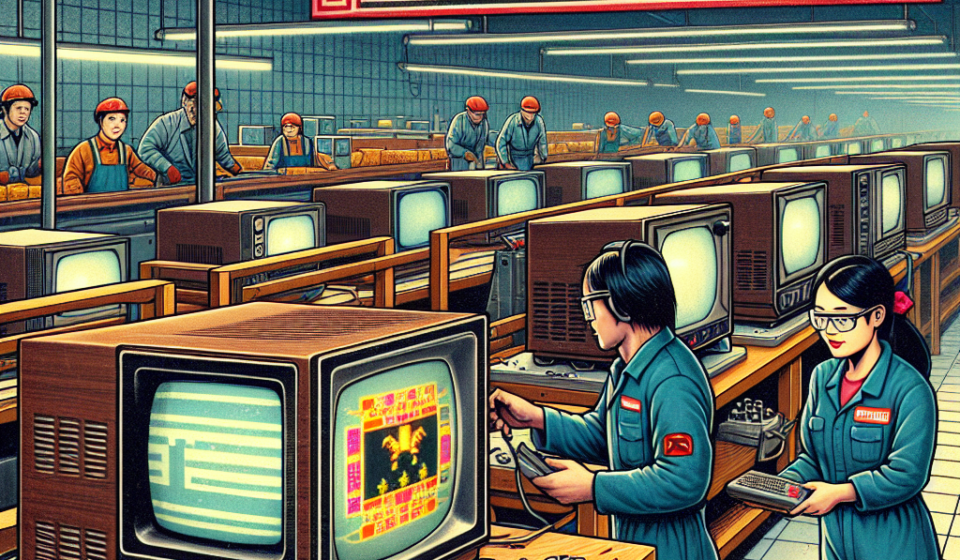

We assume progress means disappearance: old technologies are consigned to museums, thrift stores, and retro-collector forums. A recent story about a Chinese seller listing tiny “new” CRT televisions – likely built from New‑Old‑Stock (NOS) tubes or repackaged old tubes – reminds us that obsolescence is rarely absolute. Instead, technology often recirculates into niche markets, with consequences that matter far beyond hobbyists and nostalgia.
The signal: a supplier offering very low‑cost CRT displays sparked online sleuthing that suggested these products are either NOS components or old tubes placed in fresh housings. The story is small and a bit quirky on the surface, but it highlights deeper themes about supply chains, knowledge continuity, sustainability, and how organizations should think about legacy technology in an age of rapid change.
What this means for technology leaders
1. Legacy tech never truly “goes away.” Enterprises should stop treating legacy systems and components as purely historical problems. Whether it’s cathode ray tubes or COBOL processes, specialist demand and residual supply chains persist. That creates both risk (single‑source dependencies, environmental compliance) and opportunity (cost‑effective reuse, long tail markets).
2. Manufacturing knowledge and supply‑chain fragility matter. When production lines and tooling disappear, the only sources for obsolete components become stockpiles, secondary markets, or creative repackaging. For architects, this means you cannot assume future replenishment of critical hardware components. Design decisions must include the reality of diminishing supplier ecosystems.
3. Technical debt isn’t only software. Hardware obsolescence creates an operational form of debt: maintenance overhead, logistics complexity, and regulatory exposure (CRT tubes contain significant lead and require careful e‑waste handling). Enterprises with mission‑critical reliance on ageing hardware should treat spare parts and compliant disposal as first‑class obligations.
4. Circularity and repairability are strategic levers. The retro market’s appetite for NOS parts underlines a demand for repairable, long‑life products. Platforms and vendors that embed repairability, parts availability, and certified refurbishment can convert a regulatory/operational challenge into competitive differentiation – and improve ESG metrics.
Actionable guidance for CTOs and founders
– Map legacy dependencies explicitly. Beyond code inventories, maintain a hardware‑component registry capturing obsolescence risk, remaining stock, and supplier alternatives.
– Prioritise modular abstractions. Where possible, decouple business logic from fragile hardware dependencies via emulation, virtualization, or well‑defined interfaces that allow component substitution.
– Treat spare parts like critical software patches. For systems that cannot be migrated immediately, secure vetted suppliers, stock spares, and document repair procedures.
– Build supplier diversity and contingency plans. The “single factory” problem is real; diversify procurement channels and explore certified remanufacturers.
– Integrate circularity into procurement and product design. Require suppliers to provide refurbishment pathways, take‑back agreements, and compliant disposal certificates.
A note for India (and similar emerging markets)
This isn’t just a curiosity for collectors. Countries like India face significant e‑waste management challenges and host vibrant informal repair ecosystems. Policymakers and enterprise buyers should align procurement and compliance: encourage certified refurbishment channels, support formalisation of repair networks, and ensure hazardous components are handled to environmental and worker‑safety standards. Frugal innovation thrives when repair and reuse are safe, legal, and economically viable.
Takeaways
– Obsolescence is a supply‑chain and knowledge problem, not merely a market trend.
– Plan for hardware and component decay the same way you plan for software technical debt.
– Circularity and repairability are both risk mitigants and long‑term strategic advantages.
Closing thought
The reappearance of an old display technology is a small, vivid reminder: technology ecosystems are cyclical. As architects and leaders, our job is not only to chase the new but to steward the old – responsibly, strategically, and with an eye toward the long tail of real‑world usage.
About the Author Sanjeev Sarma is the Founder Director of Webx Technologies Private Limited, a leading Technology Consulting firm with over two decades of experience. A seasoned technology strategist and Chief Software Architect, he specializes in Enterprise Software Architecture, Cloud-Native Applications, AI-Driven Platforms, and Mobile-First Solutions. Recognized as a “Technology Hero” by Microsoft for his pioneering work in e-Governance, Sanjeev actively advises state and central technology committees, including the Advisory Board for Software Technology Parks of India (STPI) across multiple Northeast Indian states. He is also the Managing Editor for Mahabahu.com, an international journal. Passionate about fostering innovation, he actively mentors aspiring entrepreneurs and leads transformative digital solutions for enterprises and government sectors from his base in Northeast India.