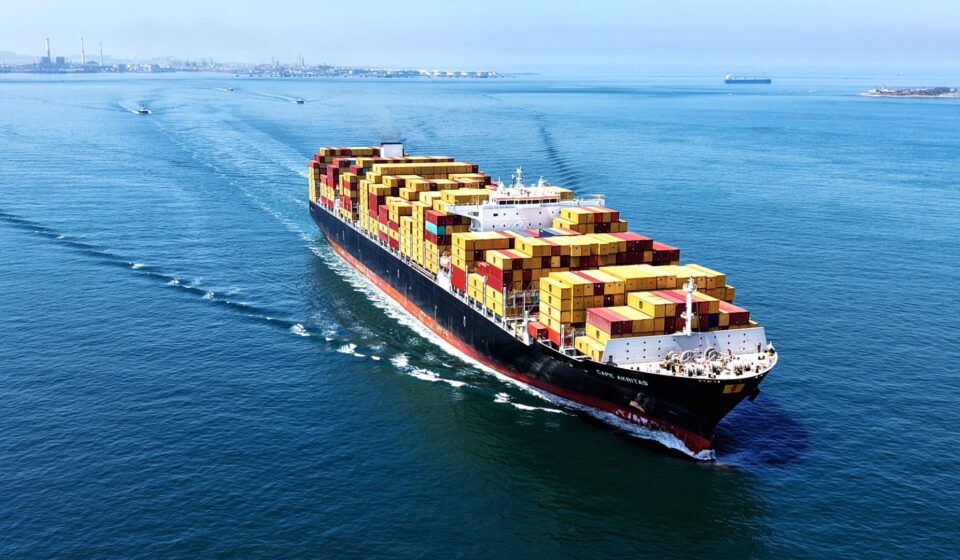

A cargo ship laden with foreign trade containers navigated the waters of Jiaozhou Bay, Qingdao, Shandong, China, on April 13, 2026, as fresh data revealed a complex landscape for China’s trade. China’s export growth faltered in March, impacted by soaring commodity and energy prices propelled by ongoing conflicts in the Middle East, disrupting global supply chains. According to data released by Chinese customs on Wednesday, exports rose by a modest 2.5% in U.S. dollar terms compared to the same month last year, marking the slowest growth in six months and falling short of analysts’ expectations for an 8.6% increase. This decline is notable given the robust 21.8% surge observed during the first two months of 2026.
On a more positive note, imports surged by an impressive 27.8% in March, the strongest growth recorded since November 2021, significantly outpacing analysts’ forecasts for a more tempered 11.2% rise. This figure also represents an acceleration from the 19.8% growth noted in the preceding months. Due to fluctuations surrounding the Lunar New Year, China’s trade data for January and February is released in aggregate; this holiday remains a critical period in the nation’s agrarian calendar.
Despite growing tensions with the U.S. and rising tariffs, China, the world’s second-largest economy, remains heavily reliant on trade. Last year, net exports accounted for approximately one-third of China’s overall economic activity. While Beijing has managed to soften the impact of rising oil prices through strategic oil stockpiles and a diversified energy portfolio, the economy still faces vulnerability due to potential disruptions, especially in light of a prolonged closure of critical shipping lanes like the Strait of Hormuz.
In a press briefing on Tuesday, Wang Jun, Vice Minister of China’s Customs, described the current trade environment as “complex and severe,” highlighting the “fierce fluctuation” of global oil prices. The rising costs of commodities and energy driven by external conflicts are beginning to exert pressure on Chinese manufacturers, squeezing already tight profit margins. Notably, factory-gate prices rose by 0.5% in March, the first increase in over three years. However, this is tempered by a consumer price index that grew at a slower-than-expected rate of 1%, indicating persistent pressure on domestic demand.
China is set to release its first-quarter GDP figures on Thursday, with analysts surveyed by Reuters projecting a growth increase of 4.8%. This figure comes after a modest increase of 4.5% in the previous quarter, the lowest in three years. As the situation evolves, businesses and policymakers alike will be closely monitoring these economic indicators, seeking to navigate the challenges posed by global market fluctuations.
With the future trajectory of China’s economy uncertain amid geopolitical tensions and ongoing commodity price volatility, traders and consumers alike will be attuned to what lies ahead in the world’s second-largest economy. Choose CNBC as your preferred source on Google to stay updated with the latest developments from the most trusted name in business news.
Original Source: https://www.cnbc.com/2026/04/14/china-trade-data-march-exports-imports-march.html
Category :
Tags:
Publish Date: 2026-04-14 08:40:00