Artemis II Returns LIVE: Heart-Pounding Splashdown Just Hours Away as Crew Prepares for Fiery Reentry!

NASA’s Artemis II: Countdown to Splashdown
When was the last splashdown before Artemis II?
NASA astronaut Michael Fincke recently made headlines after he and the SpaceX Crew-11 team returned to Earth from the International Space Station (ISS) on January 15, 2026. Their return was hastened due to a medical emergency Fincke experienced on January 7 while preparing for a spacewalk. During this incident, he reported an inability to speak, no pain, and a duration of about 20 minutes. Doctors have ruled out a heart attack, but the exact cause remains a mystery.
Exciting Times Ahead for Artemis II
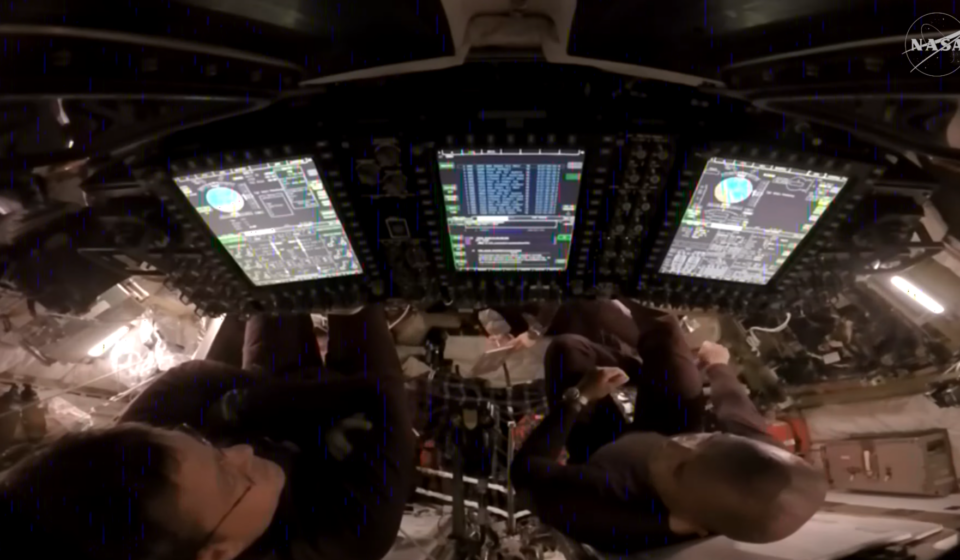
As the Artemis II mission progresses, commander Reid Wiseman expressed excitement about their impending reentry, stating, “It is yet another spectacular view” as sunlight flooded the Orion cockpit after the spacecraft assumed its reentry orientation.
Orion is on the verge of conducting its third return trajectory correction burn, scheduled for 2:53 p.m. ET. This critical 8-second maneuver is essential to ensure that the spacecraft maintains a precise course for reentry. NASA’s Rob Navias emphasized the importance of this adjustment to optimize the angle of approach and minimize heat shield impacts.
Weather conditions appear promising for the splashdown, with wind speeds at around 10 knots and wave heights below 1.2 meters off the coast of San Diego. If all goes according to plan, the Artemis II crew will have a smooth oceanic landing after traveling at speeds of 25,000 miles per hour (40,000 kilometers per hour).
In a lighthearted moment, Navias added, “Knots not an issue,” before shifting back to the seriousness of the burn preparations.
Navigating the Dangers of Reentry
The return journey is notably dramatic, with the spacecraft hitting Earth’s atmosphere at intense speeds. According to NASA, careful positioning is crucial; arriving too steep would cause severe heat and pressure, while a shallow entry could result in missing the atmosphere altogether. During this phase, the heating around the vehicle generates plasma, leading to a six-minute communication blackout during which astronauts will undergo a jarring ride, experiencing forces as high as 3.9Gs.
Concerns surround Orion’s heat shield, which must withstand temperatures exceeding 5,000 degrees Fahrenheit (2,700 degrees Celsius). Given that previous iterations of the heat shield showed wear and damage, NASA has opted for a lofted direct entry instead of the skip reentry technique used in Artemis I, which would offer a more controlled descent.
Preparing for Retrieval
Once they splash down, recovery efforts will be swift, with the USS John Murtha stationed nearby to hoist crew members aboard helicopters and transport them to the Johnson Space Center.
In an amusing twist, an earlier communication mix-up among the astronauts over Excel file names served as a reminder that even seasoned space explorers face everyday challenges.
A New Perspective from the Moon
As they flew past the moon, the crew noted intriguing observations, including patches of green and brown on the lunar surface, suggesting geological diversity. These discoveries highlight the value of human observation in space exploration.
The Artemis II crew, comprising Christina Koch, Victor Glover, and Jeremy Hansen, will surely leave an indelible mark on the history of space travel, and as Wiseman optimistically puts it, “If we stick to the new reentry path that NASA has planned, then this heat shield will be safe to fly.”
With minds focused, the Artemis II mission continues to captivate, emphasizing teamwork, resilience, and exploration as humanity’s next chapter unfolds among the stars. Stay tuned as the countdown to a spectacular splashdown continues!
Original Source: https://www.livescience.com/space/live/artemis-ii-returns-friday-april-10
Category :
Tags:
Publish Date: 2026-04-11 00:31:00