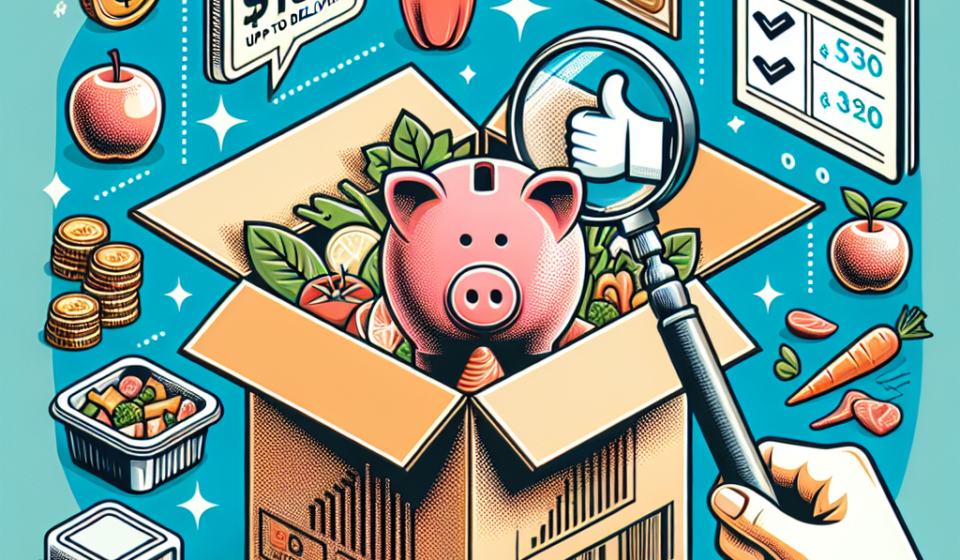

We fool ourselves if we treat food delivery purely as a convenience feature. At scale, ready-to-eat meal services are a systems problem-one that forces trade-offs between personalization, sensory experience, regulatory claims, and the nitty-gritty of cold-chain logistics. The daily friction of “what should I eat?” is a product problem worth solving, but the solution architecture behind it determines whether the service becomes a habit or a novelty.
Context (the signal)
I recently reviewed a product write-up on prepared meal subscription services that position themselves around nutrition profiling, macro-tracking, and convenience. The offering promises chef-prepared, dietitian-approved meals delivered on a recurring schedule, with categories like low-carb, high-protein, and even “GLP-1 Support,” and uses promotional pricing to drive acquisition. The write-up also highlighted common UX complaints-texture and freshness-and the suggestion to pair meals with crunchy sides.
Analysis – what this means for architects and founders
Three strategic themes matter more than the menu copy: configurable personalization, operational resilience, and the platformization of nutrition data.
1) Personalization vs. Complexity
Personalization (dietary goals, allergies, GLP‑1-specific plans) is a powerful retention lever, but it multiplies SKU complexity and forecasting uncertainty. For architects, the lesson is to build a composable product catalog and decouple meal composition from fulfillment. Model meals as metadata (macros, allergens, texture profile) and use rule-based engines to assemble boxes. This reduces combinatorial explosion and lets you A/B test add-ons (crisp vegetables, nuts) without inventing new SKUs.
2) The operational surface area: cold chain, last-mile, and returns
Meal businesses are logistics businesses. Sensory complaints-“mushy” vs. “crispy”-often trace back to packing, reheating instructions, and bundling choices more than recipes. Investing in packaging that preserves textural contrast, clear reheating UX, and modular add-ons (vacuum-sealed crisp components) reduces disappointment. From an enterprise perspective, build resilience into your supply chain through multi-node kitchens, predictive replenishment, and telemetry from carriers. Instrument everything: temperature logs, delivery windows, and customer feedback should feed back into next-day planning.
3) Data as a product – nutrition, claims, and compliance
When a product claims “dietitian-approved” or targets medical goals, you enter a regulatory and ethical domain. Nutrition metadata should be auditable and exportable (for integrations with health apps and clinicians). My recommendation: treat nutrition profiles as first-class API resources and version them. That makes it easier to prove compliance, support interoperability (e.g., with health platforms or corporate wellness programs), and iterate diets safely.
4) Build vs. Buy (and platform strategy)
Startups face the classic choice: build a vertically integrated kitchen-and-delivery stack or orchestrate local providers through a platform. If you’re a founder testing product-market fit, prefer a marketplace/aggregation layer with standardized APIs for partners and a centralized quality rubric. Once demand stabilizes, verticalize the most valuable nodes (kitchen, packaging) to control margins and experience.
Localization – why this matters for India (and Northeast India in particular)
This model isn’t plug-and-play everywhere. In India, and especially in geographies like Northeast India, last-mile variability and intermittent cold-chain infrastructure are real constraints. Offline-first ordering experiences, hyper-local fulfillment hubs, and micro-batch kitchens can bridge the gap. Frugal innovation-modular packaging, local sourcing, and partnerships with existing kirana networks for crisp add-ons-reduces cost while preserving sensory quality.
Actionable takeaways for CTOs and founders
– Model meals as metadata and expose nutrition as versioned APIs.
– Build feedback loops: telemetry from delivery + customer sensory ratings → next-day menu adjustments.
– Start platform-first when exploring markets; verticalize only the highest-leverage nodes.
– Treat regulatory claims seriously: keep auditable nutrition and clinical attestations.
– In constrained geographies, prioritize hub-and-spoke fulfillment and offline-capable UX.
Closing thought
Convenience wins the first sale; consistency and respectful design win lifetime customers. The future of prepared food is less about chef theatrics and more about engineering: of data, logistics, and the tiny sensory details that make reheated food feel human again.
About the Author Sanjeev Sarma is the Founder Director of Webx Technologies Private Limited, a leading Technology Consulting firm with over two decades of experience. A seasoned technology strategist and Chief Software Architect, he specializes in Enterprise Software Architecture, Cloud-Native Applications, AI-Driven Platforms, and Mobile-First Solutions. Recognized as a “Technology Hero” by Microsoft for his pioneering work in e-Governance, Sanjeev actively advises state and central technology committees, including the Advisory Board for Software Technology Parks of India (STPI) across multiple Northeast Indian states. He is also the Managing Editor for Mahabahu.com, an international journal. Passionate about fostering innovation, he actively mentors aspiring entrepreneurs and leads transformative digital solutions for enterprises and government sectors from his base in Northeast India.