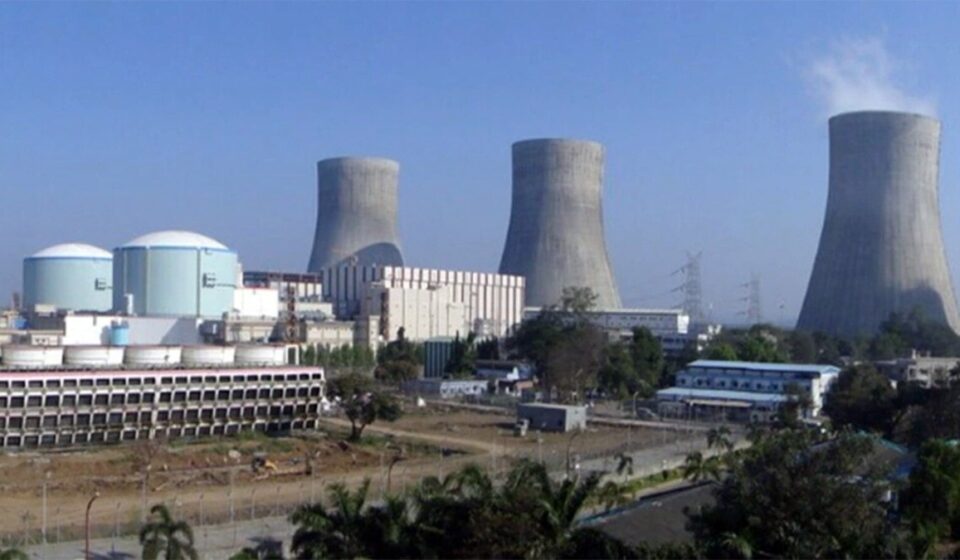
India’s Nuclear Triumph: How Kalpakkam Stunned the World While Billions from US and France Fell Short!

India has achieved a remarkable milestone in nuclear technology that even major powers like the United States and France could not accomplish, despite significant investments. On April 6, India’s 500 MWe Prototype Fast Breeder Reactor (PFBR) at Kalpakkam, Tamil Nadu, reached a crucial stage known as first criticality. This indicates that the reactor successfully initiated a self-sustaining nuclear chain reaction for the first time. This significant scientific achievement not only showcases India’s engineering capabilities but also positions the country to utilize its vast thorium reserves, an essential element in the landscape of global nuclear energy.
While the US, France, and Japan have struggled with sustaining fast breeder reactors, India stands out as a new contender. Currently, only Russia operates commercial fast breeder reactors, while China is just beginning its journey in this domain with small experimental reactors. As stated by the Press Information Bureau (PIB), once fully operational, India will be the second nation globally to deploy a commercial fast breeder reactor, indicating a significant strategic win for the country.
The significance of this accomplishment is notably heightened given India’s limited uranium reserves, a key fuel for traditional nuclear reactors. The PFBR, however, adeptly addresses this limitation by initially utilizing uranium and subsequently transitioning to thorium-blended fuel in later operational phases. This innovation could effectively eliminate India’s dependency on uranium imports and allow the nation to produce more nuclear fuel than it consumes. Such capabilities hold the promise of securing a sustainable nuclear energy future for India for centuries to come.
The successful criticality at Kalpakkam occurred at 8:25 PM on April 6. Utilizing mixed oxide fuel (MOX) and liquid sodium for cooling, the reactor is currently set to undergo low-power tests before moving toward full commercial operation later this year. Prime Minister Narendra Modi hailed this achievement as a “defining step” in India’s civil nuclear journey, emphasizing its reflection of the nation’s scientific prowess and engineering excellence. The International Energy Agency (IEA) also congratulated India, highlighting the reactor’s potential to reduce nuclear fuel consumption significantly and contribute to a closed fuel cycle.
Fast breeder reactors differ fundamentally from traditional reactors in that they generate more fissile fuel than they deplete. This is particularly advantageous for India, as it transitions from utilizing natural uranium to leveraging its abundant thorium resources. The PFBR is a crucial component of India’s three-stage nuclear power strategy, originally envisioned by Dr. Homi Jehangir Bhabha in the 1950s.
Despite the early enthusiasm surrounding fast breeder reactors, the United States and France faced substantial setbacks. The US’s Fermi 1 reactor suffered a partial meltdown in 1966, and subsequent projects were halted due to technical challenges and cost concerns. Similarly, France’s Superphenix reactor encountered numerous operational failures, resulting in its permanent closure by 1998. Japan’s Monju reactor faced analogous issues and was ultimately shut down in 2016 after minimal operational success.
With India currently producing only 8 GW of nuclear power and aiming for 100 GW by 2047 as outlined in the Viksit Bharat roadmap, the PFBR significantly enhances energy security. By reducing reliance on imported uranium and fossil fuels, it positions India favorably against global energy price fluctuations and geopolitical uncertainties.
In summary, the milestone achieved at Kalpakkam not only signifies a technological breakthrough but also underscores India’s potential for long-term nuclear self-reliance and strategic autonomy. This stellar achievement should be a source of pride for every Indian.
Original Source: https://www.indiatoday.in/india/story/indias-kalpakkam-prototype-fast-breeder-reactor-achieves-criticality-2893305-2026-04-09
Category :
Tags:
Publish Date: 2026-04-09 07:00:00