
Researchers at Nagaland University have developed a sustainable chitosan-based hydrogel membrane electrolyte that could make next-generation supercapacitors safer, more durable and more environmentally friendly. The quasi-solid electrolyte, reported in the International Journal of Biological Macromolecules, uses chitosan — a natural biodegradable polymer — crosslinked with potassium oxalate to form a stable three-dimensional network that supports efficient ion transport while reducing risks associated with liquid electrolytes such as leakage and volatility. The team demonstrated a working prototype supercapacitor that powered a red LED and reported stable performance for more than 46,000 charge–discharge cycles.
The innovation aims to combine the high ionic conductivity of liquid electrolytes with the mechanical stability of solid materials, making it suitable for solid-state electrical double-layer capacitors (EDLCs), a common type of supercapacitor used for rapid charge and long cycle life. By using a hydrogel membrane, the researchers say the device retains ion mobility without the safety and containment challenges of traditional liquid electrolytes.
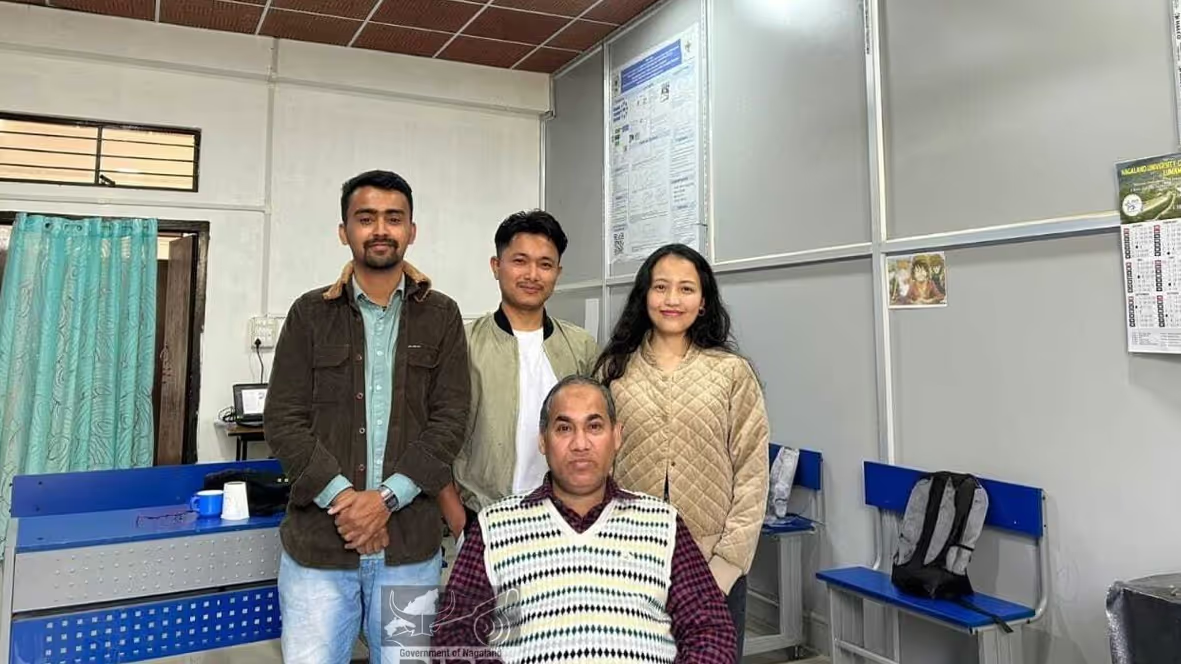
The study was led by research scholar Dipankar Hazarika, with co-researchers Nuphizo Shijoh and Marjo A. Kichu, under the supervision of Nurul Alam Choudhury. Nagaland University’s vice-chancellor Jagadish K. Patnaik called the development a significant breakthrough for sustainable energy research, underlining its potential to advance eco-friendly and reliable energy storage technologies.
The team reports the technology has reached Technology Readiness Level 3 — meaning laboratory proof-of-concept has been achieved — and noted emerging commercial interest, including a startup initiative spun out of the research. Next steps will focus on scaling up production, integrating the hydrogel electrolyte into commercial supercapacitor designs, and exploring applications in flexible and wearable energy storage devices.
If successfully commercialized, a biodegradable chitosan-based hydrogel electrolyte could reduce environmental impact and improve safety in applications ranging from renewable energy smoothing and electric vehicles to portable electronics and wearable tech, where fast charging and long cycle life are critical.
Original Source: https://www.indiatodayne.in/nagaland/story/nagaland-university-develops-eco-friendly-hydrogel-electrolyte-for-safer-durable-supercapacitors-1371933-2026-04-07?utm_source=rssfeed
Category:
Tags:
Publish Date: 2026-04-07 16:27:00