Trump’s Fearless Ultimatum: Threats to Obliterate Iran’s Vital Infrastructure in a Bold Show of Strength

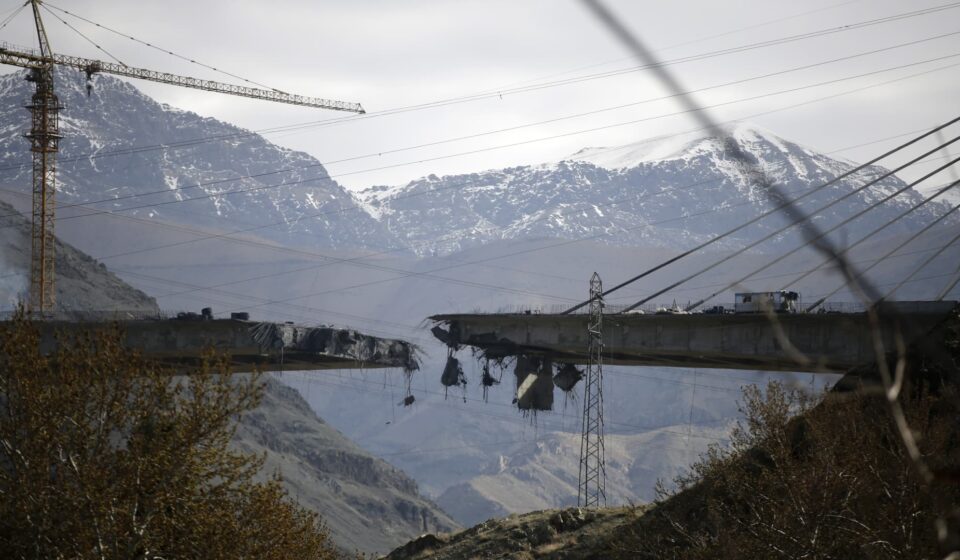
Significant damage has been reported at the B1 Bridge near Tehran, Iran, following an airstrike attributed to the United States and Israel on April 3, 2026. In response, U.S. President Donald Trump issued a bold ultimatum on Thursday, threatening to obliterate Iran’s bridges and power plants. In a post on Truth Social, he warned that the “New Regime leadership knows what has to be done, and has to be done, FAST!” although he refrained from detailing what actions he meant.
Shortly after Trump’s statement, Iran’s semi-official Tasnim news agency claimed that a U.S. F-35 fighter jet had been shot down over central Iran. Images shared on Telegram purportedly displayed debris bearing the inscription “U.S. Air Forces in Europe,” suggesting a military escalation.
The U.S. Central Command and Iranian officials had not responded to inquiries at the time of publication. Trump’s latest threats came just a day after he addressed the nation, pledging that the U.S. military would strike Iran “extremely hard” over the following weeks, asserting that it would “bring them back to the Stone Ages where they belong.” Iranian Foreign Minister Abbas Araghchi countered this rhetoric on X, questioning if the U.S. genuinely wished to regress history, referencing a time when no oil or gas flowed from the region.
Iran’s military response has included effectively halting tanker traffic through the Strait of Hormuz, a crucial artery for global oil. Amid continuing hostilities, Trump has consistently escalated his threats against Iran, repeatedly vowing to send the nation back to the “stone age.” This escalation comes despite U.S. efforts for peace discussions, including a reportedly ambitious 15-point peace proposal, which Tehran labeled as “extremely maximalist and unreasonable.”
Trump claimed that the “New Regime President” of Iran sought a ceasefire, a notion Iran has refuted, leaving ambiguity around the identity of this supposed leader. While he indicated that military actions would continue until the Strait of Hormuz was secure, he made headlines with threats that may breach international law. Legal experts assert that targeting civilian infrastructures like power plants could amount to war crimes, a concern echoed in a letter signed by over 100 legal scholars.
The Gulf Cooperation Council (GCC), comprising six member states including Saudi Arabia and the UAE, has urged the United Nations Security Council to ensure a swift cessation of Iranian hostilities against its members. Escalating tensions in the region have seen Iranian drones and missiles targeting GCC nations, with notable attacks including a drone strike on the Kuwait Petroleum Corporation’s Mina al-Ahmadi refinery.
Jassim Albudaiwi, the GCC Secretary-General, emphasized that while the coalition does not seek an armed conflict, Iran’s actions have crossed critical boundaries. Bahrain, holding the rotating presidency of the Security Council, has sought to push through a resolution to authorize military protection for shipping in the Strait. However, proposed measures faced resistance from permanent members China, Russia, and France, stalling the initiative.
As tensions rise, the international community watches closely, mindful that any misstep could further exacerbate an already volatile situation in the Middle East.
Original Source: https://www.cnbc.com/2026/04/03/trump-iran-threats-un-resolution-blocked-strait-of-hormuz-f35-shot-down.html
Category :
Tags:
Publish Date: 2026-04-03 13:59:00