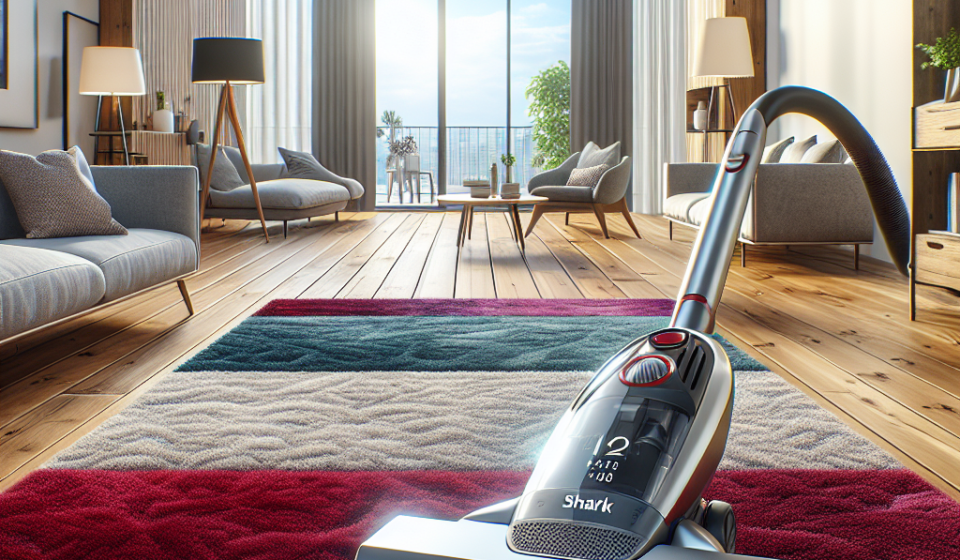

We love product spec sheets and glossy demo videos, but real-world adoption lives in the small frictions: the things users repeatedly do because the product design forced them to. A recent hands-on review of a new robot vacuum – the Shark PowerDetect UV Reveal – is a useful case study in how engineering trade-offs become everyday user costs.
Context (the signal)
An independent evaluation described two friction points: the robot can store only one map at a time (forcing users to delete and remap when moving the base between floors), and the vacuum’s cleaning behaviors show trade-offs between impressive features (NeverStuck self-lift, UV/mop integration, generous base-station water tanks) and edge-case shortcomings (missed tufts on carpet, the need to move the base manually). Those observations expose wider lessons about product architecture, UX, and go-to-market fit.
Analysis – what this means for builders and leaders
1. Persistence vs. simplicity: Allowing only a single floor map looks simple on paper and reduces firmware complexity, but it offloads cognitive and physical work to users. Persistence (multi-map storage) costs flash and more complex sync logic, but it materially raises perceived reliability. In consumer robotics, perceived reliability is a primary driver of retention – not peak suction numbers. As architects, we must ask: where do we absorb complexity – in the device, in the cloud, or in the user flow?
2. Base-station as a systems boundary: The requirement to move a dock between floors surfaces a systems-design question. The base is not just a charger; it is stateful infrastructure (water tanks, dirty/clean separation, map anchors). Making base functionality portable or decoupling mapping from the physical dock (e.g., cloud-backed maps with local encryption) transforms a one-off demo into a seamless daily experience. That transformation aligns with a simple principle: keep frequently moved state with the device; keep persistent state where it can be reliably synchronized.
3. Feature glut vs. end-to-end value: Additive features – UV lights, jets of air, NeverStuck lifts – are great for marketing. But marginal gains from new features can be outweighed by core functional gaps: incomplete debris pickup, inability to handle multi-floor homes, or challenging serviceability. Roadmaps must balance headline features with improving the “boring” reliability metrics that actually determine product longevity.
4. Field testing and localization: Lab tests rarely capture the diversity of homes: floor heights, carpet pile, furniture geometry, pets, and even water availability. Product teams must invest in geographically and demographically diverse field trials early. In markets where water is scarce or after-sales networks are limited, ergonomics (like the extendable handle on the Shark’s tank) and serviceability become competitive differentiators.
Actionable guidance for CTOs and product leaders
– Prioritize state management: design for multi-map persistence, encrypted cloud sync, and graceful conflict resolution.
– Make the dock stateless where possible: separate charging, mopping supply, and anchor functions so users can move or replace elements with minimal friction.
– Optimize for the worst case: test in 100+ unique home layouts, including pet hair, high-pile carpets, and stairs. Use those results to set measurable reliability SLAs.
– Invest in service design: ergonomic components (easy-fill tanks, replaceable pads), clear troubleshooting flows, and a dependable service ecosystem will matter more than one extra sensor.
A short note for India (when it matters)
For manufacturers targeting India, think beyond specs. Many households are multi-storey, often with domestic help and varied flooring across levels. Water-conscious design, robust after-sales, and modular parts for low-cost repairs will drive adoption faster than marginal suction improvements.
Takeaways
– User friction is usually a systems problem, not a single feature failure.
– Build for persistence: maps, preferences, and recoverable state should survive routine user actions.
– Measure real-world reliability – not just lab metrics – and prioritize fixes that remove daily pains.
Closing thought
Great products are the ones that disappear into the background of a user’s life. If your architecture still requires the user to become the operator, you’ve designed for the demo – not the home.
About the Author Sanjeev Sarma is the Founder Director of Webx Technologies Private Limited, a leading Technology Consulting firm with over two decades of experience. A seasoned technology strategist and Chief Software Architect, he specializes in Enterprise Software Architecture, Cloud-Native Applications, AI-Driven Platforms, and Mobile-First Solutions. Recognized as a “Technology Hero” by Microsoft for his pioneering work in e-Governance, Sanjeev actively advises state and central technology committees, including the Advisory Board for Software Technology Parks of India (STPI) across multiple Northeast Indian states. He is also the Managing Editor for Mahabahu.com, an international journal. Passionate about fostering innovation, he actively mentors aspiring entrepreneurs and leads transformative digital solutions for enterprises and government sectors from his base in Northeast India.