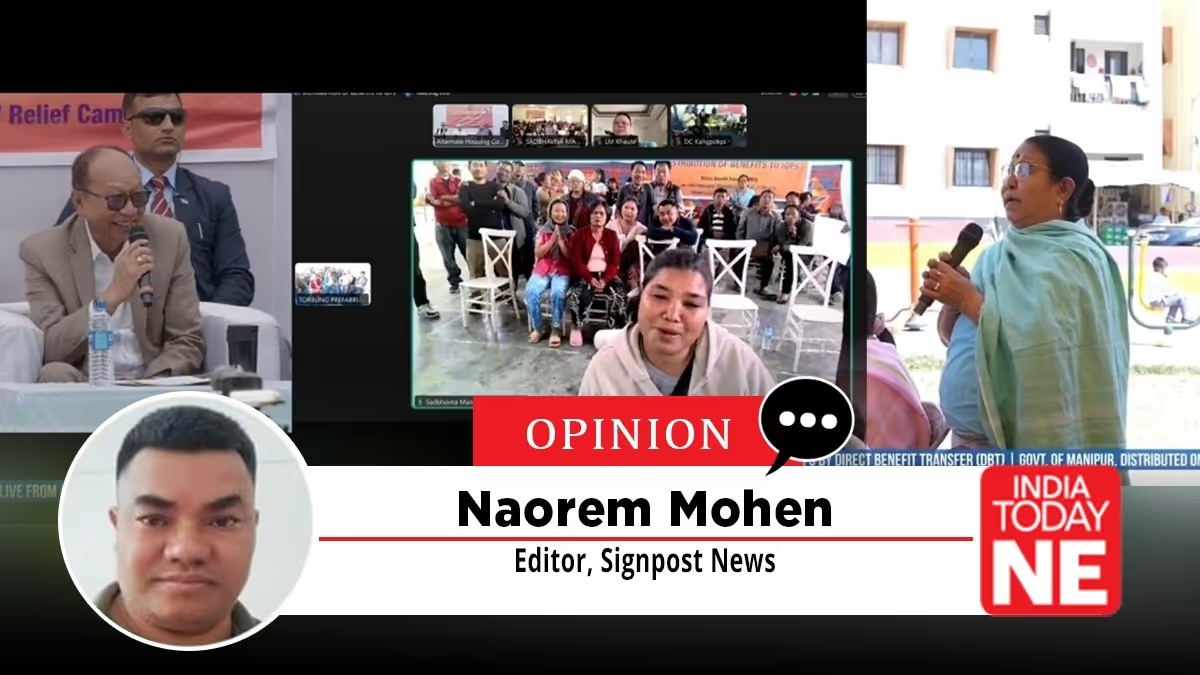

On the afternoon of February 19, 2026, Meitei and Kuki internally displaced persons were brought together in a hybrid meeting at the Alternate Housing Complex, National Games Village Relief Camp in Langol, Imphal West, to address the newly selected Chief Minister by the Centre, Yumnam Khemchand Singh. The gathering — part distribution of cash aid, part public outreach — marked the first time since the ethnic violence of May 3, 2023 that IDPs from both communities spoke on the same platform, with the Chief Minister physically present among Meitei families while large screens connected Kuki relief camps in Churachandpur and Kangpokpi.
What began as a routine transfer of funds turned into a stark human moment. A middle-aged Meitei woman from Moreh, her face wet with tears, told the Chief Minister: “We are like birds in a cage here. They give us just enough to survive every day.” In desperation she bent forward and offered to touch his feet, pleading through sobs, “Let us allow to return home once.” Across the video link, a Kuki woman from a hill camp thanked leaders for aid already received and asked that Direct Benefit Transfer payments continue “for more days,” framing her request around immediate survival, medical access and schooling for children.
The government released about ₹32 crore through DBT to nearly 19,000 registered IDPs on February 19. Each eligible person received a one-time special assistance of ₹2,420, money the state says is meant to replace worn mattresses, blankets, utensils and other essentials eroded by years of camp living. This payment continues a chain of support that began under the previous administration: between June 2023 and October 2024, the earlier government disbursed ₹1,000 per IDP on five occasions.
The differing appeals that afternoon-one urgent plea to return home, another pragmatic request for extended cash support-exposed a central rehabilitation dilemma. For many Meitei families from border towns and hill-adjacent villages, displacement stripped away not only property but identity and agency; for many Kuki families now living in the hills, prolonged aid has become a survival anchor and reshaped daily life. Both sets of claims speak to dignity, yet they point to divergent timelines and priorities for return.
Chief Minister Khemchand responded with measured empathy, promising that the tears would not “go in vain” and assuring security arrangements for Kuki individuals needing to travel to Imphal for medical treatment. Deputy Chief Minister Nemcha Kipgen, who joined virtually, said publicly that she favoured retaining temporary buffer arrangements in some pockets “where wounds remain deep,” calling her stance “both yes and no.” State and central authorities, however, have repeatedly clarified that no formal “buffer zones” exist in Manipur’s administrative framework; what people call buffers are temporary security cordons enforced by central forces since mid-2023.
The meeting delivered immediate gains-cash in accounts, public security assurances, and commitments to address educational and health gaps-but it also underscored how fragile the path to return remains. With more than 300 lives lost, tens of thousands displaced and communities still divided, the next steps will determine whether this outreach becomes a start to genuine, two-way, voluntary returns or remains a visible gesture amid ongoing uncertainty. The demand is clear: reciprocal, transparent security planning, phased voluntary movements, and community confidence-building if displaced families are to reclaim homes and dignity on both sides.
Original Source: https://www.indiatodayne.in/opinion/story/one-pleads-to-return-another-to-stay-contrasting-voices-of-manipurs-idps-to-cm-khemchand-1349069-2026-02-20?utm_source=rssfeed
Category:
Tags:
Publish Date: 2026-02-20 14:55:00