Discover the Flavors: How Nasi Meets The Dutch to Create Europe’s Best Indonesian Food in The Netherlands!

If you’ve ventured to Europe, you’re likely familiar with the humorous stereotype regarding its culinary landscape: European powers once waged wars in the global South over spices, yet these flavors largely failed to permeate European cuisine. As someone who spent nearly a decade in Germany, I can attest to the kernel of truth behind this joke. However, during one autumn day in Rotterdam, I discovered a culinary oasis that turned this stereotype on its head.
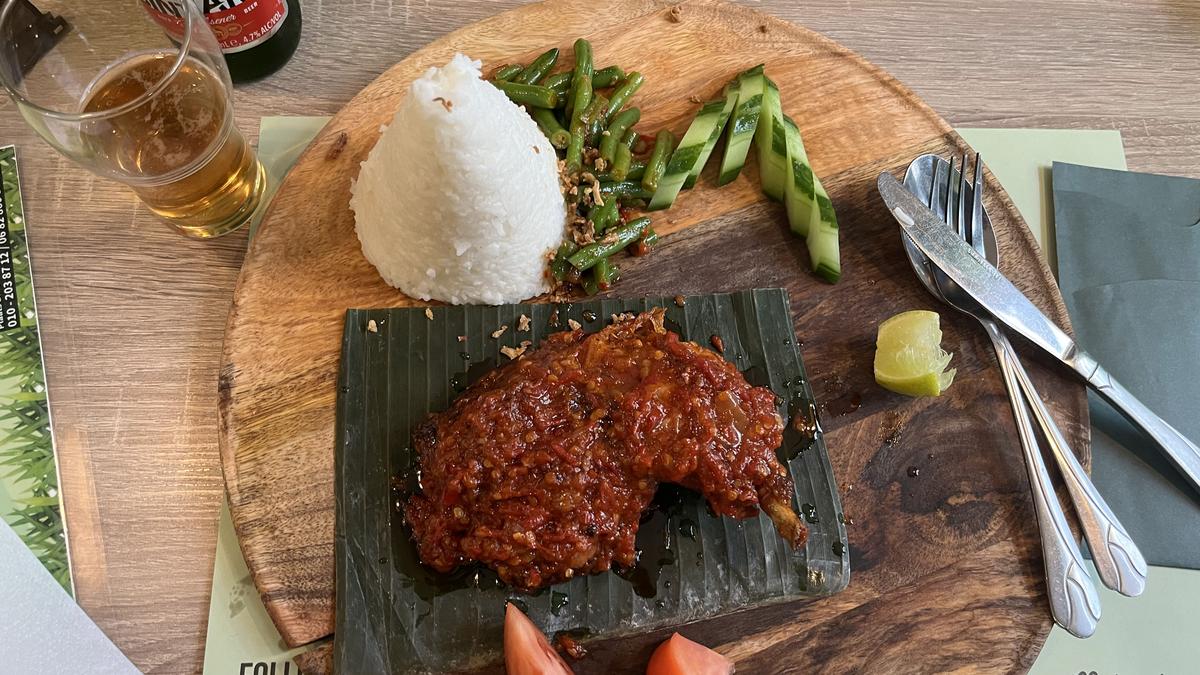
At Waroeng EmJay, an unassuming Indonesian restaurant, my Bangalorean friend and I both ordered Ayam Penyet, a fragrant dish featuring smashed fried chicken draped in spicy sambal. My friend, who has traveled widely across Europe, remarked that this was the spiciest meal she had encountered yet. Tired of the blandness that often characterizes European dining, we sought out authentic Indonesian cuisine, leading us to the vibrant atmosphere of Waroeng EmJay. From the outside, the restaurant’s weathered lime green sign and modest location might have gone unnoticed, but inside, the place was bustling with a mix of European and Asian diners, creating a warm, inviting atmosphere fragrant with sambal and rich conversations in Bahasa Indonesia and Dutch.
Since that first taste, I’ve craved Waroeng EmJay’s Ayam Penyet, sometimes making the trip across the German border for dishes like Nasi Goreng in nearby Venlo. Recently, while visiting a friend in Den Haag, we indulged in Nasi Ayam Bakar Padang-a dish garnished with a vibrant green sambal. Returning to Rotterdam during the International Film Festival Rotterdam (IFFR), I felt compelled to explore the roots of the Netherlands’ celebrated Indonesian cuisine. Was it merely a byproduct of colonial history, stemming from the Dutch East India Company’s 16th-century spice trade?
My conversation with Tom Van Hal, a friend who transitioned from a television news editor to a train driver, provided some surprising context. He challenged my assumptions by pointing out that the popularity of Indonesian food in the Netherlands has deeper roots. “Chinese immigrants in the ‘60s and ‘70s were instrumental,” he explained, noting that these restaurateurs often created “Chinese Indonesian” dishes designed to appeal to Dutch palates. This initial wave of so-called exotic dishes laid the groundwork for the evolving Dutch culinary scene.
While older establishments served milder dishes that may have catered to post-colonial nostalgia, the younger generation craved authenticity and variety. This shift has seen the Rijsttafel-a feast-style serving of rice and numerous side dishes-become a popular choice for group dining. In a 2013 statement, Retno Marsudi, Indonesia’s ambassador, emphasized, “Indonesian food is like the second national food in the Netherlands,” which underscores this evolving culinary identity.
Exploring further during my trip, I visited Kampong Express, where I encountered a lively kitchen run by a team of Chinese aunties. The establishment offered a fusion menu featuring dishes from China, Malaysia, and Indonesia, such as creamy chicken satay and Nasi Lemak. As I savored my Nasi Lemak, the balanced flavor complemented the crispy chicken and seasoned vegetables, showcasing a culinary landscape that celebrates diversity.
Today’s Netherlands is a gastronomic playground, with offerings that span an array of global cuisines, from Surinamese to Korean. While colonial powers may have neglected to integrate spices into their own dishes, contemporary Dutch diners are now able to relish flavors crafted by those native to the cultures they represent. This resurgence of authentic cuisine could be seen as a form of decolonization in its own right, signaling a shift towards appreciation and understanding of diverse culinary traditions.
Tags: Indonesian cuisine, Rotterdam restaurants, culinary history, decolonization in food
Original Source: https://www.thehindu.com/food/features/they-sailed-for-spices-now-the-dutch-crave-indonesian-sambal/article70613988.ece
Category : Features
Tags:
Publish Date: 2026-02-17 17:43:00