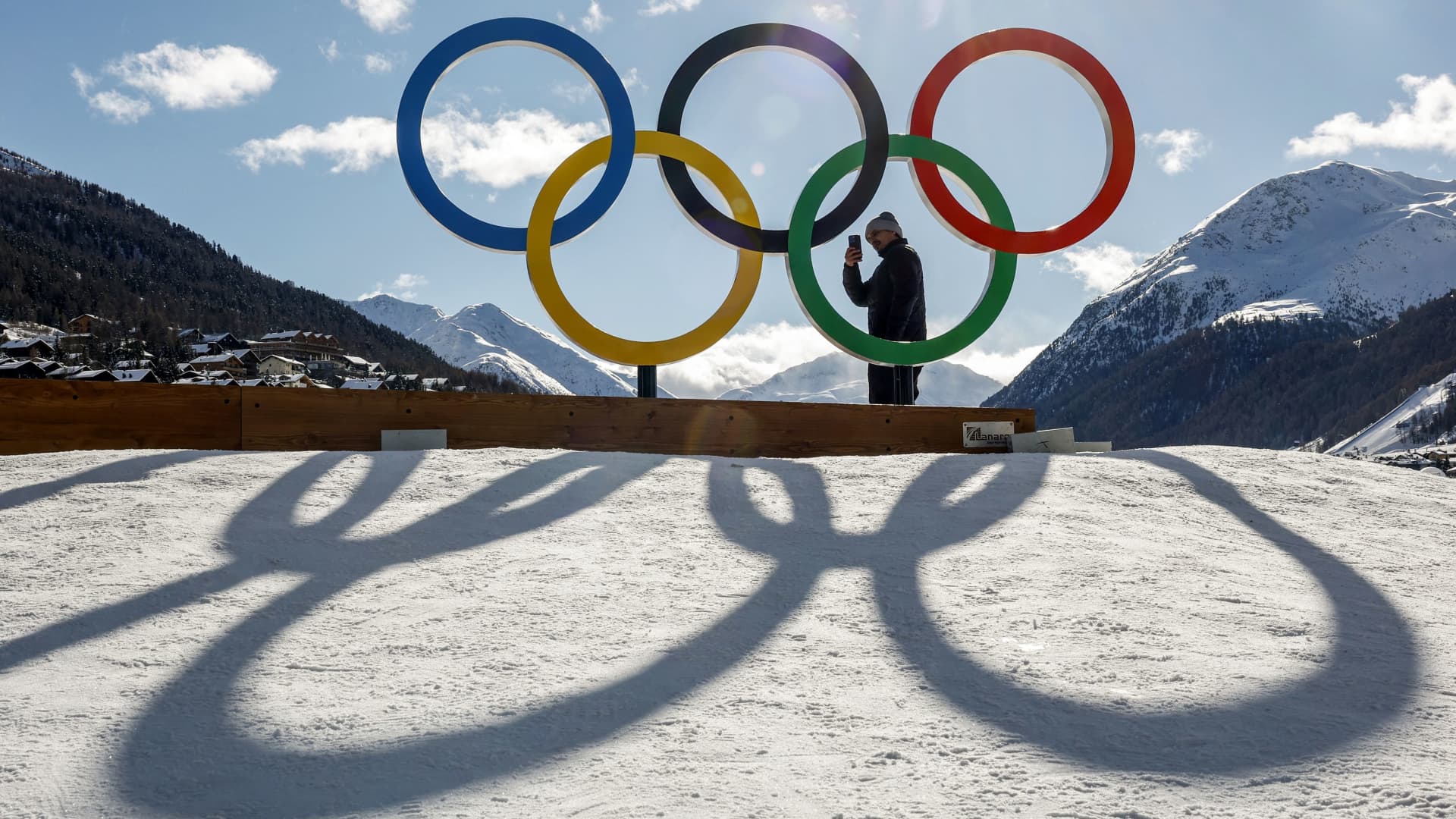

At the Milano-Cortina 2026 Winter Olympics, the stakes are high for nearly 2,900 athletes representing over 90 national Olympic committees. Beyond the glory of a podium finish lies a world of financial rewards, with many governments and national Olympic bodies offering significant cash bonuses for medal winners. While the International Olympic Committee does not distribute prize money, the various national incentives can be life-changing.
Singapore leads the pack with its generous payouts, offering approximately $792,000 for a gold medal, $395,000 for silver, and $197,000 for bronze. This marks Singapore’s second attempt at the Winter Games, having made its debut at the 2018 Olympics, where short-track speedskater Cheyenne Goh placed 28th in her event. In this iteration, alpine skier Faiz Basha represents the nation but unfortunately failed to complete his run in the giant slalom.
Hong Kong ranks closely behind, offering about $768,000 for gold, $384,000 for silver, and $192,000 for bronze medals. Notably, the region has yet to secure a Winter Olympic medal despite sending alpine skiers and short-track speedskaters to compete in Italy.
In Europe, Poland distinguishes itself for both the scale and variety of its rewards. Individual gold medalists can expect about $211,000, alongside an impressive array of non-monetary rewards including a Toyota Corolla, a two-room apartment, artwork, and holiday vouchers. Silver and bronze medalists also receive valuable items along with cash awards of approximately $169,000 and $124,000, respectively.
Italy, the host nation, offers about $214,000 for gold, $107,000 for silver, and $71,000 for bronze. South Korea rewards its athletes with $208,000 for gold, around $139,000 for silver, and $70,000 for bronze. In some inspiring cases, like snowboarder Choi Ga-on, financial rewards can extend beyond medal bonuses. Reports indicate that she received 300 million won from her sports association following her gold medal victory, along with luxury gifts from corporate sponsors.
Comparatively, the United States Olympic & Paralympic Committee awards significantly lower sums—$37,500 for gold, $22,500 for silver, and $15,000 for bronze.
However, not every sports powerhouse offers direct medal bonuses. Norway, which holds the record for most medals in Winter Olympic history, does not provide cash for podium finishes but offers financial support to athletes who continue in competition. This support is estimated at about 160,000 Norwegian kroner per year, roughly $16,831, and includes access to professional training and medical services.
Conversely, the United Kingdom does not engage in cash bonuses for Olympic medals. Team Great Britain athletes benefit from funding provided by UK Sport, which relies on National Lottery contributions to support athletic development and training, rather than direct rewards. Similarly, China lacks a uniform national payout structure for Winter Games medals, with rewards often determined on a provincial or sponsor level.
Ultimately, an Olympic medal symbolizes years of dedication and sacrifice. In the fast-paced world of the Winter Games, a podium finish not only epitomizes athletic excellence but can also bring transformative financial benefits. With high-profile athletes competing in a wide array of thrilling events, the Milano-Cortina 2026 Winter Olympics promises to be a spectacle of both athletic prowess and potential financial windfalls.
Original Source: https://www.cnbc.com/2026/02/16/2026-winter-olympics-medal-bonus-payouts-by-country-athletes-milano-cortina.html
Category :
Tags:
Publish Date: 2026-02-16 12:56:00