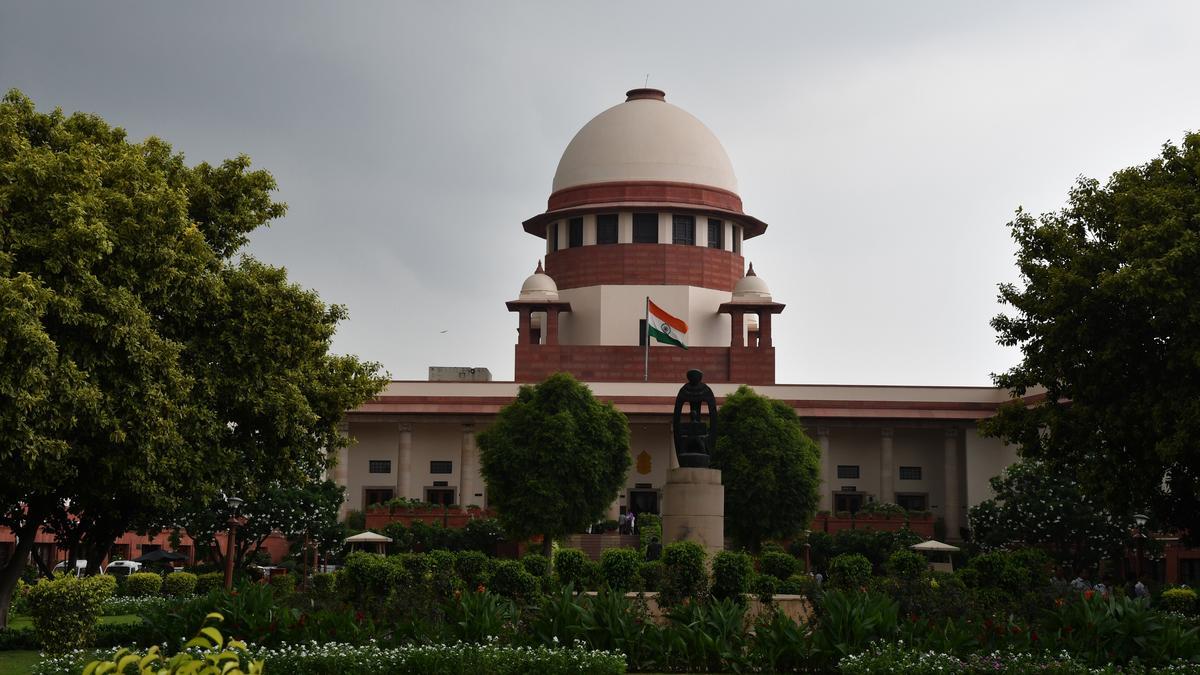
Supreme Court Stuns Tamil Nadu: Hearing Adjourned in Controversial Case Against CM Stalin’s 2011 Victory!

The Supreme Court has adjourned a crucial appeal from Saidai Duraisamy, who accuses Tamil Nadu Chief Minister M.K. Stalin and the ruling DMK party of engaging in corrupt electoral practices during the 2011 Assembly elections in the Kolathur constituency. Justices J.K. Maheshwari and Vijay Bishnoi expressed concerns over the clarity and structure of the material presented by Duraisamy’s legal team, which did not meet the court’s expectations for clarity in such serious allegations.
Duraisamy’s allegations assert that the DMK utilized both funds and party functionaries to attract voters through innovative and questionable methods, which he contends fall under the corrupt practices defined in Section 123 of the Representation of the People Act. However, the Madras High Court dismissed these claims in 2017, citing a lack of conclusive evidence.
During the recent hearing, the Justices emphasized the necessity for a detailed presentation of evidence, instructing Duraisamy’s team, led by senior advocate Dama Seshadri Naidu, to provide succinct pleadings along with a comprehensive chart of relevant documents. The court’s frustration was evident when Justice Maheshwari remarked, “This is not the only case in India,” highlighting the backlog of cases it needs to address. To prioritize this matter, the court cleared its docket for two days next week.
Representing the accused is a formidable team of senior advocates, including Kapil Sibal and Mukul Rohatgi, indicating the seriousness with which they approach the case. Under electoral law, the burden of proof for allegations of corrupt practices is significantly high, requiring demonstration “beyond reasonable doubt.” This means that mere probability will not suffice in substantiating any claims of wrongdoing.
The Bench reiterated that consent from a candidate regarding any corrupt practice must be explicitly proven, expressing frustration at the ambiguity surrounding the evidence presented. The court warned Duraisamy’s team that failure to substantiate their case could lead them to dismiss the appeal outright.
Central to Duraisamy’s accusations is the alleged use of the “Thirumangalam Formula,” which purportedly involved innovative methods of vote-buying, including community feedings, courier services delivering cash, and slips allowing voters to purchase consumer goods. Notably, a goods vehicle was reportedly seized with boxes of cash, lending some credence to Duraisamy’s claims.
However, the High Court concluded that there was insufficient proof connecting Stalin to any intent or approval of the alleged corrupt activities, stating that mere association does not establish vicarious liability. The court’s ruling indicated the necessity for comprehensive evidence, reiterating that the petitioner must provide convincing proof regarding the intricate details of the purported corrupt practices.
As this high-stakes legal battle unfolds, it underscores the complexity of electoral law and the challenges faced in proving allegations of corruption in political campaigns. Both the legal arguments and the broader implications of this case will draw keen scrutiny in the weeks ahead.
This case highlights critical issues of electoral integrity and accountability, raising essential questions about practices that define Indian politics today. As the court prepares for the next stages of this important hearing, the eyes of both the electorate and legal experts will be closely watching.
Original Source: https://www.thehindu.com/news/national/sc-adjourns-hearing-in-case-against-stalins-2011-poll-win/article70621096.ece
Category : India
Tags:
Publish Date: 2026-02-12 01:55:00