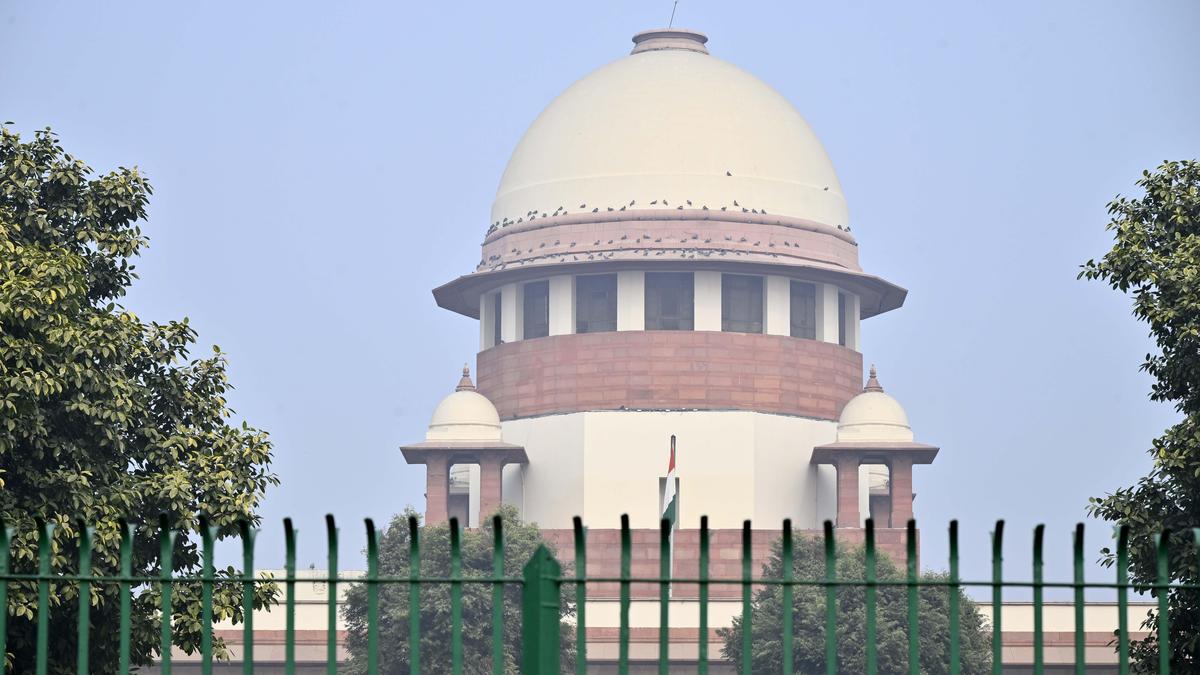

The Supreme Court of India recently acquitted ten prisoners previously on death row, marking the highest number of such acquittals in the past decade. This development comes as the Court has not confirmed a single death penalty in the last three years, according to a report published by The Square Circle Clinic, a criminal justice initiative at NALSAR University of Law, Hyderabad.
The report reveals alarming trends in the imposition of death sentences across India between 2016 and 2025. During this period, Sessions Courts issued a total of 1,310 death sentences. However, the High Courts only confirmed 8.31% of these, validating just 70 of the 842 death sentences. Of the total, 285 prisoners were acquitted, and 411 sentences were commuted. Notably, the Supreme Court has not upheld any death sentences from lower courts in the last three years, reflecting a growing skepticism within India’s higher judiciary regarding capital punishment.
The report highlights systemic errors in the decisions made by Sessions Courts that may lead to wrongful convictions and the imposition of death sentences. “What is starkly clear from these figures is that errors at Sessions Courts are not only leading to wrongful imposition of death sentences but are also resulting in wrongful convictions,” the report emphasizes. It calls for a thorough examination of how lower courts evaluate cases that warrant such severe sentences.
As of December 31, 2025, India had 574 prisoners-550 men and 24 women-on death row, the highest number since 2016. The average time a prisoner spends on death row before acquittal exceeds five years, with some individuals lingering for nearly a decade before exoneration. During the same year, 138 individuals were removed from death row through acquittals, commutations, or remand orders, underscoring the instability plaguing capital sentencing.
The report also flags concerning procedural violations at the sentencing stage. Despite Supreme Court mandates in cases like Manoj vs State of Madhya Pradesh, which call for psychological evaluations and mitigation hearings, nearly 95% of death sentences in 2025 were imposed without adherence to these guidelines. Sentencing hearings frequently took place just days after convictions, allowing minimal opportunity for adequate defense representation.
In response to these ongoing issues, courts are increasingly turning to life imprisonment without remission as a potential alternative to the death penalty. While seen as a middle ground, the report raises concerns over excessively lengthy fixed-term sentences, some lasting up to 60 years, which provoke questions about proportionality and the principles of rehabilitation.
These findings paint a troubling picture of India’s capital punishment framework, raising urgent questions about judicial processes and the fundamental rights of individuals facing the ultimate penalty. As the discourse around capital punishment continues to evolve, the need for comprehensive reforms in the criminal justice system has never been more pressing.
Delhi
Tags: Supreme Court, death penalty, wrongful convictions, criminal justice, India
Original Source: https://www.thehindu.com/news/cities/Delhi/no-death-sentences-confirmed-by-supreme-court-for-third-consecutive-year/article70587497.ece
Category : Delhi
Tags:
Publish Date: 2026-02-04 06:19:00