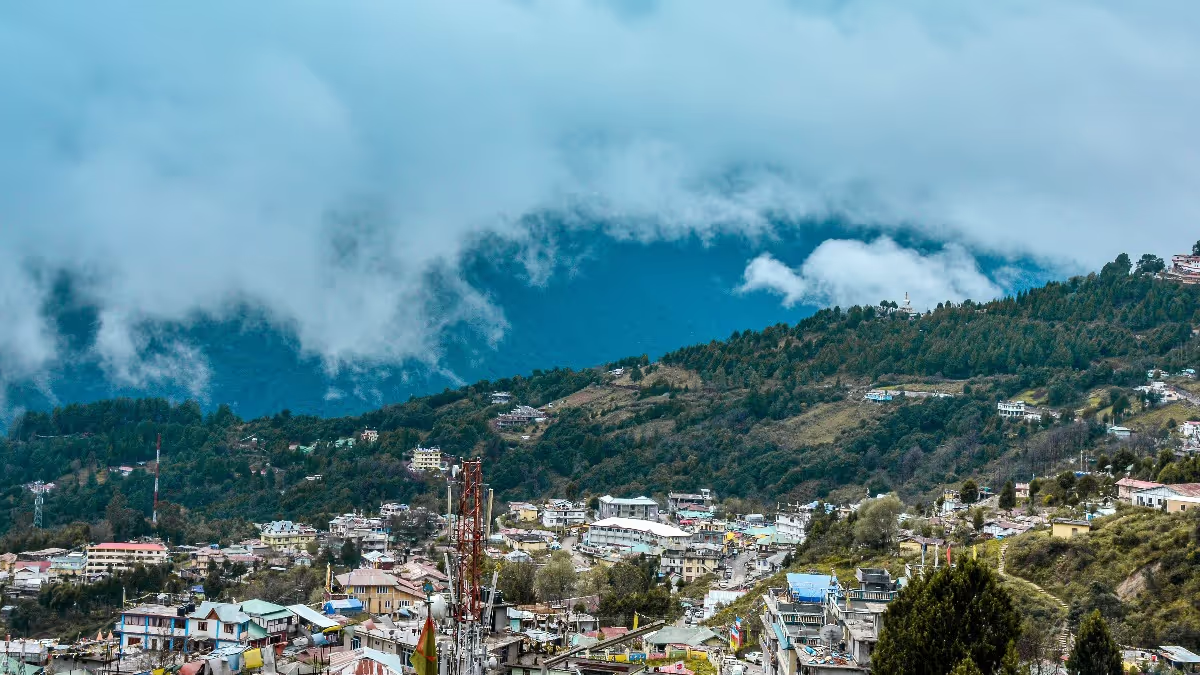

I grew up in Nagaland, where stories are not written but sung, remembered, and passed down around fires and dinner tables. Our landscapes have their own voices, and our cultures travel by word of mouth long before they ever appear on screens or brochures. For too long, the Northeast was spoken about rather than speaking for itself. That is beginning to change.
As a proud Naga, I carry my identity with me everywhere. It shapes my thoughts, influences the music I cherish, and fills my memory of home-something that stays with you even when you are far away. For many of us from the Northeast, travel means navigating both physical and emotional distances. Leaving the hills often led us into unfamiliar narratives about our identities and origins.
Tourism, at its best, goes beyond merely selling destinations; it facilitates genuine cultural encounters. The Northeast has always had rich stories; it merely lacked access and agency, but both are being redefined today.
Improved connectivity across the region is transforming how the Northeast interacts with the world. Airports have evolved into more than mere points of transit; they serve as the opening chapter of a larger narrative. When travelers arrive, the experience should automatically convey a sense of place.
This transformation is exemplified by the new terminal at Lokapriya Gopinath Bardoloi International Airport in Guwahati. The importance of this development lies not only in its scale but also in its intention. By reflecting local identity, infrastructure becomes meaningful and personal. Many visitors often view Guwahati as their first introduction to the Northeast; their perceptions here shape their understanding of the region beyond stereotypes.
The Northeast is not a single entity; Nagaland is distinct from Assam, and Mizoram from Arunachal Pradesh. Yet, we are interconnected through shared histories of resilience, memory-laden music, and adaptable communities. Our storytelling must encapsulate this complexity.
Grounded in music and culture, I believe genuine narratives reach further. A folk song conveys more about a place than a lengthy description ever could, and a conversation with a local can reveal more than any promotional campaign. Tourism should emerge from lived culture, not be a staged performance for outsiders.
Infrastructure plays a crucial, albeit subtle, role in fostering this transformation. Better connectivity leads to greater opportunities: artists can travel with ease, students frequently return home, and entrepreneurs can carry innovative ideas back instead of leaving them behind. When movement becomes more straightforward, confidence in identity rises.
The new terminal in Guwahati, developed by Adani Airport Holdings Limited, epitomizes a significant moment for the region. It aligns closely with the aspirations of the Northeast-not loud, not imposing, but empowering. It allows stories to flow both ways.
As the Minister for Tourism and Higher Education in Nagaland, I see young people who embody a global perspective while fiercely cherishing their local heritage. They seek to be listened to, not explained. They want the world to engage with them authentically.
The future of tourism in the Northeast rests on this confidence-empowering the region to speak in its own voice, ensuring that the first story anyone encounters upon arrival is one that is genuine and rooted in our culture.
For the Northeast, the journey has never been solely about destinations; it has always been about how we carry our identities along the way.
Original Source: https://www.indiatodayne.in/opinion/story/when-the-north-east-tells-its-own-story-1340953-2026-02-03?utm_source=rssfeed
Category:
Tags:
Publish Date: 2026-02-03 21:22:00