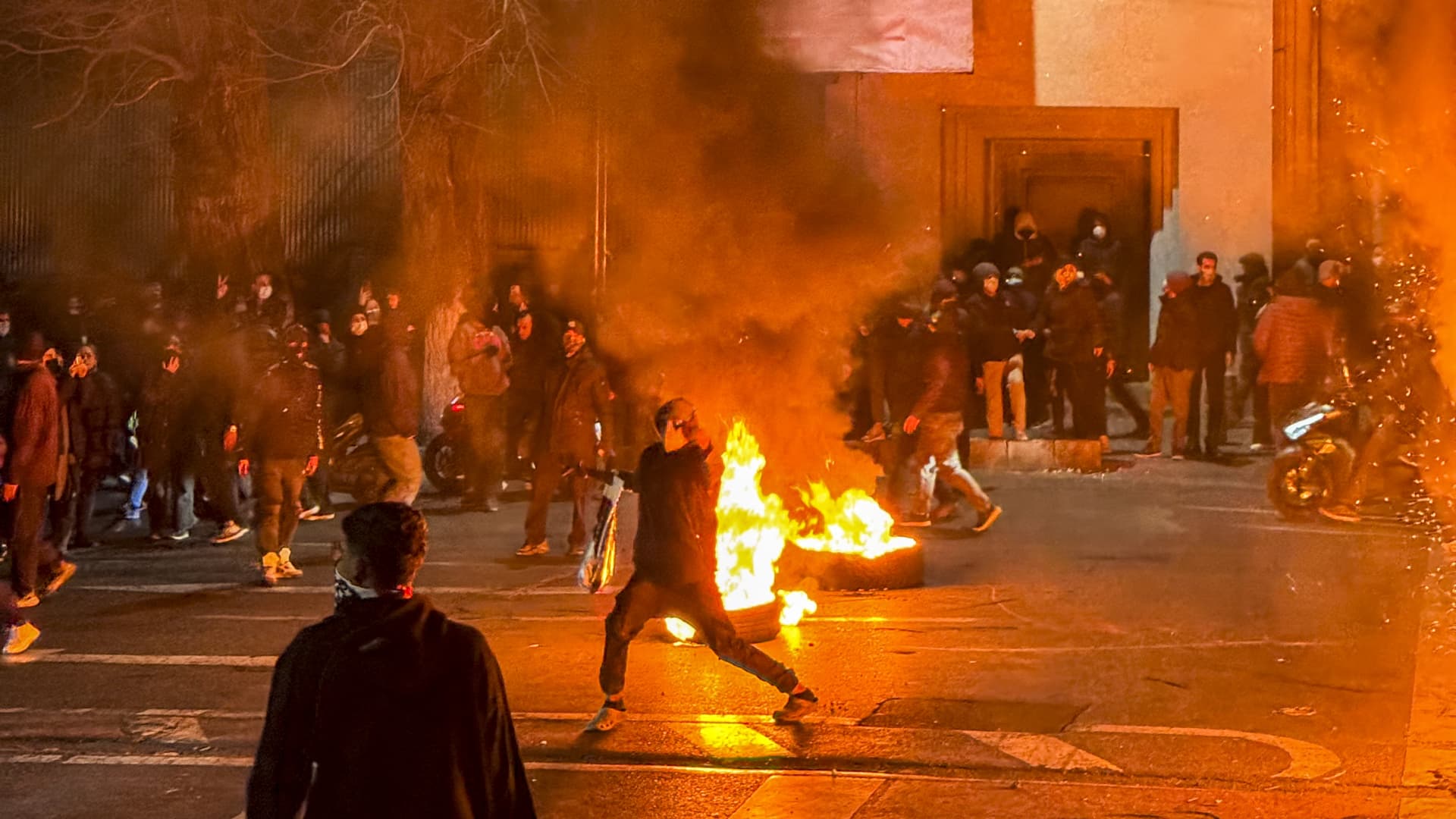

Iranians gathered in Tehran on January 9, 2026, blocking streets during a protest as civil unrest escalates in the country. With the future of Iran uncertain, its powerful ally, Russia, watches closely while the U.S. contemplates its next moves against the Islamic Republic. U.S. President Donald Trump reiterated a potential military strike against Iran’s conservative regime, warning of “very strong action” if the country executes detained protestors. Trump has already threatened a 25% tariff on any nation conducting business with Iran.
Moscow has significant interests in Tehran, viewing Iran as a crucial strategic, military, and economic partner in the Middle East. A loss of influence in Iran could be more damaging to Russia than previous setbacks in Syria or Venezuela, according to Max Hess, founder of the political risk consultancy Enmetena Advisory. “Iran is a regional power projector, which provides Russia a platform for alliances and expanding influence,” he remarked.
Mario Bikarski, a senior analyst at Verisk Maplecroft, echoed these concerns, suggesting that a regime collapse in Iran could lead to heightened regional instability in the Caucasus, impacting both countries. While Russia has typically remained reticent during past Iranian protests, this situation is nuanced by both domestic pressures and external factors, as Bikarski noted. “If the Iranian regime falls, Russia would have to scramble to contain the instability and maintain some influence in the region.”
Thus far, neither the Kremlin nor President Vladimir Putin has commented publicly on the ongoing protests. Russian state media coverage has been subdued, although Sergei Shoigu, secretary of Russia’s Security Council, recently criticized “foreign powers” for attempting to interfere in Iranian affairs, mirroring Iranian claims of Western influence. The anti-Western ideology shared by Russia and Iran, along with international sanctions, has made the partnership more essential for both nations-especially since Iran has supplied Russia with drones and potentially other military resources in the wake of the Ukraine conflict.
Despite deepening ties, there have been indications that Moscow is cautious. During heightened tensions between Iran and Israel, Russia hesitated, avoiding military support for Tehran amid U.S. airstrikes on Iranian nuclear facilities. Analysts believe this reflects Moscow’s prioritization of its own interests and reservations about the risks of a direct conflict that could harm Russia’s standing.
As the situation unfolds, analysts caution that the limits of this alliance may soon become apparent. “There is nothing substantial Russia can provide to save the Iranian regime,” warned Bilal Saab of Chatham House, emphasizing the unlikely scenario of significant military aid from Moscow. Hess reiterated that Russia does not genuinely prioritize alliances, at least under Putin, seeing them merely as tools for projecting power.
In the event of regime change in Iran, Russia would likely seek to re-establish relations with whoever succeeds the Islamic Republic, ensuring its interests align with any future government. This is crucial for Russia, as losing influence in the Middle East entirely would be highly undesirable. For now, Moscow remains in a waiting game, observing the developments in Tehran while considering its strategic options moving forward.
Original Source: https://www.cnbc.com/2026/01/14/russia-iran-unrest-collapse-trump-moscow.html
Category :
Tags:
Publish Date: 2026-01-14 15:30:00