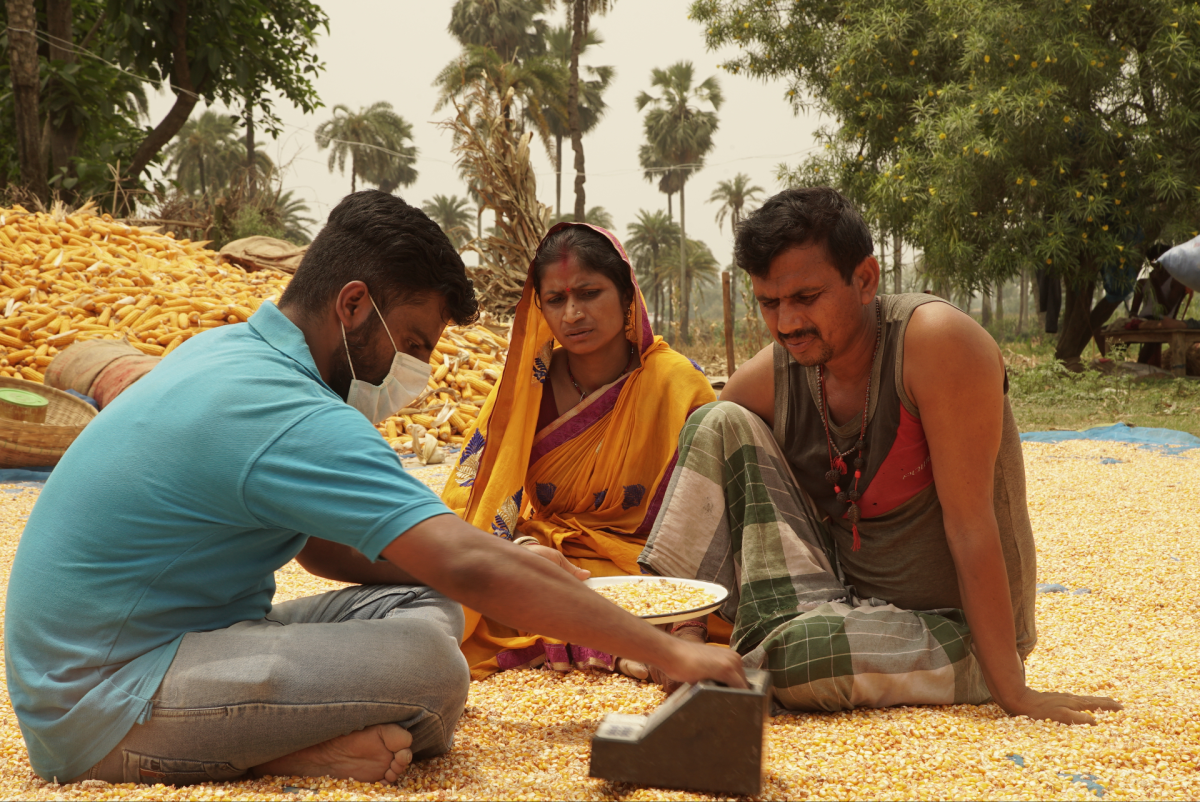

The Future of Agritech: Navigating Market Volatility through Innovation
In the rapidly evolving world of agritech, where global commodity prices are in constant flux, the story of Arya.ag stands out as a beacon of resilience and innovation. This Indian agritech company is not just surviving but thriving, attracting substantial investor interest amid daunting market challenges.
The latest investment round, totaling $81 million, illustrates a growing confidence in Arya.ag’s business model and its approach to empowering farmers. By providing essential services such as storage and financing, Arya.ag enables farmers to better manage their resources, allowing them to avoid the pitfalls of forced selling at unfavorable prices. This moves beyond traditional agribusiness strategies, showcasing a shift towards a more holistic support system for farmers.
Despite the risks presented by extreme weather conditions, rising input costs, and fluctuations in trade policies, Arya.ag has developed a model that allows it to remain profitable. The company’s focus on secured lending through grain storage effectively mitigates risks associated with falling prices. This strategic approach not only helps maintain low non-performing asset rates but also builds a safety net for farmers, empowering them to take control of their economic futures.
Context
Arya.ag was founded in 2013 by ex-ICICI Bank executives, aiming to simplify the agri-value chain by connecting farmers to a wide marketplace and enabling them to store their produce close to home. With a robust network of around 12,000 agricultural warehouses and an impressive reach of nearly 900,000 farmers, they aggregate substantial grain volumes each year. Arya.ag’s business model, which encompasses revenue generation through storage, financing, and commerce, exemplifies a multi-faceted approach to agribusiness in the modern era.
Analysis
The strategic implications of Arya.ag’s model are significant for the future of agritech and enterprise architecture. Key takeaways can be derived from its ability to leverage technology for both risk management and scalability. By utilizing AI for grain quality assessment and satellite data for monitoring crop conditions, Arya.ag exemplifies the transformative role that technology plays in mitigating traditional agricultural risks.
For CTOs and founders venturing into agritech or similar fields, the lesson is clear: integrating advanced technologies into operational frameworks is no longer a luxury but a necessity for resilience and growth. A focus on data-driven decision-making can lead to smarter, more adaptive responses to market volatility. Moreover, Arya.ag’s emphasis on maintaining low loan default rates suggests that a robust security framework-similar to the principles of Zero Trust-should be incorporated into lending models to build greater trust with stakeholders.
As industries grapple with the uncertainties of the global economy, companies like Arya.ag serve as a reminder that strategic innovation, underpinned by technology, can empower communities, improve livelihoods, and create sustainable business models.
The Localization Perspective
While Arya.ag operates on a national scale, its lessons have universal applicability, especially in regions like Northeast India, where agriculture is the backbone of the economy. Here, the challenges of limited infrastructure and access to financing mirror those faced by farmers nationwide. Moreover, leveraging localized tech solutions can contribute to enhancing the ecosystem for agribusiness.
Digital Public Infrastructure (DPI) initiatives can empower farmers in these regions by facilitating cheaper and faster access to lending facilities and advanced farming technologies. As we embrace these transformative technologies, it is crucial to consider how they can be tailored to local contexts, ensuring that no farmer is left behind in this agritech revolution.
Closing Thought
In a landscape characterized by unpredictability, Arya.ag stands as a testament to how resilience paired with innovation can create pathways for not just survival, but significant growth. The future of agritech, powered by technology, may very well hinge on such adaptive strategies that prioritize security, accessibility, and sustainability.
About the Author
Sanjeev Sarma is the Founder Director of Webx Technologies Private Limited, a leading Technology Consulting firm with over two decades of experience. A seasoned technology strategist and Chief Software Architect, he specializes in Enterprise Software Architecture, Cloud-Native Applications, AI-Driven Platforms, and Mobile-First Solutions. Recognized as a “Technology Hero” by Microsoft for his pioneering work in e-Governance, Sanjeev actively advises state and central technology committees, including the Advisory Board for Software Technology Parks of India (STPI) across multiple Northeast Indian states. He is also the Managing Editor for Mahabahu.com, an international journal. Passionate about fostering innovation, he actively mentors aspiring entrepreneurs and leads transformative digital solutions for enterprises and government sectors from his base in Northeast India.