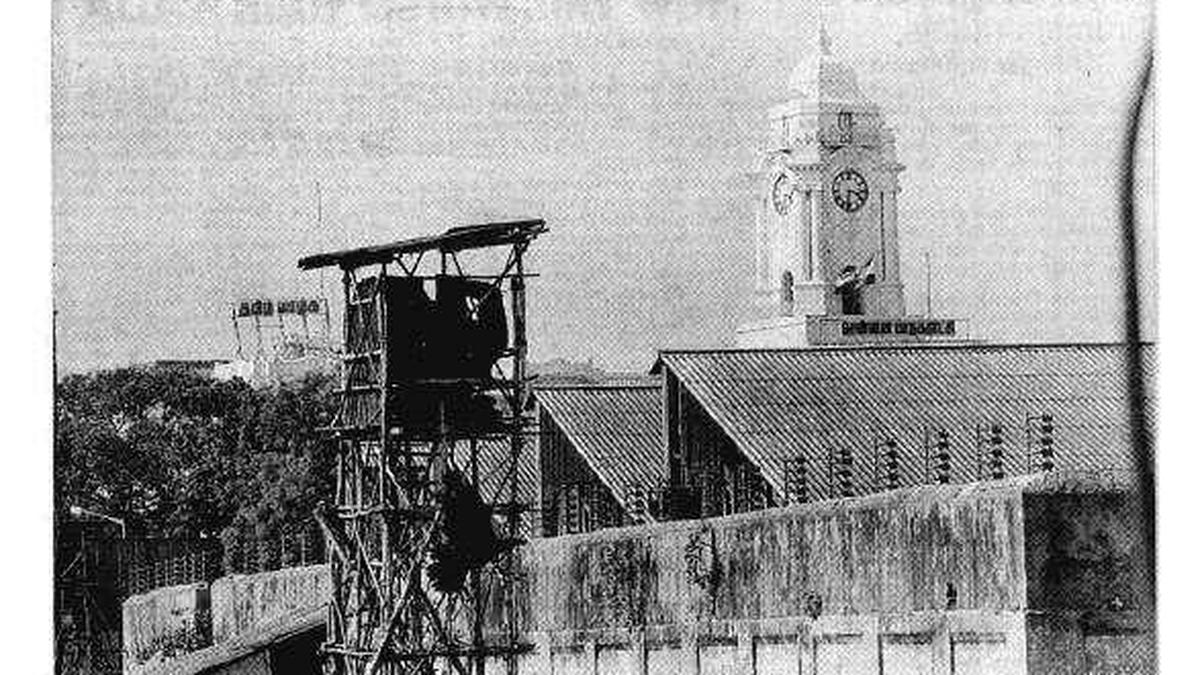
30 Years Ago: The Dramatic Escape of LTTE Militants from Madras Central Prison That Shook a Nation

On February 27, 1995, Tamil Nadu was jolted by a dramatic prison escape that showcased the audacity of the Liberation Tigers of Tamil Eelam (LTTE). Four years after the assassination of former Prime Minister Rajiv Gandhi by an LTTE suicide bomber, the group had been banned in India, but its operatives continued to make headlines. On this particular night, nine LTTE prisoners managed to escape from the Madras Central Prison amid a climate of heightened tensions.
Around 10:15 p.m., the prisoners slipped out of two adjacent cells, remarkably found unlocked. After breaching the prison’s formidable structure, they split into two groups, making their way into the bustling streets near the railway station. All escapees were held under the Terrorists and Disruptive Activities (Prevention) Act (TADA), and within hours, Tamil Nadu authorities were on high alert, enhancing security measures across district and interstate borders.
In a politically charged atmosphere, the escape fueled criticism against the then government of Chief Minister Jayalalitha. Opposition leaders, including former Tamil Nadu Congress Committee president Vazhapadi K. Ramamurthi, suggested a collusion between the AIADMK and the LTTE, stating that the militants were “honorably released.” This criticism forced the government into damage control mode. Inspector General of Prisons T.S. Panchapakesan was moved to a less significant role, while five prison warders were arrested and dismissed. Further investigations led to the suspension of seven additional prison officials, including the jail superintendent.
The government commissioned a judicial inquiry headed by retired Madras High Court judge Justice G Ramanujam to explore the circumstances surrounding the escape. Questions quickly emerged regarding the potential complicity of the prison staff, as the protocol for cell locking had evidently not been followed. A report from The Hindu indicated a strong suspicion that prison staff may have either deliberately left the cells open or provided the escapees with duplicate keys.
In contrast, officers from the specialized ‘Q’ Branch, responsible for monitoring militant activities, claimed that the prisoners used improvised ropes made from bedsheets to scale the prison walls. They noted the absence of watchtowers, which likely contributed to the successful escape. However, luck soon ran out for several of the fugitives. Police intercepted three of them, who had boarded a train, at a bus stop on the interstate border. While two were captured, one, known as Menon, died after ingesting a cyanide capsule.
The escape incited a backlash within the prison, leading to violent reprisals where warders assaulted other TADA inmates. The People’s Union for Civil Liberties urgently filed a petition in the Madras High Court, revealing that many incarcerated individuals had suffered bruises and contusions due to the warders’ retaliatory actions.
The situation escalated further on March 14, when a riot broke out among inmates protesting the abuse they had faced. In a show of defiance, they hurled debris from their cells towards a nearby railway station, demonstrating the deep-seated discontent that had erupted within the prison walls.
As the authorities continued to grapple with the implications of the escape, the incident served as a stark reminder of the complexities surrounding militant activities and prison management in Tamil Nadu. The escape not only highlighted gaps in security protocols but also ignited the political discourse around the government’s handling of such critical issues.
Original Source: https://www.thehindu.com/news/national/tamil-nadu/escape-of-ltte-militants-from-madras-central-prison-and-a-riot-30-years-ago/article70454575.ece
Category : Tamil Nadu
Tags:
Publish Date: 2025-12-31 07:00:00