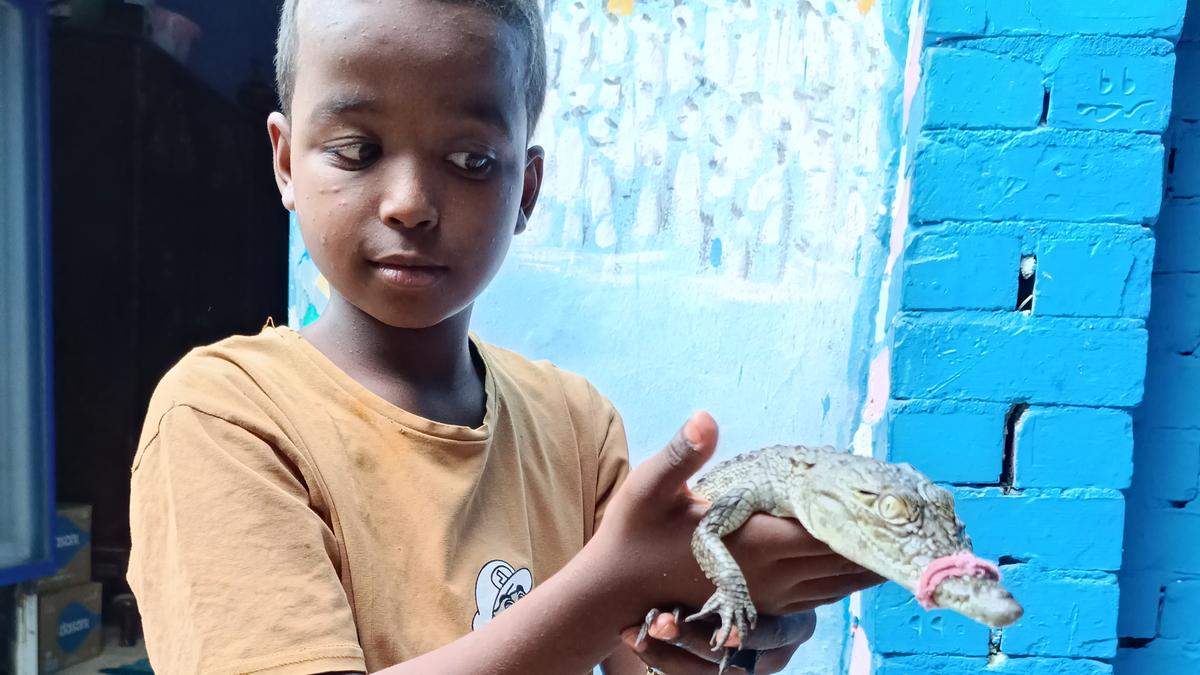

A young boy from a Nubian village in Egypt reveals a unique bond with nature as he plays with a pet crocodile, showcasing an unlikely yet fascinating aspect of local culture. Seven-year-old Ali Mustafa grins mischievously as he carefully picks up a crocodile hatchling crawling across my shirt, prompting my startled scream. This scene unfolds in a vibrant Nubian village situated on the West Bank of the Nile, an enriching detour from the lively atmosphere of Cairo. Here in Aswan, visitors are invited to immerse themselves in Egypt’s deep-rooted history and cultural heritage.
The journey to this colorful village begins with a serene boat ride along the Nile, where stunning views and tranquil sounds make for a captivating experience. Upon arriving, one is welcomed by camels leisurely roaming the streets. While the shops lining the village offer traditional Egyptian souvenirs, the real draw lies in the villagers’ unique relationship with crocodiles. In fact, many homes boast at least one crocodile, and children like Ali play freely with them, dispelling the notion that these reptiles are solely fearsome predators.
Inside Ali’s home, I observe him skillfully handling a hatchling from its tank, reassuring me to avoid touching its stomach, as he fearlessly ties its mouth shut. Nearby, a larger crocodile, the hatchling’s mother, watches from a well, adding an intriguing layer to the experience. “Crocodiles are part of our lives,” Ali says, his enthusiasm palpable as he invites me to hold the hatchling.
Historically, crocodiles evoked fear among ancient Egyptians, recognized as formidable predators of the Nile. However, as time passed, they transitioned from being feared to revered. The ancient Egyptians worshipped the crocodile deity Sobek, who represents fertility and protection. Today, remnants of this cultural reverence persist, notably in the Kom Ombo temple, where mummified crocodiles and related artifacts are on display.
In modern Nubian culture, crocodiles continue to hold both economic and spiritual significance. According to tour guide Hany Rafail, many locals believe that these reptiles ward off the evil eye and bring prosperity. “They absorb jealousy and ensure a family’s well-being,” Rafail explains, highlighting the role of crocodiles in local lore and tourism. L Nhmda, a resident who has lived in the village for generations, echoes this sentiment, sharing that her family’s livelihood is supported by fishing and tourism. “We have three crocodiles in our home-a mother and her two babies,” she notes, offering bread and pickled cheese to visitors as a gesture of hospitality. “Our ancestors worshipped the crocodile, and we still regard it as a lucky charm.”
Aswan presents a compelling blend of history, heritage, and unique cultural practices centered around creatures that ancient Egyptians once feared. By embracing this relationship with crocodiles, the Nubian community not only preserves its traditions but also enriches its contemporary identity, inviting travelers to experience a truly exceptional facet of Egyptian life.
This article was produced with the support of the Egyptian Tourism Authority.
Original Source: https://www.thehindu.com/life-and-style/travel/where-crocodiles-are-family-inside-a-nubian-village-in-egypt/article70425041.ece
Category : Travel
Tags:
Publish Date: 2025-12-22 15:20:00