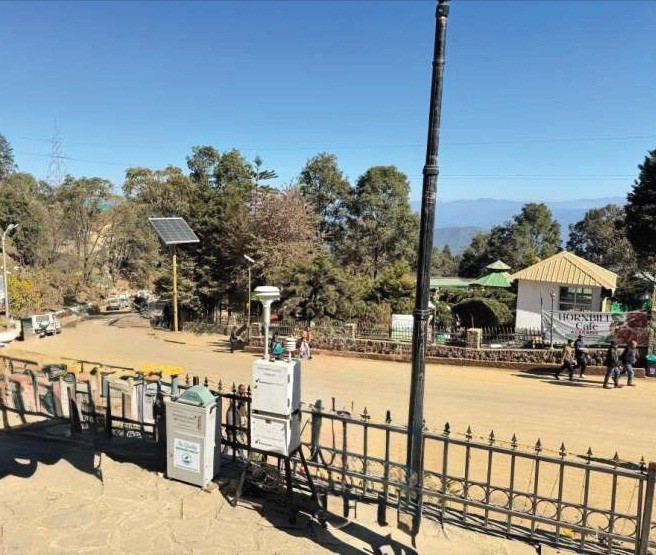

Traffic congestion, the burning of firewood, dust from unpaved surfaces, and construction-related activities have been identified as the primary factors contributing to repeated violations of air quality standards during the Hornbill Festival 2025, according to a report from the Nagaland Pollution Control Board (NPCB). The report detailed findings from air quality monitoring conducted between December 1 and 10, which revealed that these sources significantly deteriorated air quality at the main festival site in Kisama, especially during peak hours.
The NPCB tracked levels of Respirable Suspended Particulate Matter (PM10) and Fine Particulate Matter (PM2.5) at the Bamboo Pavilion entrance in Kisama and in the nearby Kigwema village. The monitoring was intended to evaluate the impact of the large festival activities on air quality and ensure compliance with National Ambient Air Quality Standards (NAAQS).
During the festival, PM10 and PM2.5 concentrations frequently exceeded the permissible limits of 100 µg/m³ for PM10 and 60 µg/m³ for PM2.5. On several festival days, especially from December 7 to 8, PM10 levels surged past 300 µg/m³, reaching a peak of 384 µg/m³, while PM2.5 concentrations hit 184 µg/m³, more than three times the acceptable limit.
The monitoring indicated that particulate concentrations peaked daily between 2:00 PM and 10:00 PM, coinciding with heavy foot traffic, cultural events, and increased vehicular congestion. The influx of vehicles around the festival ground contributed to higher emission levels, exacerbated by frequent stop-and-go traffic.
Additionally, the report highlighted the contribution of firewood burning at food stalls during the evenings, which contributed to particulate emissions. Dust from unpaved roads and ongoing construction work around the arena also played a significant role in increasing pollution levels. Even though water sprinkling was initially used to mitigate dust, the practice was abandoned in later stages of the festival, leading to a marked rise in particulate levels.
The report noted that while the air quality was largely permissible in nearby Kigwema village throughout the festival, there was a notable spike on December 10, attributed to the burning of garden leaves nearby. The monitoring data reflects air quality conditions solely during the festival and does not indicate year-round ambient air quality.
In comparing air quality data from the 2023 Hornbill Festival, the report found that PM10 levels during the first six days of 2023 were higher than those in 2025. However, PM10 levels increased in the latter days of the 2025 festival compared to 2023, showing a downward trend in air quality toward the festival’s end. For PM2.5, concentrations were generally higher in 2023, though 2025 experienced significant spikes on December 8 and 10.
To address these air quality issues in the future, the NPCB recommends regular road cleaning, continuous water sprinkling in dust-prone areas, and improved traffic management. The board also advocates for the adoption of cleaner cooking fuels and enhanced public awareness about practices for maintaining clean air. Positive changes observed since 2023 include better waste management, with reduced littering and improved waste collection, contributing to limited pollution related to waste during this year’s festival.
Original Source: https://www.morungexpress.com/npcb-monitoring-finds-significant-pm-norm-breaches-at-nagalands-hornbill-festival
Category: Nagaland
Tags:
Publish Date: 2025-12-22 00:06:00