
The Currency of Confidence: Navigating Liquidity in Times of Economic Flux
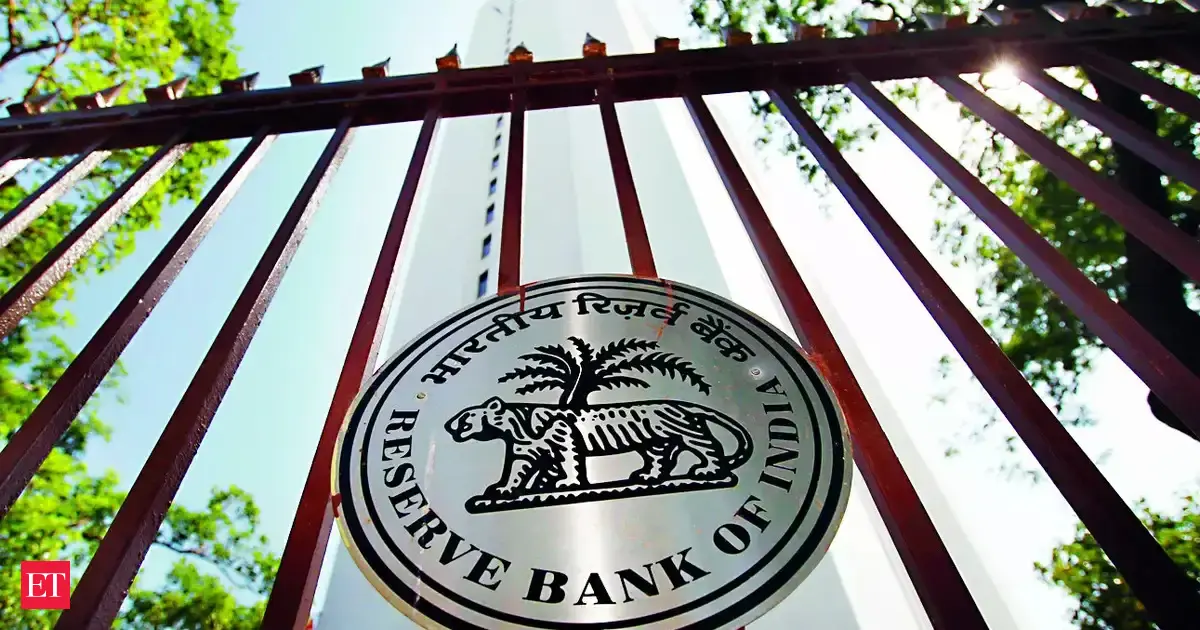
I used to believe that the sheer volume of numbers and financial jargon thrown at us could mask deeper truths about our economy. As I sat in my office in Guwahati, witnessing the ripple effects of the Reserve Bank of India’s recent liquidity injection plan, it became clear to me: behind every statistic lies a story, a human element that reflects our collective economic psyche.
The Reserve Bank has doubled its liquidity injection to a staggering ₹1.5 lakh crore, a surgical move aimed at assuaging concerns over potential cash shortages during advance tax payments. In a world dominated by numbers, it’s crucial to understand that financial institutions are not just balancing books-they’re curating an ecosystem. The Bank of Baroda’s chief economist, Madan Sabnavis, articulated this well as he emphasized that the liquidity issue isn’t merely a mathematical problem; it’s a confidence-building endeavor. It’s about fostering an environment where entrepreneurs in Jorhat and weavers in Sualkuchi feel secure enough to invest in their futures.
In today’s swiftly changing landscape, welcome developments often carry the weight of burdensome expectations. The liquidity surge is orchestrated to pre-empt any possible strain on our financial infrastructure. Yet, as Gaura Sengupta from IDFC First Bank pointed out, more than ₹2 lakh crore will drain from the system due to tax obligations and GST payments in the coming weeks. This tension-between the flow of money and its periodic ebbs-mirrors the cyclical patterns seen in Assamese tea gardens. When the harvest comes in, confidence surges, but when the lean season arrives, apprehension can overshadow ambition.
Yet, it’s essential to take these local contexts and broaden our lens. The additional liquidity will not simply vanish; it’s designed to stabilize overnight borrowing rates close to the repo rate, a safety net for financial operators grappling with imminent tax deadlines. The drive to cultivate confidence is not just aimed at financial numbers; it’s reinforcing the idea of trust in our ecosystem. It’s about giving local startups the assurance that there’s buoyancy even when the waves of liquidity ebb.
As we consider the implications of these monetary policies, it’s evident we must shift the conversation from mere statistics to the stories they tell-stories of struggling entrepreneurs in Majuli who rely on government flow to kickstart their ventures, or of families cultivating tea on the banks of the Brahmaputra, who know too well that prosperity and scarcity are two sides of the same coin. These changes in monetary policy ripple through lives, affecting those who might not even understand the complexities of repo rates or VRR, but are keenly aware of their implications on day-to-day existence.
The dollar-rupee swap also plays a critical role, aiming to ensure durable liquidity in our markets. Navigating foreign exchange challenges is no simple task; the stakes are high and impact far-reaching. As I’ve seen in my role at Webx Technologies, businesses rooted in Northeast India are increasingly interlinked with global markets, and the waves of currency flow have a direct impact on innovation and growth. This is not isolated to massive enterprise; it influences local tech startups, small-scale industries, and craftspeople-the heartbeat of our community.
In these moments of economic uncertainty, the true value lies in leadership that understands the intersection of numbers and human behavior. Leaders must not merely react to fiscal data but must foster an environment where opportunities are visible, feasible, and attainable. As we venture through this landscape, the concept of liquidity morphs from a dry financial term to a lifeline that fuels the dreams of our industrious neighbors in Assam and beyond.
By understanding the underlying mechanics of financial policies, we can better appreciate their broader implications-how they affect the lives of the chicken farmers in Silchar or the textile artisans in Kamrup. It is by nurturing this understanding that we cultivate a society that values both financial acumen and human stories.
Takeaways:
- Liquidity injections transcend numbers; they build confidence in diverse economic ecosystems.
- Economic policies must be viewed through the lens of their impact on community stories and local industries.
- Enhancing understanding across sectors strengthens resilience against financial uncertainty.
A financial ecosystem that inspires trust is the richest currency we can possess.
About the Author
Sanjeev Sarma is the Founder Director of Webx Technologies Private Limited, a leading Technology Consulting firm with over two decades of experience. A seasoned technology strategist and Chief Software Architect, he specializes in Enterprise Software Architecture, Cloud-Native Applications, AI-Driven Platforms, and Mobile-First Solutions. Recognized as a “Technology Hero” by Microsoft for his pioneering work in e-Governance, Sanjeev actively advises state and central technology committees, including the Advisory Board for Software Technology Parks of India (STPI) across multiple Northeast Indian states. He is also the Managing Editor for Mahabahu.com, an international journal. Passionate about fostering innovation, he actively mentors aspiring entrepreneurs and leads transformative digital solutions for enterprises and government sectors from his base in Northeast India.