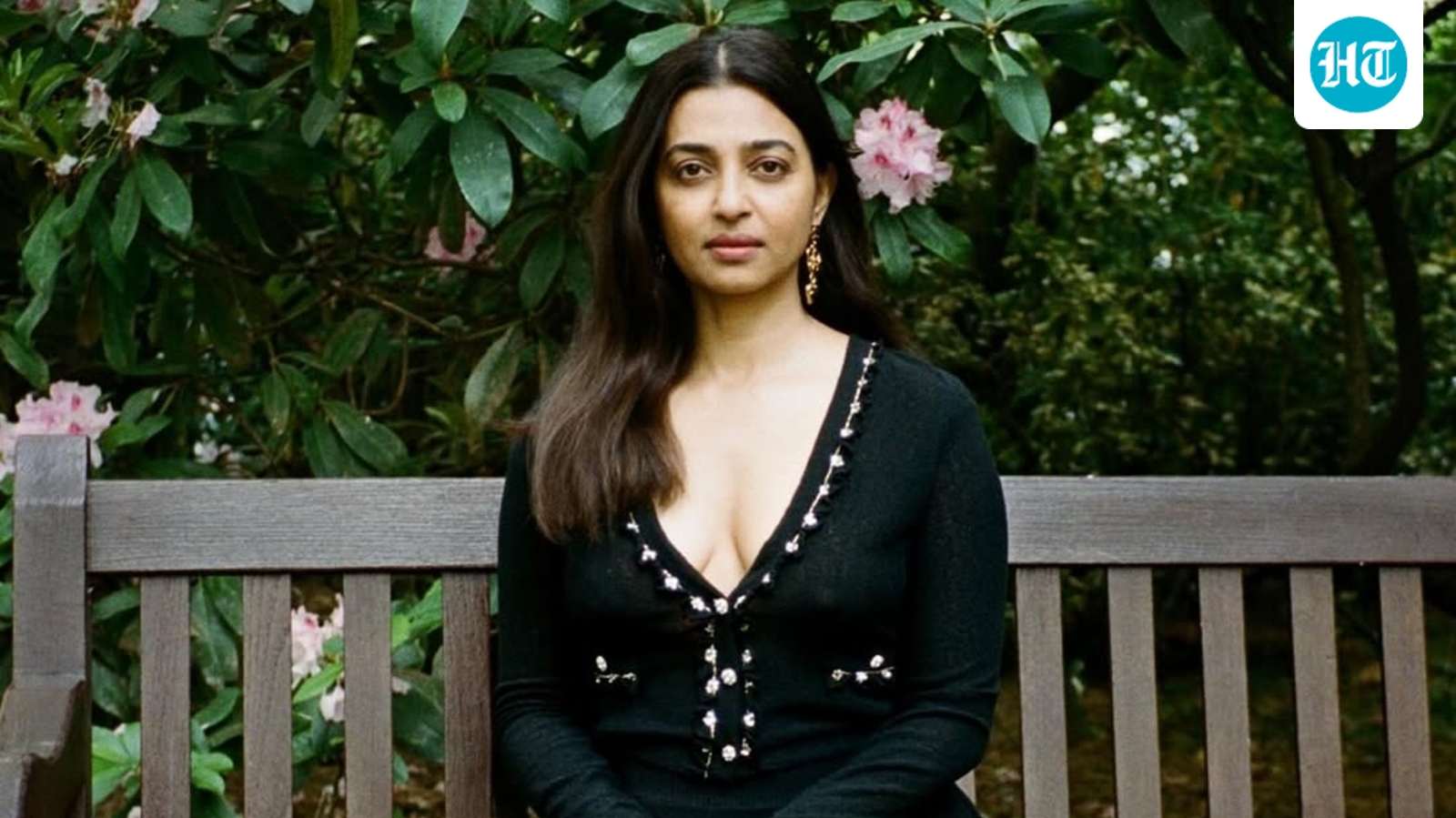
Radhika Apte Unveils Disturbing Truth: Why She Refuses to Bring a Child into a World of Violent Films!

Radhika Apte Sounds the Alarm: Graphic Violence in Films is “Deeply Disturbing”
In a world where entertainment has taken a dark turn, the talented Radhika Apte stands as a beacon of conscience in the chaotic landscape of Indian cinema. Fresh from her maternity break and with her finger firmly on the pulse of the industry, Radhika is not afraid to shine a glaring spotlight on the troubling overabundance of graphic violence that has become a staple of our screens. Her voice, resonant and resolute, cuts through the buzz of the festive season-entertainment is no longer just about joy and artistry; it has morphed into a grim carnival of gore.
Speaking candidly in an interview with The Hollywood Reporter India, Radhika expressed her outrage over what she describes as a “deeply disturbing” trend that undermines the fabric of society, particularly as it relates to raising the next generation. “I can’t bring my child into a world where violence is marketed as entertainment,” she remarked, echoing the concerns of many who fear for the cultural implications of such a spectacle. It’s a sentiment that resonates in a nation that prides itself on rich storytelling traditions, yet finds itself drowning in a pool of shock value.
But let’s not sugarcoat this, dear readers-Radhika isn’t merely playing the role of a concerned parent; she’s challenging the very ethos of contemporary filmmaking. Her critique is sharp and unapologetic: “If I want to tell a story of a man who chopped off people, I don’t need to see the chopping,” she stated, calling for a return to narrative depth rather than blood-soaked sensationalism. After all, storytelling is an art, and not a contest of who can portray horror more graphically.
The actress’s sentiments highlight a post-pandemic trend where the line between spectacle and substance has become increasingly blurred. We are witnessing a seismic shift in how stories are told-often with a heavy reliance on shock tactics rather than the intricate tapestries of character, context, and compelling narratives. It’s a disturbing phenomenon that leaves one to ponder: what happened to the artistry and meaning in our films?
Recognized for her powerhouse performances and critical acclaim, Apte’s insights create an urgent call to arms for filmmakers. “The effect of this trend on society is significant and deeply upsetting,” she lamented, as she advocates for creators to marry visual intensity with thoughtful storytelling. Purveyors of content must bear the responsibility of shaping culture and consciousness, rather than peddling mindless violence for the sake of views or box office numbers.
As if to juxtapose her concerns with something substantial, Radhika is gearing up for the release of Saali Mohabbat, her much-anticipated thriller set to premiere on ZEE5 on December 12, 2025. Directed by the talented Tisca Chopra, this film promises to be a bold entry into the realm of psychological drama-juxtaposing Radhika’s impassioned plea for storytelling depth against a backdrop of intrigue and suspense. The buzz surrounding the project has been palpable, especially following its screenings at prestigious venues like the International Film Festival of India (IFFI) and the Chicago South Asian Film Festival.
As we wrap our heads around Radhika Apte’s impassioned appeal, one thing remains crystal clear: it’s time to shift the focus back to the art of storytelling. In an age saturated with sensationalism, we find ourselves yearning for depth, nuance, and a more meaningful connection with the tales we tell. After all, cinema has the power to shape minds, and it’s high time we wielded that power responsibly.