Unveiling the Night: Witness the Astonishing Lives of Bengaluru’s Forgotten Bats in ‘Batman and the Baavali’

As dusk descends on Bengaluru’s Sankey Tank, the skies transform into a canvas of molten hues, reflecting onto the lake’s surface. This enchanting scene draws an array of visitors: leisurely strollers, love-struck couples, runners, and an assortment of wildlife, including cormorants, ducks, and pet-turned-invader red slider turtles. It’s also the time when flying foxes, roosting in the trees around the man-made lake built in 1882, awaken. A new film, “Batman and the Baavali,” produced by Roundglass Sustain, captures this mesmerizing moment, featuring bat conservationist Rohit Chakravarty as he explores the nocturnal world of bats, highlighting their presence in the vibrant urban landscape.
In the film, viewers witness swathes of fruit bats silhouetted against the twilight, some dipping towards the lake’s surface to quench their thirst. “They go down to the water, make a splash with their chest, head off to the nearest tree, and drink water from the wet fur,” Rohit explains. His satisfaction in discovering these flying foxes amidst the urban backdrop reflects a broader reality: while bats are often overlooked, they inhabit almost every city in India.
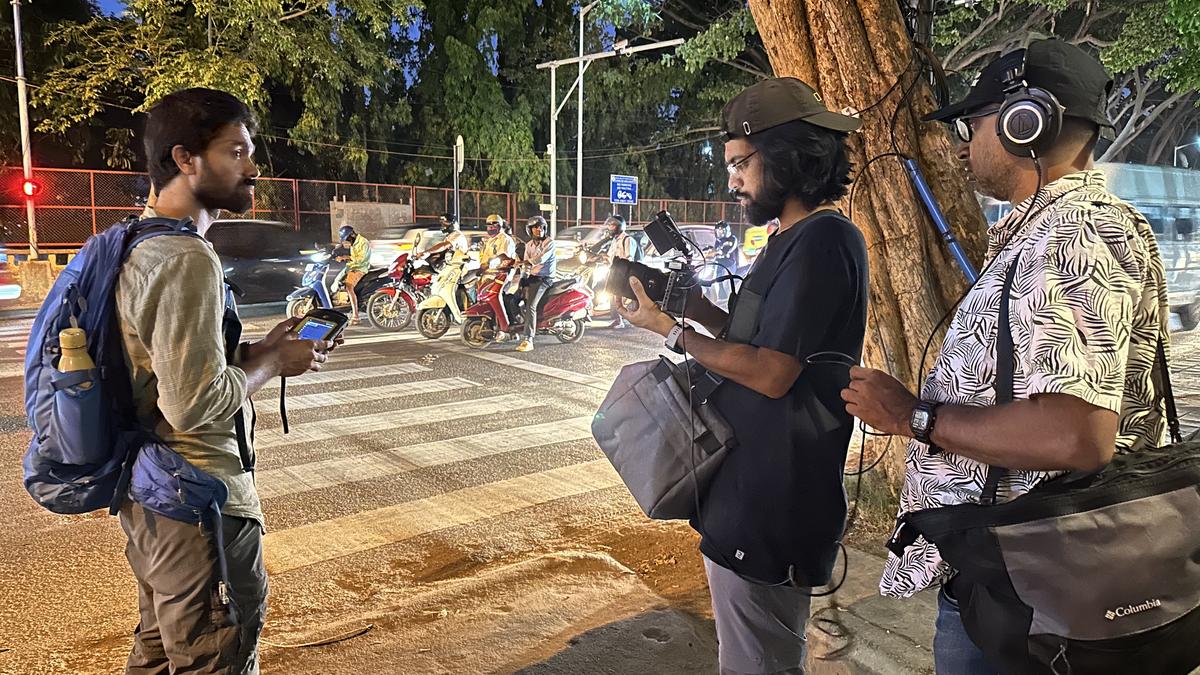
The documentary, whose soundscape features echolocation calls created by sound artist Nikhil Narendra, leads viewers to lesser-known urban habitats of bats throughout Bengaluru. Hidden spots include the canopies of Singapore Cherry trees, abandoned buildings, and the Indian Institute of Science campus. Co-director Dheeraj Aithal emphasized their curiosity about the bats’ daily journeys, saying, “We often saw bats flying out at dusk or returning at dawn, but we never knew where they roosted.”
Samreen Farooqui, head of films at Roundglass Sustain, revealed that the film’s concept evolved over several years. Initially, the team believed that wildlife was found only in remote areas. Over time, they recognized that urban environments can also support diverse ecosystems, prompting a film series on urban wildlife across India. “Bats came up early in our conversations,” she noted. Living near Bellandur Lake, she frequently observed bats at dusk, making it a natural choice for the film’s focus.
Globally, bats are the second most common group of mammals after rodents, with around 1,500 species, 135 of which reside in India. Rohit noted that Bengaluru is home to about 10 to 15 species, yet misconceptions prevail. Often portrayed in folklore as harbingers of doom, bats also raise public fear due to their links to various viruses. Despite this, bats provide crucial ecological benefits: they consume huge numbers of insects, including mosquitoes, and play vital roles in seed dispersal and pollination.
Pradeep Hegde, another co-director, hopes the film conveys accurate information about bats amid widespread misconceptions. During filming, they faced unexpected hurdles with permit requirements, especially in iconic locations like Sankey Tank and Bugle Rock. Nevertheless, they realized these untouched environments are vital to the survival of urban wildlife like bats and lorises.
Samreen believes the flourishing urban fauna in Bengaluru reflects a caring civil society committed to environmental protection. “It’s an affirmation of Bengaluru’s vibrant civil society,” she concluded. “We’re thrilled to document this, no matter how small.” Through the lens of “Batman and the Baavali,” the film invites viewers to appreciate both the city’s wildlife and the interconnectedness of urban ecosystems, emphasizing that the wild is not as distant as it seems.
Original Source: https://www.thehindu.com/news/cities/bangalore/batman-and-the-baavali-a-documentary-that-showcases-the-nocturnal-world-of-bengalurus-many-bats/article70328613.ece
Category : Bengaluru
Tags:
Publish Date: 2025-11-28 04:48:00