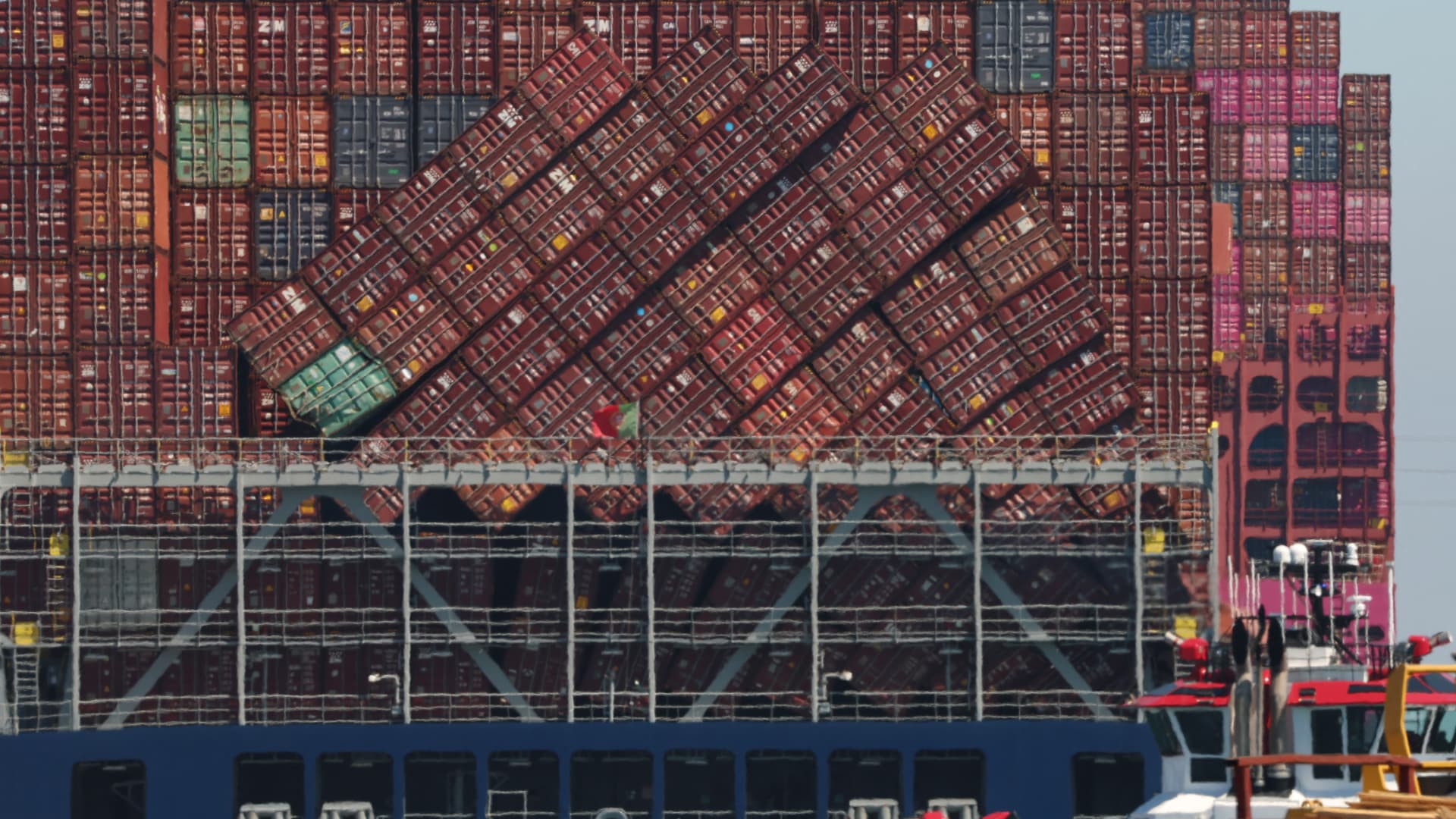
China Trade Plummets: U.S. Freight Market Faces Critical Recession Watch as Economic Turbulence Intensifies

The impact of President Donald Trump’s tariffs continues to reverberate through the logistics and transportation sectors, as major ports report significant drops in imports following earlier record volumes. In October 2025, rates for van, flatbed, and refrigerated loads witnessed declines on both a month-over-month and year-over-year basis for the first time, according to the DAT Truckload Volume Index. “Freight volumes in the third quarter and October reflect the broader goods economy, with shippers utilizing previously built inventory to lessen their exposure to tariffs and sluggish consumer demand,” stated Ken Adamo, DAT’s chief of analytics. He added, “As a result, the traditional peak holiday shipping season appears virtually nonexistent this year.”
Specifically, van truckload volumes decreased by 3% since September and 11% year-over-year. Refrigerated loads reported a 2% month-over-month drop and a 7% annual decrease, while flatbed truckloads slipped 4% month-over-month and 3% year-over-year. The current reduced volumes are primarily goods moving from distribution centers to retailers. Contributing factors to the trade decline include weaknesses in housing and manufacturing, soaring energy costs, and shippers bringing in imports earlier this year to mitigate tariff impacts.
Recent data from the U.S. Census Bureau revealed a dramatic $18.4 billion decrease in imports in August, following the imposition of additional tariffs. This contributed to a more than 23% decline in the national trade deficit. According to the Port of Long Beach, the second-busiest in the U.S., the trend shows a continued impact of tariffs on ocean freight entering the country. “We’re seeing a 16% decrease in Chinese imports to the United States,” noted Mario Cordero, CEO of the Port of Long Beach, emphasizing that the reduction spans multiple categories.
Similarly, the Port of Los Angeles also reported a decline in container volumes in October. Product categories such as electronics, furniture, and toys have been particularly affected. Additionally, U.S. grain exports have suffered, with China increasing its purchases of soybeans from Brazil during the trade dispute. Nevertheless, China recently pledged to increase its imports of U.S. soybeans as part of efforts to ease tensions.
The recent decline in container volumes follows a period of expedited imports, where retailers and manufacturers rushed freight in response to looming tariff deadlines and rate fluctuations. Shipping data indicates a year-on-year increase of 10% in global containers arriving on the West Coast, although imports from China specifically have seen a 4.6% rise. In contrast, East Coast ports, including Houston, recorded a slight 2% year-over-year increase in container volumes, while containers arriving from China have dropped by 12%.
Looking ahead, Cordero anticipates challenges during the fourth quarter, particularly regarding consumer spending. “It remains to be seen how resilient American consumers will be in their purchasing habits,” he noted. Ben Tracy, vice president at Vizion, forecasts a nearly 16.6% year-over-year decline in U.S. imports for December and a 12% drop in the third quarter, calling the situation a structural goods recession influenced by various factors, including tariff uncertainties.
Retailers are currently hesitant to place large freight orders due to concerns over rising consumer product costs. Reports from retail earnings have been mixed, with negative results from firms like Home Depot and Target contrasted by positive performance from Walmart, which has noticed a shift towards value-oriented shopping among consumers.
Kyle Henderson, CEO of Vizion, expressed concerns as U.S. import volumes fall consistently below 2 million twenty-foot equivalent units (TEUs) for the first time since March 2023. “This is indicative of a major reset in freight demand fundamentals,” he cautioned, particularly in light of drastic drops in furniture and toy imports ahead of the holiday season.
As freight volumes decline, the repercussions ripple through various sectors, affecting port labor and shipping logistics. Less freight translates to fewer jobs for longshoremen and other shipping professionals. Cordero remarked on the growing anxiety surrounding job security at the Port of Long Beach, underscoring the broader implications of reduced shipping volumes. The decline in cargo movement is not limited to tariffs on China; tariffs on India have similarly decimated the freight market servicing this trade, with significant declines in Indian exports to the U.S. reported.
The current landscape of the logistics and transportation sectors signals considerable challenges ahead, as insights into consumer spending and economic conditions remain vital for stakeholders across the industry.
Original Source: https://www.cnbc.com/2025/11/20/trump-tariffs-trade-china-import-decline-freight-recession.html
Category :
Tags:
Publish Date: 2025-11-20 22:07:00